Thewesternbalkans.
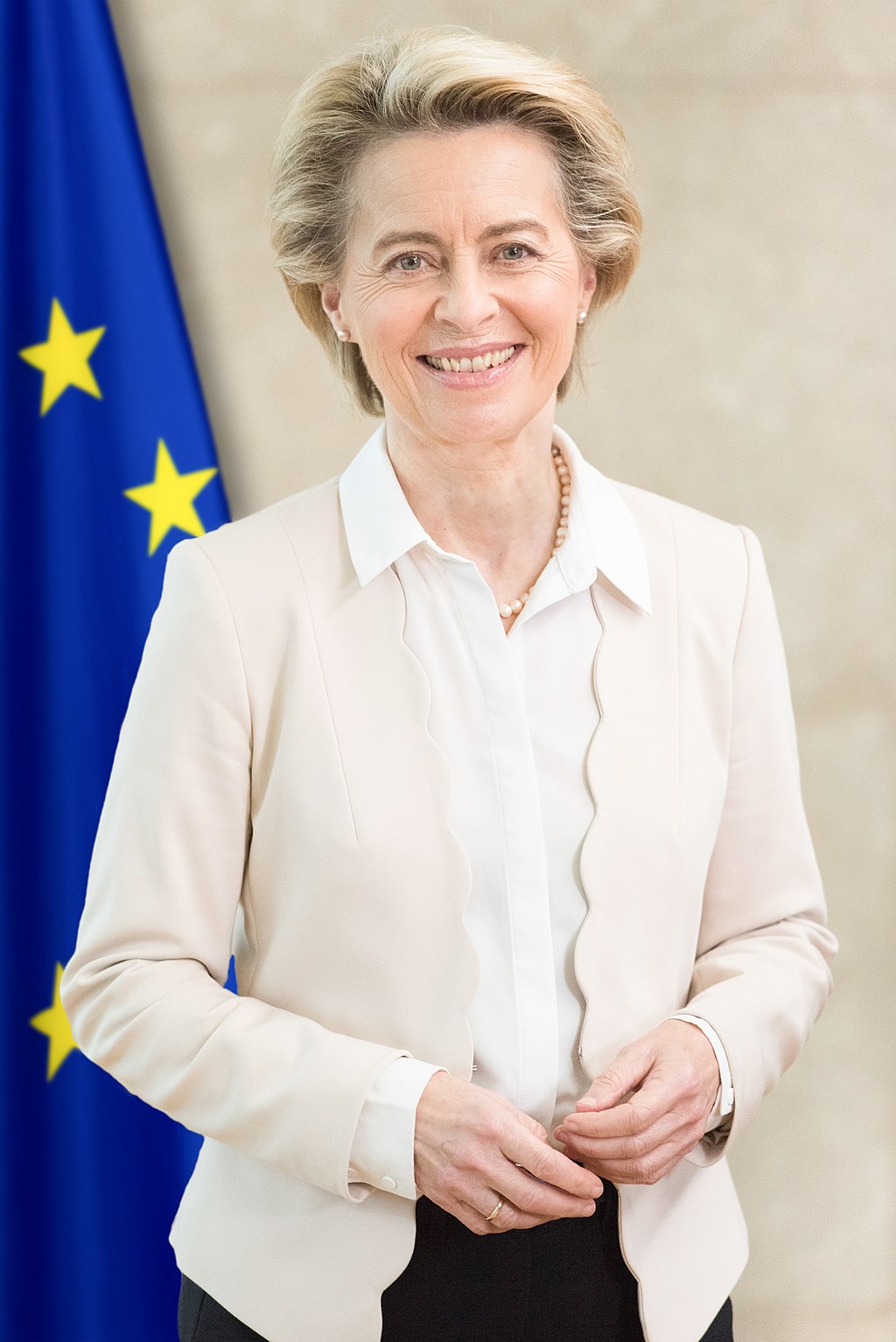
Ursula von der Leyen’s State of the Union address on September 16, 2026, holds greater significance for the Western Balkans than the relatively brief attention devoted to the region might suggest. In it, she placed the Western Balkans within the context of the EU’s geopolitical enlargement while simultaneously making it clear that the process would be more strictly tied to European values and concrete reforms.
The key message is that the future of the Western Balkan states lies within the EU and that the Commission will soon propose “roadmaps” for the candidates that have made the most progress.
This is important for two reasons: first, it confirms that enlargement remains a strategic goal for the EU; and second, it shifts the focus from a general promise of membership to a differentiated path forward based on each country’s actual progress. In other words, Brussels is not speaking of a “package” admission of the Western Balkans, but rather of competition based on results.
The most significant practical element are the roadmaps, which may ultimately prove more consequential than the speech itself.
The Commission had already been preparing ideas to offer early benefits to candidates, and in June, von der Leyen stated that if a country implements reforms, it should advance in the opening and closing of negotiating chapters and clusters. This also aligns with the broader debate on “gradual integration”—the inclusion of candidates in specific European policies and instruments even prior to formal membership. However, von der Leyen drew a crucial “red line”: she stated that “this process will continue to be based on merit” and emphasized that “respect for our values is non-negotiable.”
This is particularly important for the Western Balkans. The EU clearly does not want the geopolitical necessity of enlargement to result in automatically overlooking issues regarding democracy, the rule of law, corruption, or foreign policy orientation.
The speech also had a specific Balkan dimension—von der Leyen made particular reference to the glorification of Ratko Mladić, stating that honoring war criminals has no place in the European Union. This was no casual historical reference, but an unequivocal message to Belgrade: while the European perspective for Serbia remains open, political and value-based alignment with the Union is becoming a more prominent factor in progress assessments. This means the Commission continues to view Serbia as part of the enlargement process while simultaneously scrutinizing its commitment to the European path.
Regarding Montenegro—one of the most advanced candidates—the speech offered no specific promises concerning a membership date or the conclusion of negotiations. The question of how far Montenegro will actually progress remains unanswered. Consequently, the real test for Podgorica will not be the words spoken in the speech, but the upcoming roadmap and decisions regarding specific negotiating chapters. The remaining candidate countries from the Western Balkans (North Macedonia, Albania, Bosnia and Herzegovina, Kosovo) can benefit from von der Leyen’s proposed new model only if they demonstrate tangible progress in reforms.
Von der Leyen’s entire speech was built around the concept of a stronger, more independent, and more secure Europe. She proposed a new European security strategy, including a mechanism—likened by her to a European “Article 4″—for responding to hybrid threats. In this context, the Western Balkans are no longer merely an “unfinished EU enlargement” but are increasingly becoming “part of the European security architecture.” This represents a fundamental shift in how Brussels views the region.
The speech should be considered alongside von der Leyen’s announced visit to the Western Balkans between September 30 and October 2, 2026. She will visit Albania, Kosovo, Montenegro, and North Macedonia to discuss the next steps on their European paths and their gradual integration. Serbia and Bosnia and Herzegovina are not included in this tour; the Commission has indicated that visits to these countries will take place at a later stage. This effectively makes the tour a continuation of the speech, likely conveying a clear political message: EU membership is becoming a genuine strategic prospect, with the possibility of an accelerated pace. At the same time, conditionality is being reinforced—each country will be assessed individually based on its results. Roadmaps are likely to emerge as a new tool for accelerated integration, with early benefits expected to gain increasing importance. Following the negative referendum in Iceland last August—in which the majority voted against resuming membership negotiations—Brussels is clearly not abandoning the idea of enlargement; on the contrary, it is attempting to frame it as part of Europe’s broader geopolitical and security strategy. The fundamental shift in the logic of enlargement lies in moving from the question “Will we admit the Western Balkans?” to the question “How will we integrate them gradually, and which of them can move the fastest?”