Thewesternbalkans.
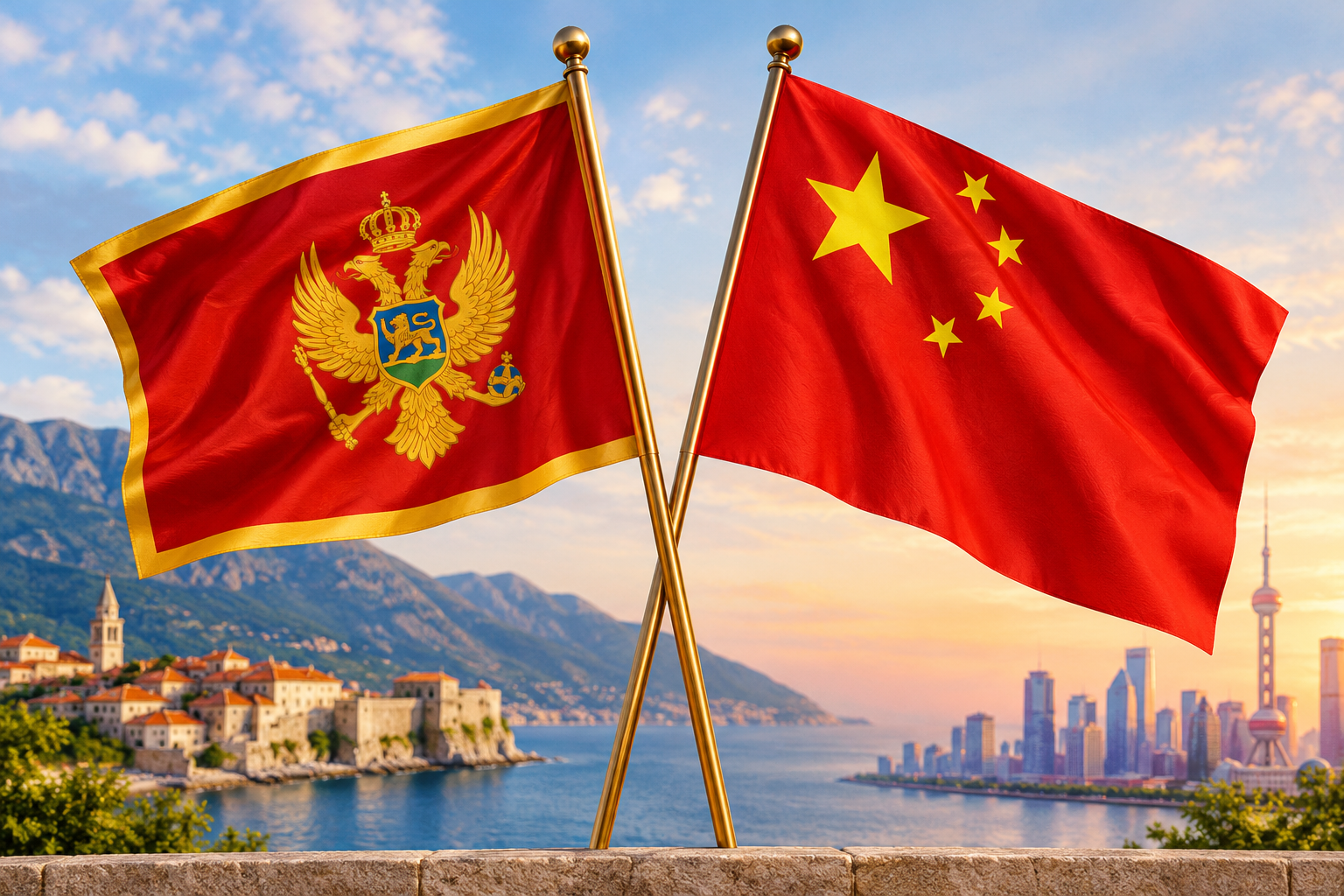
Chinese Foreign Minister Wang Yi visited Montenegro on October 17–18, 2026, as part of a broader diplomatic tour that also included Azerbaijan, Croatia, and Bulgaria. This marked the first visit by a Chinese Foreign Minister to Montenegro since the country regained its independence in 2006.
In Podgorica, Wang Yi held talks with Deputy Prime Minister and Minister of Foreign Affairs Ervin Ibrahimović, as well as Prime Minister Milojko Spajić. On October 17, he was also received by President Jakov Milatović in Cetinje.
The meetings covered bilateral relations, infrastructure projects, trade, tourism, energy, and green development, alongside regional and international issues.
The agenda appeared routine, as did the official statements released in the media of both countries. Beyond the symbolic significance of the visit—which coincides with the 20th anniversary of the establishment of diplomatic relations between China and Montenegro—the publicly announced outcomes are primarily political and framework-oriented in nature; the official statements make no mention of a new investment package, a specific agreed-upon financial sum, or any new bilateral agreements signed during the visit.
Beijing Bets on the Next EU Member State
Anyone following China’s policy in the Balkans might ask: why, among the Western Balkan nations, did Wang Yi choose Montenegro rather than Serbia—its closest partner in the region? The primary reason is that Serbia is on the verge of elections; furthermore, relations between the two countries are managed at the level of their respective heads of state.
But most importantly, Montenegro is an EU candidate with the most immediate prospect of accession—potentially by 2028. From the Chinese perspective, close ties with Montenegro could secure another friend for China at the EU table.
EU foreign policy decisions—including statements concerning China—still require unanimity. For years, this principle was utilized by Viktor Orbán’s friendly Hungary to soften or block the Union’s common stance on China. Now that Orbán is no longer a factor, and with Germany joining France this October in adopting a tougher stance toward China, Beijing has set out to actively court Podgorica during the window of time leading up to its accession. China traditionally pursues long-term objectives; a small yet friendly nation like Montenegro—possessing veto power once admitted to the Union—would be of immense value to China.
Beijing makes no secret of what it wants from Podgorica. During the visit of Montenegrin Prime Minister Milojko Spajić to Dalian in June of this year—the highest-level bilateral visit in the last 18 years—his Chinese counterpart, Li Qiang, expressed hope that Montenegro would help steer China-EU relations “in the right direction.”
“China believes that upon joining the EU, Montenegro will become another good friend of China within the Union“, stated Wang Yi during his meeting with the President of Montenegro, Jakov Milatović. Wang expressed hope that Montenegro would play a unique and important role in promoting regional peace and stability, as well as in the development of China-EU relations.
A key phrase used by Wang Yi to define the Chinese approach is that “China has consistently maintained that all countries, big or small, are equal, and has always followed the path of partnership over alliance and dialogue over confrontation.” China prefers to develop relations with EU member states on a bilateral basis, rather than dealing with Brussels, which speaks with a single voice.
China seeks and finds friends. According to Xinhua, Jakov Milatović told Wang Yi that his time spent in China—specifically a period of study at Peking University—helped him gain a deeper understanding of the country’s economic and social development, as well as the significance of cooperation with China. For his part, Wang Yi noted that China highly values Milatović’s “rational and objective understanding” of China.
Specific Areas of Cooperation
The Montenegrin side highlighted the Bar–Boljare motorway, including the completed Smokovac–Mateševo section and the involvement of a Chinese consortium in the Mateševo–Andrijevica section. Discussions also covered the potential for Chinese participation in projects involving railways, airports, seaports, and energy infrastructure. Beijing urged high-quality execution of the next phase of the motorway and expressed readiness to expand cooperation with Montenegro in the energy sector and the green transition.
Both sides expressed a willingness to foster tourism, cultural cooperation, cinema, education, and scientific research. Visa regimes and ways to facilitate interpersonal contacts were also discussed. No specific changes to the visa regime were announced as a result of the visit. Consequently, in order to meet the criteria for concluding negotiations under Chapter 24, Montenegro will introduce visa requirements for citizens of China (as well as Russia, Belarus, Saudi Arabia, and Turkey) effective November 1, 2026. Podgorica is seeking to mitigate the impact by establishing visa application centers in China. Meanwhile, Montenegrin citizens continue to enjoy unilateral visa-free entry into China until December 31, 2026. Given that China maintains a unilateral visa-free policy toward EU member states, it is possible that the door may remain open for other partners aligned with Brussels.
Geopolitical Significance
While there are no signs of an imminent economic breakthrough, Wang Yi’s visit to Montenegro carries significant political and strategic weight. The Chinese side acknowledges Montenegro’s European perspective, publicly framing the country’s aspiration for EU membership as compatible with the development of its relations with China. Wang Yi emphasized that Beijing understands Podgorica’s “European choice” and hopes that, upon joining the European Union, Montenegro will serve as a partner to China from within the bloc. This position was conveyed both during the meeting with President Milatović and in discussions with Ibrahimović. While this does not imply that Podgorica will act as an advocate for Chinese interests in Brussels, it indicates that Beijing views Montenegro’s future EU membership as an opportunity to further deepen economic ties.
For its part, the Montenegrin leadership does not present closer ties with China as an alternative to European integration; rather, it frames the relationship as an economic partnership designed to fit within the broader context of that integration.
The Chinese Model
It is worth noting a significant shift in the model of Chinese economic engagement in Montenegro—a shift that could potentially be applied to other Western Balkan nations. This change concerns the development process for projects: moving away from reliance solely on bilateral agreements toward the use of international tender procedures. Furthermore, there is a greater emphasis on grants—provided by both China and the EU—and financing from European institutions, such as the EBRD, alongside a reduction in Chinese loans. Accelerated integration into the EU does not entail the rejection of Chinese contractors; rather, the method of payment to them is changing. Beijing accepts the change in rules and is adapting to it. For China, this approach offers an opportunity to maintain good relations with a country aspiring to EU membership, and potentially to develop business ties in compliance with European regulatory requirements. At the same time, Beijing is placing greater emphasis on political capital—an asset that will prove significant once Podgorica gains a vote in Brussels.