Thewesternbalkans.
We can finally discuss the long-awaited European Council Conclusions, adopted at the meeting held on October 15–16, 2026, concerning EU enlargement and the accession process in the Western Balkans.
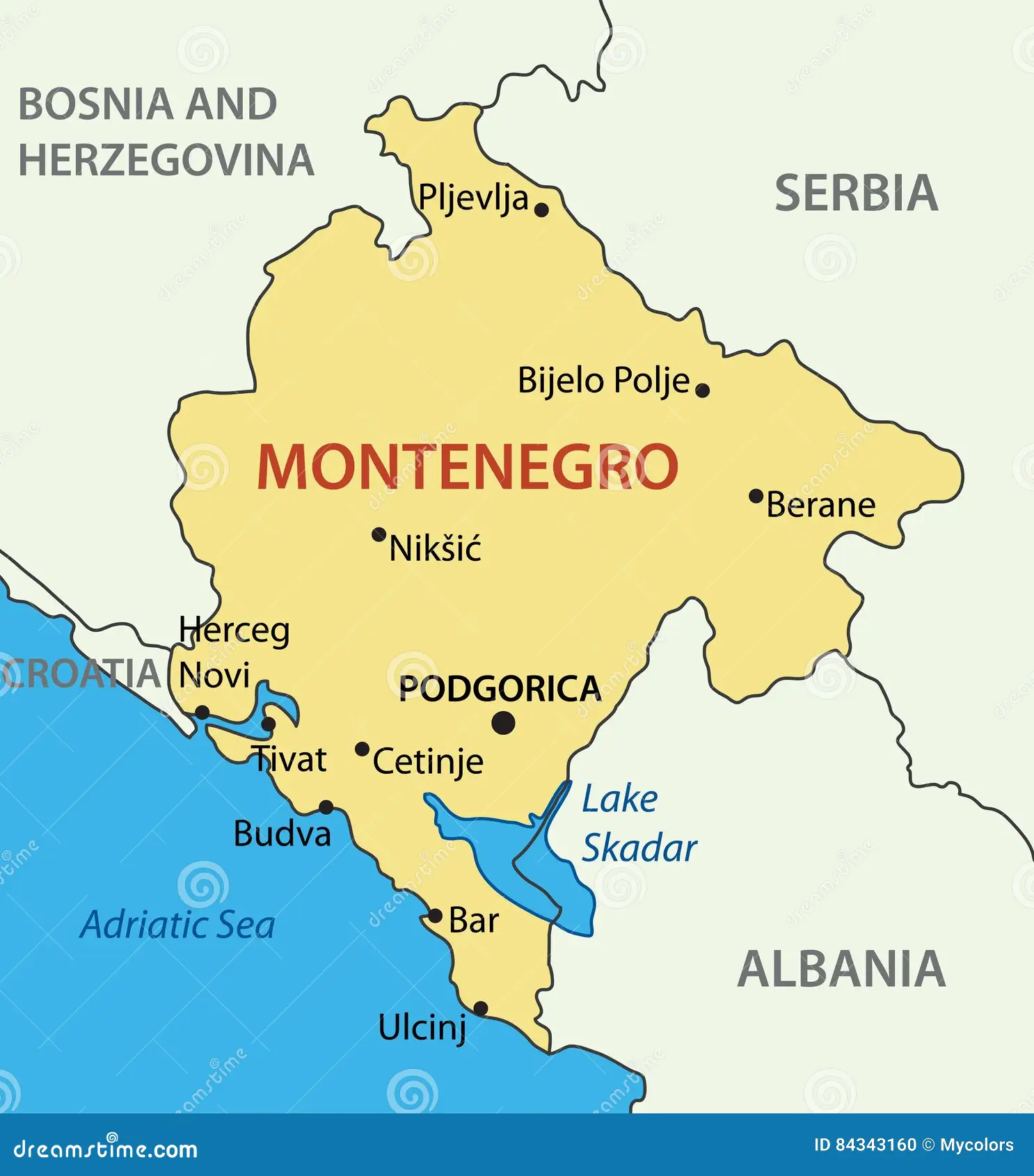
Particular attention should be paid to the language used by EU leaders regarding Montenegro’s membership bid.
Before that, it should be noted that “The European Council takes note of the Commission’s Communication on ‘Preparing for a wider Union’ and calls on the Council to analyse all strands and, on the basis of this analysis, to take work forward“ (paragraph 70 of the section on „Enlargement and reforms“ in the Conclusions).
The following paragraph 71, contains the two key statements from the European Council concerning Montenegro:
The first statement: “The European Council welcomes the ongoing work on drafting the accession treaty with Montenegro.”
The second statement: “It notes the intention of the Irish Council Presidency to work towards the provisional closure of the remaining negotiating chapters, subject to the implementation of the corresponding reforms by Montenegro.”
These two sentences constitute the entire content of paragraph 71, which is dedicated to Montenegro. No other candidate countries from the Western Balkans are mentioned in the Conclusions of the EU leaders.
These formulations in themselves constitute an important political signal regarding the acceleration of Montenegro’s accession to the EU. They indicate that the process is now viewed not merely as a series of negotiations on individual chapters, but also as preparation for a future accession treaty.
These two formulations carry different diplomatic significance.
The first—support for the preparation of the accession treaty—is the more substantial strategic step. It confirms that work on the treaty is already part of the actual enlargement process, rather than just a future possibility. A special working group of the Council of the EU, tasked with drafting Montenegro’s accession treaty, was established on April 22, 2026.
The second formulation—concerning the intention of the Irish Presidency—is positive but more limited in scope. The European Council does not set a deadline for the conclusion of negotiations; instead, it notes the Presidency’s intention to work toward that end. Consequently, this represents a political direction and a stated priority, rather than a guaranteed outcome.
At the same time, the text is carefully worded and does not constitute an unconditional commitment by the EU to admit Montenegro within a specific timeframe. While there is support, there is no expectation that Podgorica will close all negotiating chapters by the end of the year. The discussion among EU leaders did not result in any concrete decision. So, why do the leaders meet at all? Or is this just another case of “much ado about nothing”?
What does this mean for Montenegro?
On October 12, 2026, the Montenegrin government stated its ambition to provisionally close all remaining negotiating chapters by the end of 2026 and to move toward signing the accession treaty as early as 2027. This is a national goal, not a timeline confirmed by the European Council.
As of mid-October 2026, Montenegro has opened all 33 negotiating chapters, 21 of which have been provisionally closed. There remain 12 chapters yet to be provisionally closed.
In practice, Montenegro is entering the final stage of negotiations, involving work along two parallel tracks: fulfilling the remaining criteria and preparing the legal framework for membership. However, this does not mean that negotiations have concluded. Chapters that have been provisionally closed may be revisited before an overall agreement is reached on all chapters.
The language used by the European Council indicates that it is providing political support for practical work already underway and acknowledging a stated intention, without turning it into a firm commitment on the part of all member states. The diplomatic compromise lies in the fact that, while the European Council politically encourages Montenegro’s progress, it remains more cautious regarding the timeline for concluding negotiations and offers no advance guarantee of membership.
The wording is significant because it places Montenegro in a more concrete and advanced phase of the enlargement process. At the same time, however, it remains sufficiently vague to allow for varying interpretations regarding the level of support.
The reluctance of member states to commit in advance to a specific date for Montenegro’s EU accession—combined with the phrasing regarding the Irish Presidency’s intentions—leaves room for assessing actual progress and accounting for potential delays. This context allows Croatia to continue insisting that Podgorica fulfill specific conditions.
At a press conference following the European Council meeting in Brussels, German Chancellor Friedrich Merz stated that the discussion had focused on “how quickly we can admit Montenegro into the EU.” Merz noted that “there are still a few smaller, local issues—also raised by my colleague Plenković (Prime Minister of Croatia)—but they are all resolvable.” He explained that the discussion regarding enlargement was intense, yet “very constructive” with respect to Montenegro. This implies that not all member states were aligned in their stance toward Podgorica, with some showing sympathy for Zagreb’s position.
For the other Western Balkan countries, the signal is that an acceleration of the enlargement process is possible; however, the principle of conditionality remains in place, and the progress of individual nations will continue to depend on their specific achievements.