Thewesternbalkans.
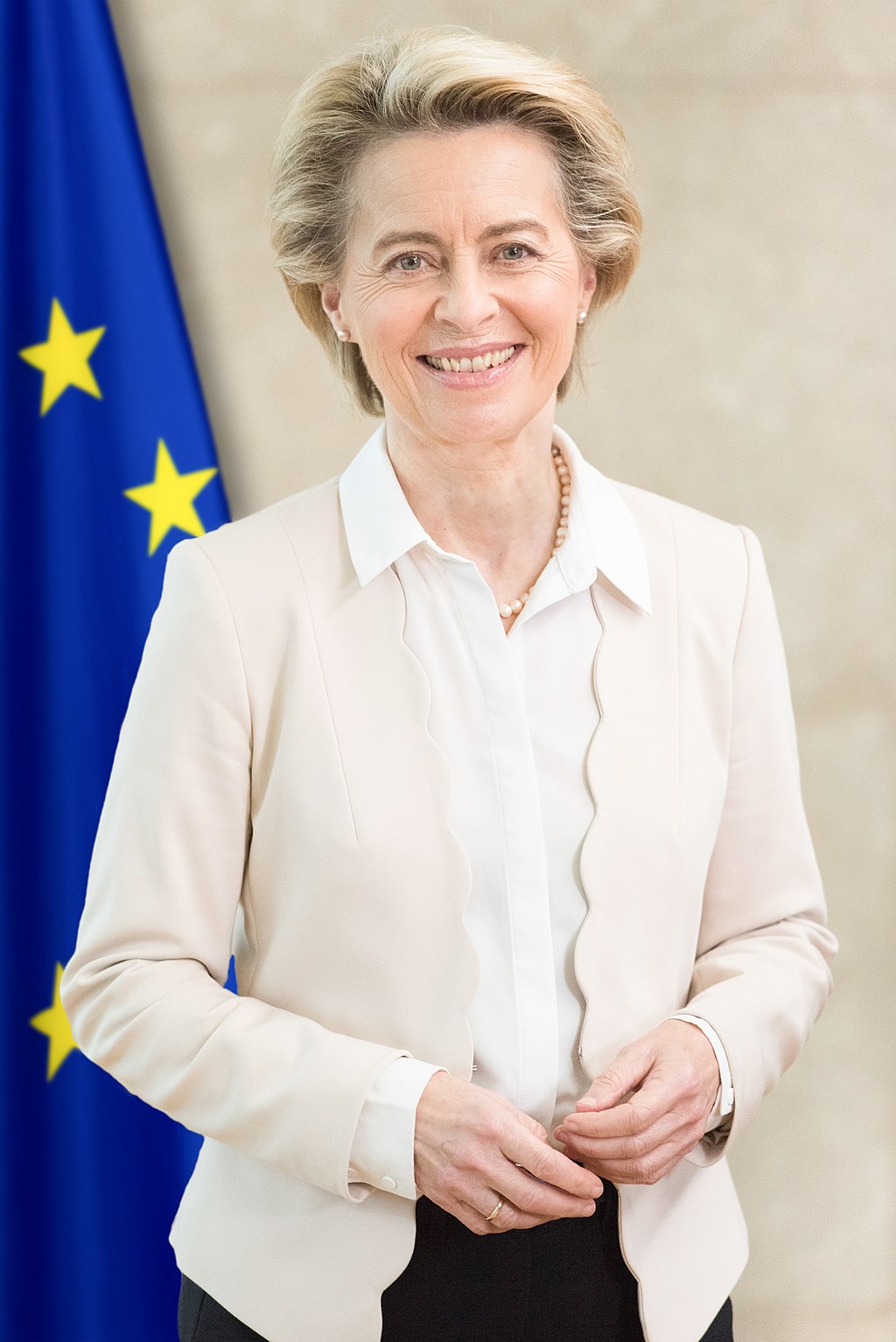
President Ursula von der Leyen’s recent visit to the Western Balkans was aimed at advancing the region’s EU accession process and integration into the European single market. The tour included stops in Albania, Kosovo, Montenegro, and Republic of North Macedonia, where von der Leyen met with local leaders and discussed the EU’s €6 billion Growth Plan for the Western Balkans. The visit highlighted the importance of domestic reforms and the need for continued efforts to achieve EU membership.
Von der Leyen’s visit confirms accelerated Western Balkans integration, but process remains conditional on reforms. This was also linked to the level of domestic structural reforms in individual countries.
As the EU enlargement process becomes increasingly important for the Union, as well as the personal ambitions of the European Commission President to see it happen during her term, Von der Leyen was well-prepared, and her messages were short, positive, accurate, and tailored to each of the countries she visited.
In Tirana.
First message of the President of the European Commission was simple: the goal is in sight. Albania is among the frontrunners in the accession process. Albania has made remarkable progress opening the final cluster of negotiating chapters and in July, it closed the first three chapters, including external relations. It means Albania is fully aligned with EU common foreign and security policy, and this is very important for the accession process.
Nevertheless, now is the time to keep the focus this leads to her second message. More reforms are needed across all open chapters – on justice, on the electoral framework and the protection of the environment. Adopting reforms is important, and it is equally important to implement them thoroughly. To make sure they deliver real change, for the people of Albania. This requires genuine engagement across political lines and a strong, continued dialogue with society, to address its concerns.
The third message is about the Growth Plan. As Albania is preparing to join the Union, the EU opens parts of its Single Market. As a result, Albania is doing very well on the Growth plan. It has achieved over 80% of reform steps and has already received 213 million euro in EU funds. More payments are expected in the coming weeks.
The last message was the following: Accession will always remain merit-based and the European commission will present its pre-enlargement policy reviews, as well as will soon set out roadmaps for our most advanced candidates. Albania, of course, is among them.
Pristina.
EU has been Kosovo’s strongest partner and largest provider of financial assistance supporting reconstruction, economic development, reforms, and the constitution of a modern, democratic Kosovo.
Firstly, Fon der Leyen appreciated the measured response Kosovo’s Prime minister, and that of other political leaders on judgment of former president of Kosovo Hashim Tachi. For her this judgment is about the individual responsibility of the defendants. Kosovo’s resistance was not on trial. “And we must honour the memory of all victims. From all communities in Kosovo. Their memory must remain part of Kosovo’s path towards reconciliation and a shared future” Von der Leyen said.
Second point: the crucial importance of institutional stability. The new Assembly and the government have been formed. The next step is the election of a President. The dialogue between political parties is possible, and Kosovo should build on it.
Third point: Kosovo’s European future. Von der Leyen believes in a European future for Kosovo because she knows how deeply European the people of Kosovo feel. This is exactly what EU’s Growth Plan is about. The principle is the same across the region. EU brings more investment and progressively opens parts of its Single Market. In parallel, counties deliver the reforms needed. Kosovo can receive up to 882 million euro under the Growth Plan.
Kosovo’s European future is also about the kind of society it builds. Kosovo must protect its multi-ethnic character, and rebuild trust with the Kosovo-Serb community.
Podgoritsa.
The first message of the President of the European Commission was that the EU believes in Montenegro ’28 by 28′. This is why she came to Montenegro already three times this past year. Not only to show her personal support but also to commend Montenegro for the impressive work.
Montenegro has provisionally closed more than half of all negotiating chapters and has made important reform progress. Especially on the rule of law over the summer. And this has paved the way for the final stretch. The EU and Montenegro are working now to close all remaining chapters by the end of this year.
The second message was on the Growth Plan. The EU brings more European investments and, as Montenegro prepares to join our Union, EU opens parts of its Single Market to Montenegro.
Her last message was that Montenegro is getting ready. And so is the EU. Because enlargement is a two-way process. Candidate countries must be ready to join, without any question. And the EU must also be ready to welcome candidate countries that join the European Union. That is why next week the European commission will present its pre-enlargement policy reviews.
In a second step, the EC will soon set out roadmaps for the most advanced candidates. Montenegro, of course, is among them. These roadmaps will turn the path to membership into concrete steps.
Skopje.
Constitutional amendments are the key step North Macedonia must take to advance its EU accession process and open the first negotiating cluster, Fundamentals, European Commission President Ursula von der Leyen said at a joint press conference with Prime Minister Hristijan Mickoski in Skopje.
Von der Leyen linked the prospect of rapid progress for North Macedonia to overcoming the current impasse. She stressed that the European Union welcomed the country with its identity and language and cited the Prespa Agreement with Greece as an example of political courage.
Acknowledging the sensitivity of the issue, von der Leyen emphasised that North Macedonia belonged at the European table. She said Macedonian culture and language could enrich the Union, in keeping with its commitment to unity in diversity.
North Macedonia had already demonstrated its ability to make bold decisions about its future, she added. The Prespa Agreement showed how two countries could choose to turn the page and write a new chapter together. It had opened the way to NATO membership, and North Macedonia is now a valued ally.
She added that a pre – enlargement policy reviews would also be presented that week.
The EU already had roadmaps for countries further along in the accession process that were opening and closing negotiating chapters, she explained. In her view, North Macedonia could advance very quickly once the current impasse was overcome, although further work remained.
Mickoski focused on relations with Bulgaria, calling for clear agreements and obligations and for the accession process to be protected from “new bilateral conditions”. He said that these issues to be resolved through dialogue, goodwill and mutual respect and he expected the EU to be involved in this process.
He identified a possible bilateral meeting during forthcoming visit of his foreign Minister Mucunski to Sofia for conference on Corridor VIII as a concrete next step.
Von der Leyen confirmed his account, saying they had agreed on an initial step the following week.
Proposing a bilateral meeting with Bulgaria right now isn’t so fair on von der Leyen’s part, because the issue isn’t really about Bulgaria anymore. In 2022 North Macedonia accepted the so-called French proposal, endorsed by all EU member states. The issue is therefore not a bilateral dispute or a blockade. Under the Negotiating Framework, North Macedonia is required to include Bulgarians in its constitution as a condition for negotiations with the EU. It must also honour the 2017 Treaty of Friendship, Good Neighbourliness and Cooperation with Bulgaria and the two protocols under it.
It’s also worth noting Von der Leyen’s refusal to visit Serbia and Bosnia and Herzegovina. Apparently, the mass attendance at General Ratko Mladić’s funeral, including the military honors given to him, deeply affected the President of the European Commission.
Maybe Brussels is already aware that Belgrade has no desire to join the EU and wants to maintain its status among the non-aligned countries, as well as its multi-vector foreign policy.
In the EU are probably also expecting favorable results from the parliamentary elections in October, as well as the presidential elections in December this year.
They still need to understand how strong Belgrade’s influence in Skopje is, which for the third year in a row has determined North Macedonia’s firm stance on European proposals.