The westernbalkans.
More concrete conclusions country by country according to the European Commission:
Montenegro has made remarkable progress toward EU accession, having provisionally closed 21 chapters to date. Montenegro could provisionally close the remaining chapters by the end of this year. The ongoing work on Montenegro’s accession treaty, alongside the adoption of Council Conclusions on the financial package for the country’s EU accession, confirms that Montenegro is close to the final stage of its accession process. Sustained reform efforts and broad political consensus remain essential for the country’s EU future.
Albania continues to make progress towards EU accession. It opened the last remaining cluster, met the interim benchmarks on the rule of law chapters, paving the way for the provisional closure of four chapters. Continued efforts are now needed across all remaining chapters. Reaching Albania’s ambitious but achievable objective of concluding accession negotiations by 2027 requires maintaining reform momentum and fostering inclusive political dialogue. Keeping up the momentum will require swift delivery on high-quality EU-related reforms. At the same time, the reporting period saw the country’s largest civic mobilisation since its democratic transition. EU accession is a whole-of-society approach that requires constructive dialogue.
Moldova has continued to make steady progress on its EU accession path, having opened four clusters over the past year. The Commission’s assessment remains that Moldova has met the conditions required to open all remaining clusters. Moldova has intensified the alignment of its legislation with the EU acquis across all chapters and made further progress on key rule of law reforms. It has also made very substantial progress towards meeting the interim benchmarks under the fundamentals cluster. It is now important that Moldova continues to maintain the current pace of reforms to allow the country to pursue its ambitious but achievable objective of closing accession negotiations by early 2028.
Ukraine remains committed to its EU accession path despite the challenges caused by Russia’s war of aggression, having opened four clusters over the past year. The Commission’s assessment remains that Ukraine has met the conditions required to open all remaining clusters. Ukraine has continued to advance on key sectoral reforms. Its institutional framework for combating corruption remains effective, with specialised anti-corruption institutions continuing to operate overall independently and effectively. The focus should now be on meeting the interim benchmarks under the rule of law, as well as delivering on the roadmaps concerning the rule of law, the functioning of democratic institutions and public administration reform, and on the action plan on national minorities. It is important that Ukraine continues to accelerate the pace of reforms, to put the country in a position to meet its ambitious objective to close accession negotiations by the end of 2028.
Serbia did not make any substantive progress in accession negotiations. The reporting period was marked by increasing societal polarisation, including in the pre-electoral context. While Serbia advanced the work on the alignment with EU acquis and technical standards, negative trends related to the fundamentals of the accession process ran counter to the authorities’ declared objective of EU accession and the values underpinning Serbia’s EU path. Alignment with the EU’s Common Foreign and Security Policy (CFSP) remained low. Serbia also needs to implement all obligations stemming from the EU-facilitated Dialogue, which remains an integral part of its European perspective. The recent parliamentary elections in Serbia provided the newly elected government with a strong mandate for reforms. Progress towards EU accession will depend on the incoming government’s efforts to reverse the negative trends, prioritise the fundamentals, including democratic criteria, the judiciary and fundamental rights. It will need to restore respectful democratic dialogue, demonstrate a clear and unambiguous commitment to EU values, including as regards alignment with the EU’s foreign and security policy and efforts towards reconciliation, good-neighbourly relations and normalisation.
North Macedonia continued work on the opening benchmarks for the fundamentals cluster. This includes the adoption of the roadmap for public administration reform and continued work on the roadmap for the rule of law, alongside the accompanying action plan on minorities. North Macedonia has yet to adopt the necessary constitutional amendments, which it committed to undertake. Further efforts are needed to reinforce the rule of law. The country made significant progress in implementing reforms under its Reform Agenda, making it one of the top performers under the Reform and Growth Facility. Intensified efforts to adopt the necessary constitutional changes and address opening benchmarks remain essential to move the accession process forward.
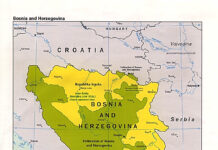
Bosnia and Herzegovina continued to publicly declare its commitment to EU integration as a strategic goal, while increasingly disengaging from its EU path. Political posturing, divisive rhetoric and anti-EU narratives increased ahead of the general elections. Following the elections, Bosnia and Herzegovina should swiftly proceed with setting up of all executive and legislative bodies and demonstrate a renewed commitment to delivering on EU reforms. Bosnia and Herzegovina also needs to urgently proceed with the necessary steps to fully benefit from the Reform Agenda adopted under the Reform and Growth Facility.
Kosovo saw its EU-related reform process stall amid a prolonged institutional crisis, which was alleviated by a political agreement on the election of the President. While some progress was recorded in the area of serious and organised crime, and full alignment with the CFSP, concerning developments were noted as regards the functioning of the judiciary and the respect for fundamental rights. Following the transfer of local governance in northern Kosovo, the Commission lifted its measures against Kosovo, re-engaging through the Stabilisation and Association Process Dialogue and resuming the delivery of financial assistance. While the support for European path remains strong, Kosovo needs to step up with the reform process and implement all obligations stemming from the EU-facilitated Dialogue, which remains an integral part of Kosovo’s European perspective. The Commission stands ready to prepare an Opinion on Kosovo’s membership application if requested by the Council.
Türkiye remains a candidate country and a key partner for the EU. The EU has continued to advance relations with Türkiye in a phased, proportionate and reversible manner, engaging in areas of mutual interest. However, legal actions brought against elected officials, opposition figures and civil society have intensified, raising growing concerns about Türkiye’s adherence to core democratic principles. The gap between Türkiye’s declared objective of joining the EU and its backsliding on the fundamental political criteria for EU accession has widened further. The underlying factors that led to the standstill in the accession negotiations in 2018 remain unaddressed.
Georgia‘s EU accession process remains de facto halted, and the Commission’s assessment of Georgia as a candidate country in name only remains valid. Georgia continues to fall short of the nine steps set out in the Commission’s recommendation for candidate status, as the ruling party has continued to undermine democratic principles, the rule of law, fundamental rights and civic space, while enabling further state capture. Unless Georgian authorities change course and recommit to the fundamental principles underpinning EU accession, Georgia will continue to miss out on the benefits of candidate status and the pre-accession process. The EU’s longstanding support for Georgia’s independence, sovereignty and territorial integrity remains unwavering, as does its support for the European aspirations of the Georgian people.
Comments: From the European Commission’s reports on the first reading, several main conclusions emerge:
– The leading role of Montenegro is confirmed, as well as the stable development of processes in Albania, despite recent events in the country. Specific deadlines are already being set for the completion of Enlargement towards these two countries. Still, the EC has left itself some room for maneuver regarding Albania;
– The position that the next two EU enlargement countries will be Moldova and Ukraine is increasingly solidified;
– The conditions for starting negotiations with the Republic of North Macedonia are confirmed, including the requirement (presented as a commitment by North Macedonia) to change the Constitution;
– Serbia is pushed to the periphery of the process despite the demonstrated support for Alexandar Vučić from EU leaders. However, a door is left open to continue and accelerate the process after the October 25 elections this year;
– The process with Turkey has been blocked for 8 years and it is unlikely that a reasonable argument can be found for its continuation. Especially after Erdogan’s statement that Turkey’s membership in the EU is no more a priority.