Thewesternbalkans.
How the elections came about
After 14 years in power, Serbia’s ruling Serbian Progressive Party (SNS) and its leader, Aleksandar Vučić, have lost the parliamentary elections. Following two years of protests against corruption and a struggle for greater democracy, the students—organized under the “Student List” (SL)—are taking over the governance of the country.
On Sunday, October 25, snap parliamentary elections were held in the Republic of Serbia. These were the most contested elections in the 36 years since the restoration of a multi-party system in Serbia. The vote was intended to defuse political tensions in the country—tensions fuelled by nearly two years of protests by students against the corruption-plagued rule of the Serbian Progressive Party (SNS).
The catalyst for these protests was a tragedy in Novi Sad in November 2024, when a newly renovated structure collapsed, claiming the lives of 16 people. The ruling authorities’ refusal to conduct a swift, transparent investigation into the tragedy or to take effective measures against the corrupt misuse of public funds shifted the focus of the protests toward political demands for the resignation of the ruling elite. Through marches in the country’s major cities and acts of civil disobedience, the students reached broad segments of the population, garnering support for their fight against corruption and for a more democratic system. In order to keep their ratings high, the rulers once again resorted to their tried-and-tested tactic of early voting, and with this move they also responded to public demands. This time, however, they failed.
The snap parliamentary elections
The elections for the 250-seat Skupština (national parliament) were held under the proportional representation system in a single, nationwide electoral district, with closed party-list representation. A total of 18 electoral lists (parties, coalitions and representatives of minorities) with 2,418 candidates participated in them. The distribution of parliamentary mandates is made up of party and coalition lists that have received at least 3% of the votes. Parties of national minorities may enter the Assembly with votes below the 3% barrier, according to special rules.
About 6,45 million people had the right to vote, 8,392 polling stations were established, of which 93 were outside the country. Given the high stakes, the elections were held with a record voter turnout for the country – 62%.
Election Results
According to preliminary results from the Republic Electoral Commission, with 97% of the data from polling stations processed, the highest number of votes has gone to Vučić’s main opponent—the newly formed student protest movement “Student List – Students Win” (SL), led by 56-year-old cardiologist from Novi Sad, Professor Dr. Ilija Srđanović. SL secured the support of 52.65% of voters and is expected to win approximately 140 parliamentary seats, granting it an absolute majority in the National Assembly (Skupština).
The “Aleksandar Vučić – United Serbia” list—which, in addition to the SNS, includes nine smaller political entities (most notably the Party of United Pensioners, Farmers, and Proletarians of Serbia – Solidarity and Justice – PUPS] and the Serbian Radical Party – SRS)—received 39.22% of the vote. This secures up to 105 seats for the coalition, placing it in the role of the opposition in the new parliament.
According to the preliminary results, none of the other political entities that participated in the election with their own lists will secure seats in the new National Assembly. Having failed to reach the 3% electoral threshold, they remain outside of parliament. Ethnic minority parties, however, which are subject to special rules regarding the allocation of seats, have a chance to enter parliament with a small number of representatives (up to 5).
Contrary to expectations, the elections took place without any significant clashes between the supporters of the two main opposing factions. The deployment of police and Serbian Gendarmerie units at key locations prevented acts of violence on election day and contributed significantly to the peaceful conduct of the vote. However, concerns regarding voting irregularities were confirmed. Violations were recorded at 29% of polling stations—most commonly involving pressure on voters, vote-buying, the organized transport of voters, breaches of ballot secrecy, group or repeat voting, and the duplication of electoral rolls. Given the close margin between the two leading factions, these irregularities could have proven decisive for the final outcome of the vote.
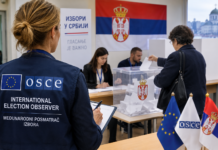
The elections attracted significant interest from 57 international organizations and associations. A total of 637 international observers monitored the electoral process, including representatives from the Organization for Security and Co-operation in Europe (OSCE), the Parliamentary Assembly of the Council of Europe, the European Parliament, and others.
Initial reactions from the main political factions
Immediately after the polls closed, SNS leader Aleksandar Vučić issued a special statement categorically declaring that the Student List was winning the snap election. This contributed to easing of the tension from election day among supporters of the SNS and SL.
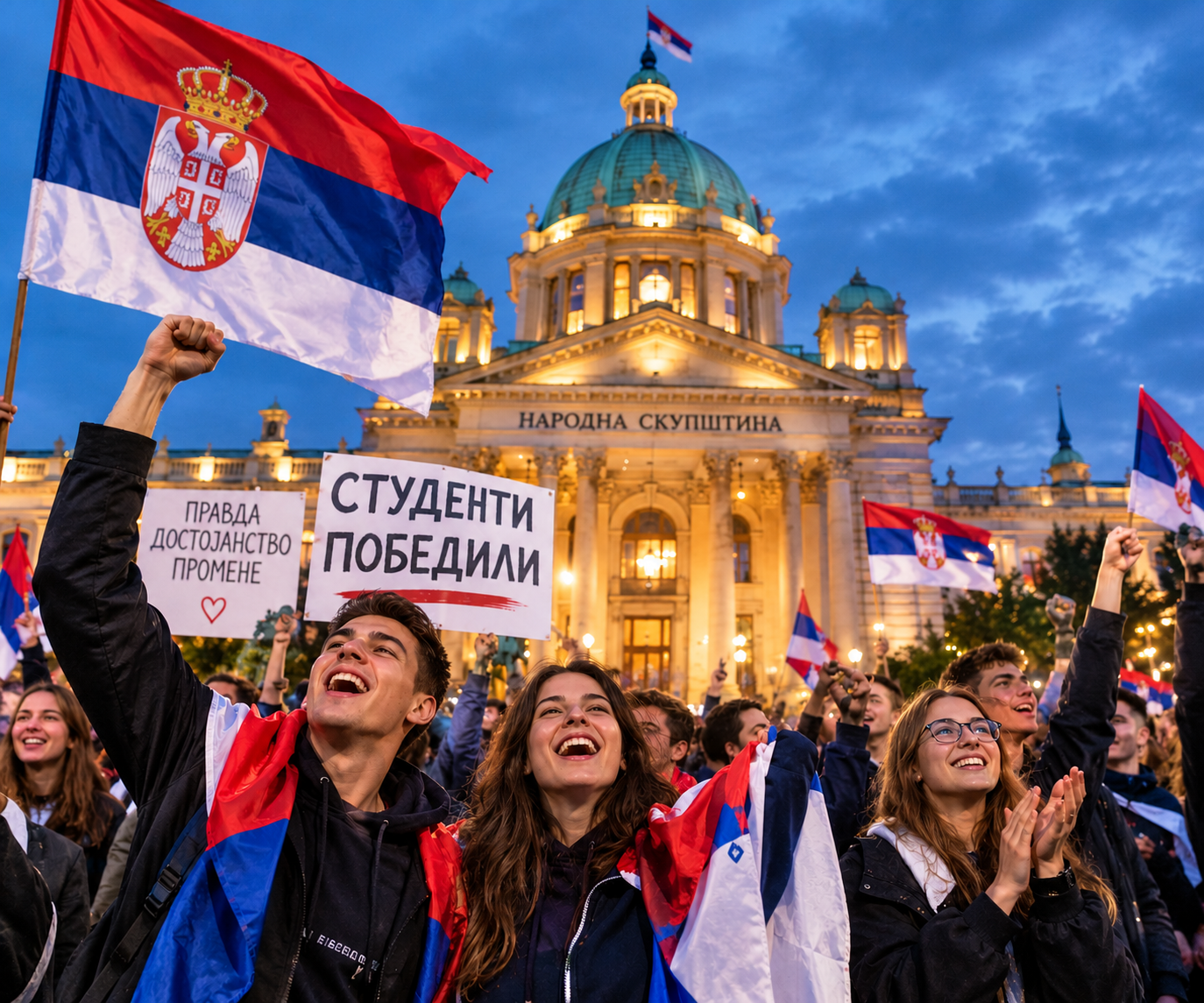
In an official statement, representatives of the Student List emphasized that “the hope that Serbia can be a country of justice, freedom, and dignity has prevailed.” Leaders and supporters described it as a “victory of the people,” ushering in an entirely new era that will encourage young people to remain in the country. Amidst widespread street celebrations in Belgrade, Novi Sad, and Niš, SL representatives explicitly urged their supporters to remain completely calm, thereby ensuring a peaceful transition.
What happens next, leading up to the formation of the parliament and the new government?
Within 96 hours of the close of voting (in this case, by the end of October 29), the Republic Electoral Commission (REC) publishes the election results in the Official Gazette of Serbia. Within ten days of the publication of the results, the REC allocates seats to candidates from the party lists, following the order in which they appear on those lists. The first session of the Serbian Parliament must be convened no later than 30 days after the announcement of the final election results. The Parliament is considered officially constituted once the mandates of at least two-thirds of the Members of Parliament have been confirmed. Before proceeding to the election of the executive branch, the Parliament must elect its leadership—a Speaker and Deputy Speakers and appoint a new Secretary General. Parliamentary groups are formed, and standing committees are established. Immediately following the constitution of the Parliament, the most critical political process begins: the formation of the country’s new government. The President of the country is required to hold formal consultations with representatives of all elected parliamentary groups and formally propose to the Parliament a candidate for Prime Minister who is capable of securing the support of at least 126 deputies (a simple majority). The procedure for the vote on the Cabinet is subject to a strict deadline: it must take place within 90 days of the constitution of the Parliament. Should the National Assembly fail to elect a new government within this 90-day period, the Parliament is automatically dissolved, and the President is required to call for new snap parliamentary elections.
Challenges for SL as a governing entity
SL gained public trust by focusing on a message of opposition to corruption and to Vučić’s style of governance, which bears the hallmarks of authoritarianism. Its electoral list includes 250 prominent intellectuals—professors, academics, physicians, cultural figures, and activists who are united primarily by their shared concern regarding the abuse of state power. However, the composition of its parliamentary group is heterogeneous, and the Student List lacks a clearly defined political identity. This could potentially lead to internal disagreements—both during the group’s initial appearances in the National Assembly and within the political entity as a whole. The post-election period will involve several significant political developments, such as the formation of a cabinet, the drafting of a governing program (including the adoption of the 2027 budget), the definition of the new cabinet’s core foreign policy priorities, and the nomination of a candidate for the early presidential elections (scheduled for December 2026)— all of which will put the unity of SL to the test.
Over the coming months, a major challenge for the country will be the smooth transition of power to SL. Given the movement’s lack of experience in governing the nation, comprehensive support from European institutions will be crucial for the successful execution of its mandate. However, European institutions are likely to once again set a condition for the development of the dialogue with Kosovo. Although the Student List candidates for parliament hold pro-European views, the Kosovo issue is a sensitive one for the Serbian society, and internal disagreements within SL regarding this matter cannot be ruled out.
After losing power, SNS leader Aleksandar Vučić will likely leverage his positions within the state apparatus, local government structures, and business circles to hinder the Studet L from establishing a stable administration. The SNS is likely to challenge the unity of the Student List, exploiting any difficulties the List faces to fracture its parliamentary group, trigger a political crisis, and precipitate new snap parliamentary elections.
It is evident that Serbia is entering a period of historic political change. This phase bears the hallmarks and spirit of the events of December 2000, when the Democratic Opposition of Serbia (DOS) won both the presidential and parliamentary elections. In the medium term, political tension within the country is set to persist. The ability of the Student List to consolidate itself as a unified political entity and form a stable government will be a decisive factor in the country’s new democratic transition.