Thewesternbalkans.
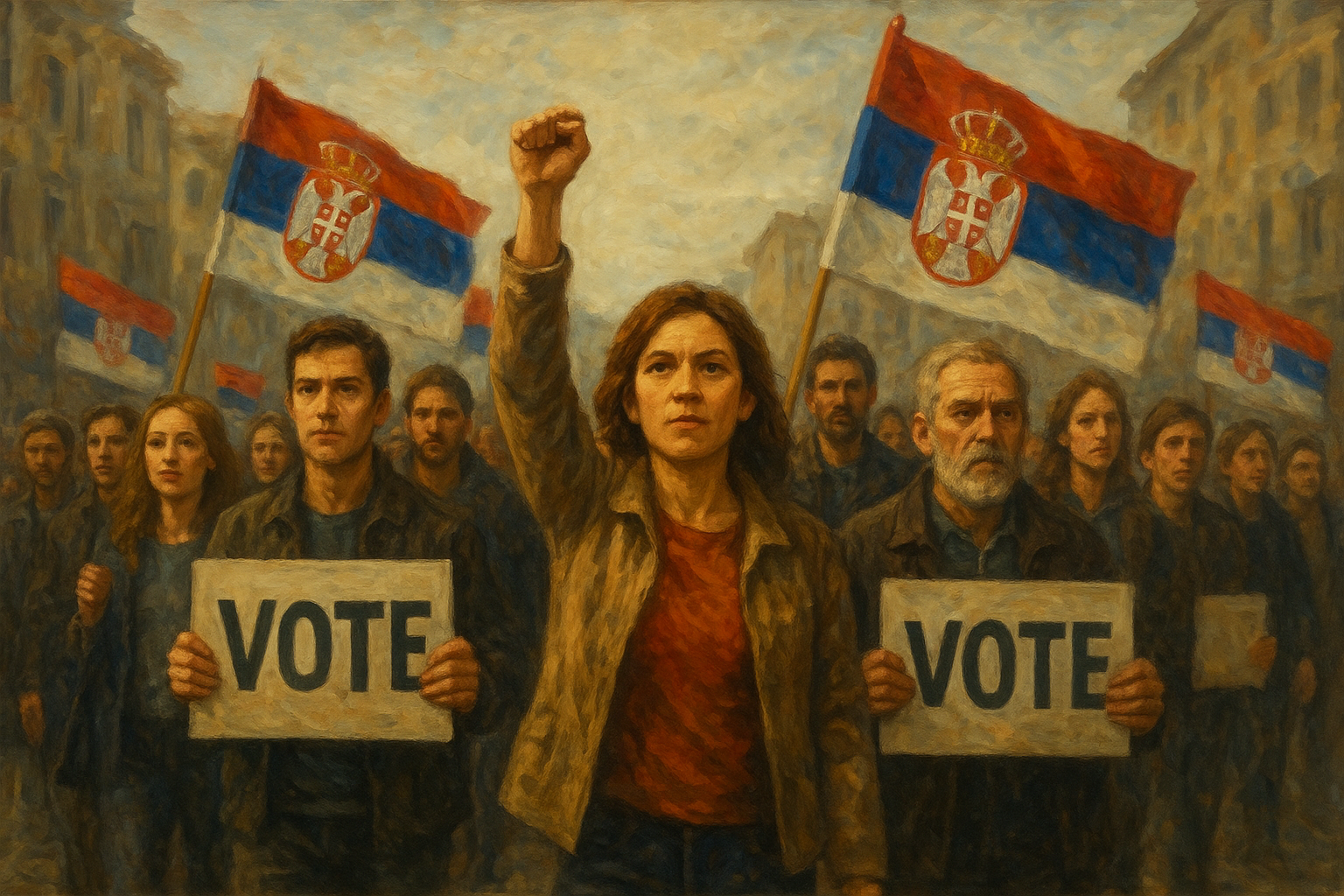
As was already decided on October 25 this year, early parliamentary elections will be held in Serbia.
Who are the main candidates and what are preliminary forecasts for these elections?
The official Lists on the ballot are as follow:
- 1. Aleksandar Vucic — United Serbia · Aleksandar Vucic (SNS) — Governing SNS-led list; its 2023 list took 46.75% and 129 of the 250 seats
- 2. Ivica Dacic — Factor of Stability · Ivica Dacic (SPS) — SPS with JS, SDPS and the Greens, in government with the SNS; 18 seats in 2023
- 3. Student List — Students Win · Ilija Srdanovic — New list from the protest movement; proclaimed on 69,099 verified signatures
- 4. Rasim Ljajic — Human (SDP/CDP) · Rasim Ljajic — Minority list of the Sandzak Democratic and Montenegrin Democratic parties
- 5. Alliance of Vojvodina Hungarians · Balint Pasztor — Hungarian minority list; 1.70% and 6 seats on the minority quota in 2023
- 6. Usame Zukorlic (SPP) — Movement for Unification · Usame Zukorlic — Bosniak minority list; the SPP list took 0.76% and 2 seats in 2023
- 7. Russian Party — Serbia in BRICS · Slobodan Nikolic — Russian minority list; 0.30% and one seat on the minority quota in 2023
- 8. Authentic Right — Dr Milos Jovanovic · Milos Jovanovic (Novi DSS) — Opposition right, with the monarchists and NADA, which took 5.02% and 13 seats
- 9. European Serbia · Marinika Tepic and Zdravko Ponos — Opposition; its SSP and Srbija centar were in the 2023 list that won 65 seats
- 10. SDA of Sandzak — Guardians of Sandzak · Party of Democratic Action of Sandzak — Bosniak minority list; 0.57% and 2 seats on the minority quota in 2023
- 16. Vladimir Gajic — Alternative for Serbia · Vladimir Gajic (Narodna stranka) — Opposition, with BUNT; the 2023 Narodna stranka list he stood on won no seats
- 17. Albanian Coalition · Koalicioni Shqiptar — Albanian minority list; an Albanian list took 0.35% and one seat in 2023
How the National Assembly is elected
All 250 seats are filled at once by closed-list proportional representation in a single nationwide constituency: there are no districts, and every voter in the country marks the same ballot paper. Seats are allocated by the d’Hondt method among lists that clear a 3% threshold, with an exemption that lets lists representing national minorities take seats on a much lower, naturally calculated quota — which is how parties of the Hungarian, Bosniak and Albanian communities have consistently held a handful of seats between them. At least 40% of the candidates on any list must be women. A list may be submitted by a party, a coalition of parties or a citizens’ group, and may carry up to 250 names.
Polling stations are open from 07:00 to 20:00 on the day, and Serbian citizens abroad vote at diplomatic missions. The election is run by the Republic Electoral Commission (RIK) with local commissions and polling boards beneath it, and RIK is the body whose figures appear on this page.
The governing parties are standing on a single list, “Aleksandar Vucic — United Serbia“, which the Republic Electoral Commission proclaimed first and which appears at number one on the ballot. Its bearer is Vucic himself: the SNS main board decided unanimously that the sitting president (in that moment) would head the list and be the party’s candidate for prime minister, a role he has not held since 2017.
The protest movement is standing separately rather than behind the existing opposition parties. Its list, “Student List — Students Win“, was formed on the day the election was called and proclaimed on 15 September with 69,099 verified signatures of support; first on it is Ilija Srdanovic, a professor at the medical faculty in Novi Sad.
The established opposition is divided across several lists rather than reassembled into one: European Serbia carries the Party of Freedom and Justice and Serbia Centre, both of which were in the broad Serbia Against Violence coalition that won 65 seats in 2023; Authentic Right carries Novi DSS, the monarchists and the rest of the NADA coalition; and Alternative for Serbia carries the Narodna stranka. One list that would have carried the People’s Movement of Serbia, “Izbor naroda”, with Miroslav Aleksic, Milos Parandilovic and Aleksandar Jovanovic Cuta, was proclaimed on 18 September and withdrawn on 24 September, and the Commission renumbered the lists behind it.
Actual forecasts:
The leading political force is “Aleksandar Vucic — United Serbia” (SPS) of the former president with 44.7 % foracast. Second could be Student lists (lead candidate – Ilija Srdanovic) – 29.7 %. Third is forecasted SPS of Ivica DACIC 5.3 %, and fourth is European Serbia carries the Party of Freedom and Justice and Serbia Centre leaded by Marinika Tepic – 4.3 %.
lija Srdanović, born 7 August 1970 is a Serbian physician and university professor at the Faculty of Medicine of the University of Novi Sad. He also works as a cardiologist at the Clinic for Cardiology of the Institute for Cardiovascular Diseases of Vojvodina in Stremska Kamenica.
Srdanović publicly supported the student-led anti-corruption protests and had spoken at several student demonstrations. In September 2025, he alleged that the Serbian government had used chemical agents against demonstrators. Srdanović was revealed to be a candidate of the Student list on 14 September 2026.
As a healthcare professional, Srdanović has advocated for a healthcare system that “will be at service of citizens and based on equality for all patients”. He has also supported decentralisation of the healthcare system. In an interview with the FoNet news agency, Srdanović said that his goal was building “a better Serbia, nothing else is important“.
Srdanović maintains that Kosovo is an integral part of Serbia under the country constitution and pledged to find the best solutions for Kosovo Serbs and promised not to abandon them. In the same interview, Srdanović stated that EU integration is not a current focus or a priority for the students’ list, adding that Serbia’s immediate goal is “existential survival”.
Marinika Tepić is a Serbian opposition politician and vice-president of the Party of Freedom and Justice (SSP), known for her outspoken criticism of President Aleksandar Vučić and the ruling SNS. A former journalist and Vojvodina sports and youth secretary, she has served multiple terms in the National Assembly, leading SSP’s parliamentary group. Tepić has exposed alleged government-linked corruption and abuses, and in 2023 staged a hunger strike over disputed elections.
Ivica Dačić is a Serbian politician, leader of the Socialist Party of Serbia since 2006, and current Deputy Prime Minister and Minister of Internal Affairs. Rising under Slobodan Milošević as SPS spokesman, he has held key posts including Prime Minister (2012–2014), Minister of Foreign Affairs (2014–2020, 2022–2024) and Speaker of the National Assembly. Known for pragmatic, populist and nationalist politics, he signed the Brussels Agreement advancing Serbia–Kosovo normalization and has balanced pro‑EU diplomacy with close Russia ties.
Comments: Judging by the averaged results of the sociological forecasts, a consolidated opposition to Aleksandar Vučić has indeed emerged. The question is what goals this opposition actually has. And when we talk about European integration, it becomes clear that at the moment the political forces firmly supporting Serbia’s integration into the EU are no more than 10%. Still, these are just forecasts. We’ll have to see the actual results of the elections on October 25.