Thewesternbalkans.
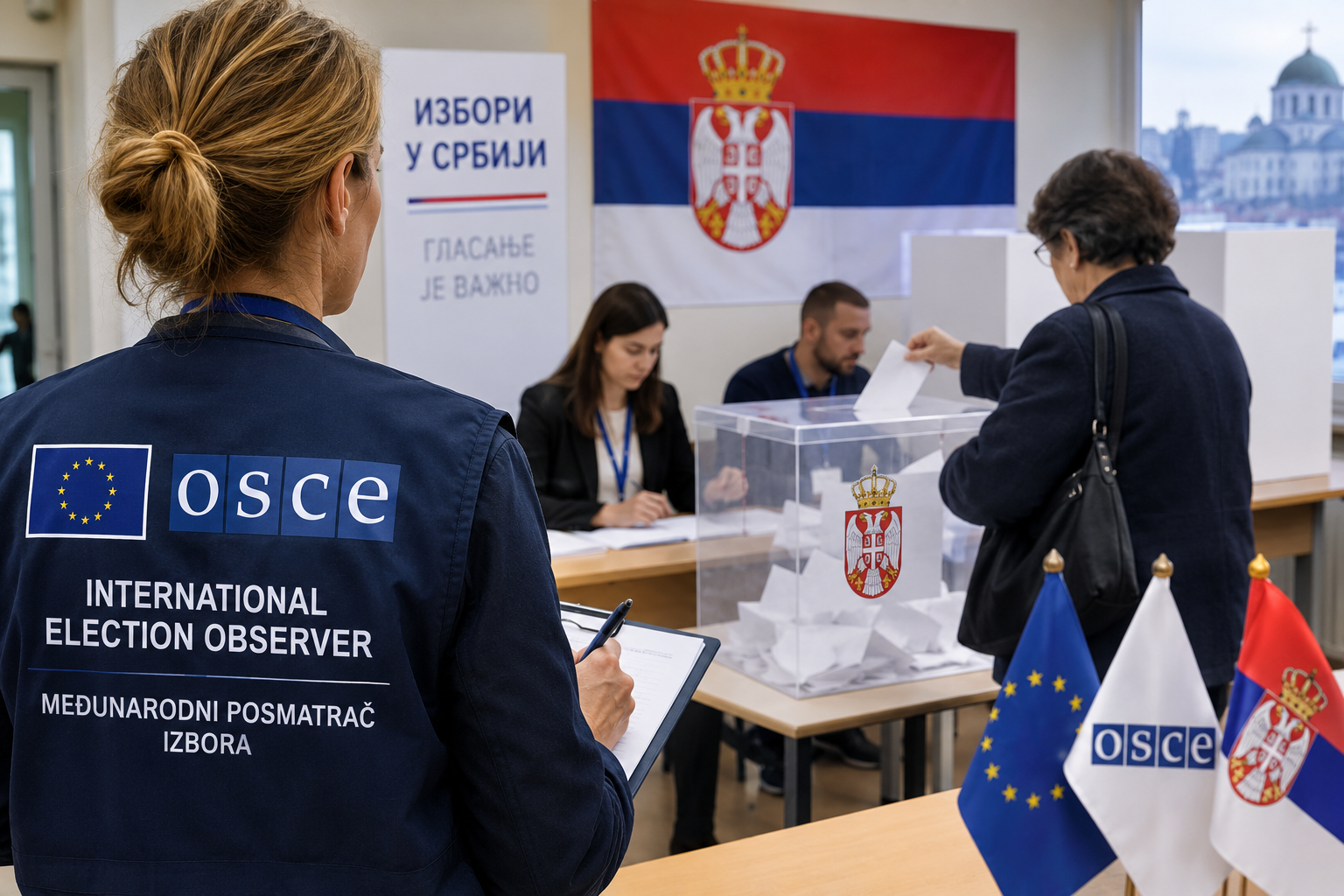
Ana Brnabić, Speaker of the Serbian National Assembly and Acting President of the Republic of Serbia, sent a letter on October 19 to the President of the European Parliament (EP), Roberta Metsola. In the letter, she expressed a strong protest regarding the composition of the EP delegation—scheduled to visit Serbia from October 22 to 26 to observe the snap parliamentary elections—and specifically objected to the appointment of Andreas Schieder as its head.
According to Brnabić, the past actions of certain delegation members demonstrate clear political bias. She argued that their public statements in the media following the 2023 parliamentary elections in Serbia—alleging “vote-buying” and the presence of “phantom voters”—were politically motivated, false, and aimed at altering the election results. The inclusion of individuals who express negative views of the ruling authorities in Belgrade, and who openly voice expectations for their removal from power, suggests that the delegation is arriving in Serbia with pre-formed conclusions regarding the upcoming electoral process. In her letter, Brnabić further noted that Andreas Schieder, who served as an observer during the 2023 parliamentary elections, violated the Code of Conduct for International Observers. His appointment as head of the European Parliament’s delegation for the upcoming elections is indicative of the assessment it is likely to deliver regarding the electoral process on October 26. Brnabić believes that the European Parliament has dispatched an observation mission with predetermined political biases, aimed specifically at supporting the “Student List.”
Comment:
The stakes in the upcoming parliamentary elections are exceptionally high for the Serbian Progressive Party (SNS)—which has been in power for over 14 years—and its leader, Aleksandar Vučić. For the first time, the SNS faces a formidable opponent in the newly formed political entity pro-European “Student List” (SL), whose primary objective is to restore democracy in the country and oust the current administration. Naturally, public attention and the focus of international observers are centred on the “Student List”, which is participating in elections for the first time and stands as the principal challenger to the ruling SNS.
The leader of the SNS resigned from the presidency; to ensure his party’s success, he staked his own reputation on the outcome and is now heading the party’s electoral list. He asserts that his party will win the vote by a substantial margin—at least 500,000 votes ahead of the second-placed political force. However, according to the latest polls on electoral sentiment (as of October 18, 2026), the ruling party, the SNS, holds a narrow lead with 44.3% of the vote (a decline of 3.8 percentage points). Meanwhile, the “Student List” has seen a significant surge—gaining 8.0 percentage points over the last 30 days—to reach 41.7%. This would translate into 118 seats for the SNS and 111 for the SL in the 250-member National Assembly.
The rise in the SL’s standing is clearly intensifying tensions within the SNS; should the party face defeat, its political elite will likely seek to shift the blame—a point underscored by the sharp tone adopted by Brnabić. Furthermore, the fact that Brnabić extended an official invitation to the European Parliament to send an election observation mission only at the very last minute is telling of the Serbian leadership’s attitude toward such a mission.