Thewesternbalkans.
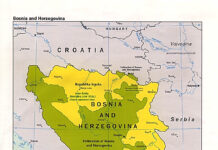
On November 3, the Central Election Commission of Bosnia and Herzegovina (BiH) adopted a decision to confirm and publish the results of the general elections held on October 4 of this year. Following the publication of these results in the Official Gazette of BiH, the official timelines commence for the formation of legislative bodies at the state level and within the two entities: the Federation of Bosnia and Herzegovina (FBiH) and Republika Srpska (RS).
The constitution of legislative and executive authorities at both the state and entity levels involves a complex procedure designed to safeguard the vital interests of the country’s constituent peoples – Bosniaks, Serbs, and Croats.
The parliaments of the state and the FBiH are bicameral, with representatives in their lower chambers elected directly through general elections. Similarly, members of the unicameral National Assembly of Republika Srpska are also elected directly.
In the FBiH, once the unicameral parliaments of the ten cantons (which are directly elected) are constituted, they will appoint members to the House of Peoples (the upper chamber) of the FBiH Parliament. This body, in turn, will be responsible for selecting five representatives each from the Bosniak and Croat communities to serve in the 15-member House of Peoples (the upper chamber) of the state-level Parliament of BiH. The remaining 5 members of the House of Peoples of the Parliamentary Assembly of BiH will be determined by the National Assembly of Republika Srpska.
In the general elections in BiH, the winners of the race for the country’s tripartite Presidency are Denis Bećirović (from the Bosniak community), Darijana Filipović (from the Croat community), and Željka Cvijanović (from the Serb community). Over the next four years, they will hold the Presidency on a rotating basis, serving 8-month terms each. Savo Minić, from Milorad Dodik’s Alliance of Independent Social Democrats (SNSD), was elected President of Republika Srpska. The President of the Federation of BiH (FBiH) – along with the Vice-Presidents – will be elected by the two chambers of the Federation’s parliament through a complex procedure.
According to the announced election results, the leading ethnic parties representing the country’s three constituent peoples secured the most votes for the Parliament of BiH: the Party of Democratic Action (SDA, a Bosniak party), the Alliance of Independent Social Democrats (SNSD, representing the Serb community), and the Croatian Democratic Union of Bosnia and Herzegovina (HDZ BiH).
What is the party representation in the 42-seat House of Representatives (the lower chamber) of the Parliament of BiH?
Bakir Izetbegović’s Party of Democratic Action has managed to regain its leading position within the Bosniak community and will hold 9 seats. The SNSD will be represented by 6 deputies; the Social Democratic Party of BiH (SDP BiH), which defines itself as multi-ethnic – 5 seats; the coalition of Croat parties centered around the HDZ BiH – 4 seats; and the Party for Bosnia and Herzegovina (SBiH) – 3 seats. The remaining seats are distributed among smaller ethnic coalitions and parties. In the 98-seat House of Representatives (the lower house) of the FBiH Parliament, the SDA will hold the largest number of seats with 31 deputies, followed by the SDP BiH with 16, the HDZ BiH with 15, the SBiH with 9, and others. The new National Assembly of Republika Srpska (83 seats) will be composed as follows: the SNSD will hold the most seats – 34; followed by the “Secure Srpska” Movement (PSS) with 12; the Serb Democratic Party (SDS) with 10; and others.
To conclude the electoral process and the establishment of legislative bodies at all levels in BiH, it is necessary to select members for the upper houses of the parliaments—both at the Federation level and at the state level. This will pave the way for addressing the most critical issue: the formation of the government of BiH.
Comment:
The results of the general elections indicate that the traditional ethnic parties in BiH have managed to regain their leading positions; they will play a decisive role in the formation of the country’s government over the next four years. Relations between the SDA, the SNSD, and the HDZ BiH, however, are deeply divided along ethnic lines, characterized by persistent political paralysis and a lack of a shared vision for the country’s future. Although the parties are compelled to participate in complex coalitions at the state level due to the structure of the Dayton Peace Agreement, their strategic goals are diametrically opposed.
Bosnian Serbs will strive for entity autonomy, with the ultimate goal of secession and potential unification with Serbia. Statements by SNSD leader Milorad Dodik – made following the country’s general elections – regarding the restoration of Republika Srpska’s (RS) powers in the areas of defense, border control, and intelligence, as well as the adoption of a new RS Constitution, clearly outline the steps in this direction. It is expected that Serb leaders will periodically block the functioning of central institutions in Sarajevo, challenge the legitimacy of the international community’s High Representative, and oppose any further centralization of the state. They will maintain constructive relations with the Croats to achieve tactical objectives and counter the Bosniak community’s push for state centralization.
The ultimate goal of the Bosnian Croat parties will likely remain the creation of a third Croatian entity. To this end, they can be expected to maintain constructive relations with Bosniak parties in the FBiH, while – in cooperation with Serb political groups – striving to limit Bosniak political dominance.
The establishment of a unitary and centralized state, alongside integration into NATO and the EU, has emerged over the years as the primary priority for Bosniak parties. Challenges for them will include the separatist ambitions of Banja Luka, as well as attempts to close the Office of the High Representative.
Political dynamics in BiH will continue to function as a “veto triangle.” Instead of reforming the economy and moving the country toward the EU, ethnic elites frequently employ nationalist rhetoric to mobilize their voters and preserve the status quo, as well as their control over the state resources.