Thewesternbalkans.
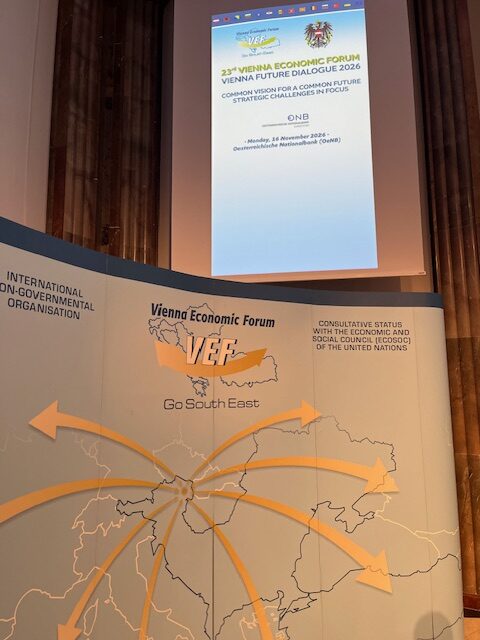
The 23rd edition of the Vienna Economic Forum took place on November 16, 2026, in the ceremonial hall of the Austrian National Bank. This year’s forum was held under the motto “Common Vision for a Common Future – Strategic Challenges in Focus” and under the patronage of Dr. Christian Stocker, Federal Chancellor of the Republic of Austria and Patron of the Vienna Economic Forum.
The event brought together representatives from governments, international institutions, and the business community, providing a platform to exchange views on current economic and political challenges, strengthen regional cooperation, and explore prospects for European development.
The 23rd Vienna Economic Forum—Vienna Future Dialogue 2026—was officially opened with welcoming remarks by Dr. Johannes Hahn, President of the Austrian National Bank (OeNB) and former European Commissioner.
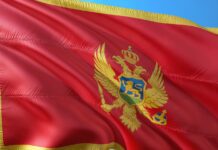
The focus of this year’s Vienna Economic Forum was Montenegro—a country anticipating EU accession in 2028. This explains the special participation of the Prime Minister of Montenegro, Milojko Spajić, in the forum. A special session was dedicated to marking the 20th anniversary of the restoration of Montenegro’s independence, its economic development, and its path toward European Union membership. During the session, Prime Minister Spajić delivered the keynote address and received the “Partner of the Year 2026” annual award.
Reflecting on the two decades since the restoration of independence, Spajić noted that European integration and economic growth are the two key pillars that will shape Montenegro’s future.
“Montenegro did not have to become European. Montenegro has always been part of Europe, not only by geography, but also by values. When Montenegro joins the European Union, we will not adopt other people’s values. We will take our place in the family whose values we have always shared,” Spajić said.
Addressing economic development, Spajić highlighted the significant transformation of the Montenegrin economy, noting that its nominal value has more than tripled over the past 20 years. The Prime Minister identified four sectors with the greatest potential: tourism, energy, information technology, and organic agriculture.
Spajić devoted a specific portion of his address to Montenegro’s progress in negotiations with the European Union. He noted that Montenegro has already closed 23 negotiating chapters, with the expectation that more will be closed this week.
“All our energy is now focused on a single goal: to close all remaining chapters by the end of this year and to sign the Accession Treaty next year. This goal is ambitious, yet achievable,” Spajić stated.
He added that the European Commission has also presented a financial package to support Montenegro’s accession.
Emil Brix, President of the Vienna Economic Forum, stated that within the broader context of defense and security, economic competition, strategic autonomy, and the enlargement of the European Union, the focus today is on the aspect of enlargement. “It is clear that only by succeeding here can we—as Europeans—demonstrate that we have a chance to be significant players in all these areas. It is also interesting that small Montenegro could prove pivotal in helping Europe become a more influential player,” he noted.
Johannes Hahn, President of the Austrian National Bank and former European Commissioner for Enlargement, remarked that Montenegro is making excellent progress regarding the reforms necessary for its European integration.
“Regarding the financial aspect—looking specifically at Montenegro—it is clear that the required investment would not pose a significant financial burden on the European Union. On the contrary, in many respects, it represents an exceptional opportunity and a sound investment—one capable of yielding substantial benefits and long-term results. Therefore, we should do everything in our power to accelerate the European Union enlargement process,” Hahn said.
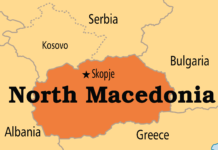
Aleksandar Nikoloski, Deputy Prime Minister and Minister of Transport of the Republic of North Macedonia, was another high-level participant from the Western Balkans at the Vienna Economic Forum. In his remarks at the Forum, Nikoloski emphasized that economic cooperation among countries in the region is essential, as it facilitates a unified approach and strengthens their competitive position in the global market.
Nikoloski pointed out that the challenge for the countries in the region lies in finding a way to jointly enter the European market and achieve a higher level of development. He also provided an update on development projects currently underway in Macedonia along Corridors 8 and 10, with a total value of between 5 and 6 billion euros. He noted that active work is being done to modernize the eastern section of Corridor 8—through the construction of highways and expressways—as well as to complete the railway line. “We are at an advanced stage regarding the commencement of construction for the high-speed railway on Corridor 10,” the Deputy Prime Minister stated.
“Our goal is for Macedonia to become a true crossroads in the Balkans—a place where business and the economy converge—while we simultaneously contribute to strengthening security,” said Nikoloski.
Also participating in the forum were Delina Ibrahimaj, Albania’s Minister of Economy and Innovation; Mimoza Kusari-Lila, Kosovo’s Minister of Industry, Entrepreneurship, Trade and Innovation; and Majda Adzovic, Montenegro’s Minister of Public Works.
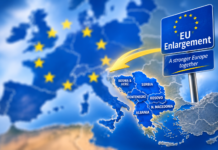
The panel discussions highlighted the political significance of the 23rd Vienna Economic Forum, specifically regarding the link between economic cooperation and the acceleration of European integration for the Western Balkans. A key focus was demonstrating the importance of infrastructure connectivity and regional economic cooperation for the region’s European prospects. The countries of the Western Balkans are well aware that they must now demonstrate their capacity to evolve from mere neighbors into partners.
A significant political aspect is the emphasis on economic integration as a tool for modernization, raising concrete questions regarding competitiveness, investment, and the business sector’s readiness for EU membership.
Statements from the forum participants make it clear that the Western Balkans do not lack a vision; rather, there is a gap between that vision and its implementation. It is not a lack of values, but a lack of actions aligned with those values. While the Western Balkan nations are progressing along the path of European integration at different paces, they are all united by a single call: to move from ambition to action.
Participants viewed the Vienna Economic Forum as an excellent opportunity to promote national development policies, foster new connections, and attract potential investors. Such forums facilitate new forms of institutional cooperation with European partners; in this context, high-level participants specifically highlighted the efforts and role of the Vienna Economic Forum’s Secretary General, Ms. Elena Kircheva—a former Bulgarian ambassador, the forum’s founder, and its driving force. The forum is officially recognized by the European Commission as a satellite event of the global EU Enlargement Forum 2026.