Thewesternbalkans.
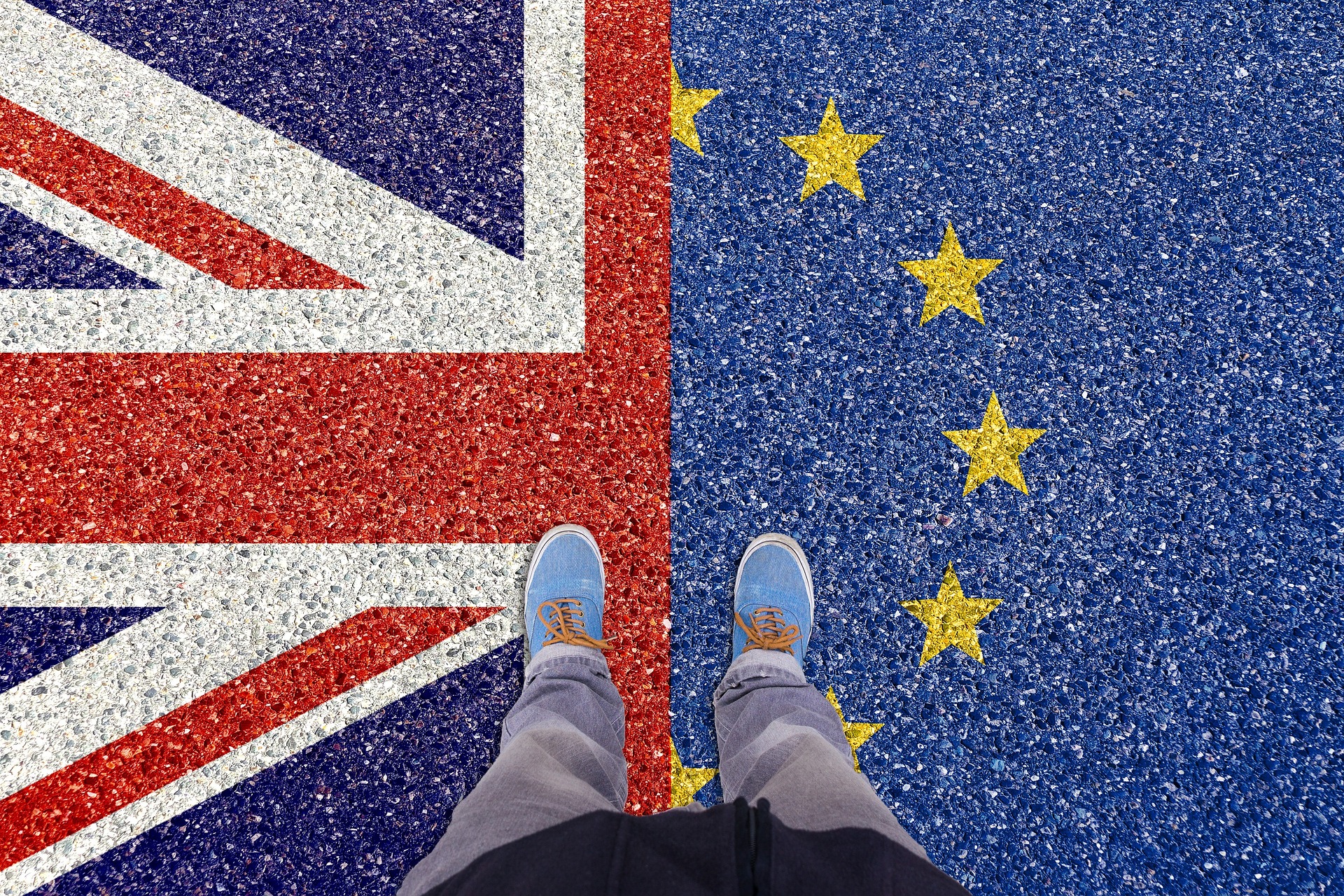
On 29 August 2026, Icelanders rejected the resumption of EU accession negotiations: 52.8% „No“ to 47.2% „Yes“, with a very high turnout of around 82.5%. The result is formally consultative, but the government has said it will respect it and the issue of membership will not be put back on the political agenda during its term.
The Icelandic “No” has a rather negative political effect on enlargement to the Western Balkans, but not because Iceland is “blocking” anyone. This is not a defeat for the enlargement process itself. The effect is on the political dynamics and trust in the enlargement process.
Iceland applied for EU membership in 2009 and accession negotiations began the following year. However, the country suspended negotiations in 2013 due to the then centre-right government’s opposition to the EU’s Common Fisheries Policy.
The instability of the Icelandic krona, fueling high inflation, the appeal of the eurozone, geopolitical uncertainty and Donald Trump’s interest in seizing Greenland have renewed public interest and debate in Iceland about the prospect of EU membership.
Iceland is already deeply integrated with the EU as part of the internal market through the European Economic Area (EEA) and the Schengen area. The country is also a founding member of NATO. Before the talks were suspended, Iceland had opened twenty-seven of the EU’s thirty-five thematic policy chapters for negotiations and had provisionally closed eleven.
A blow to Brussels
Iceland’s friction with the EU has mainly been in the areas of agriculture and fisheries, particularly over fisheries management and catch quotas. Fishing, which accounts for about a third of the country’s total exports, is an integral part of its economy, history and identity. Reykjavik fears that EU membership would weaken its control over its most valuable natural resource.
Reykjavik’s refusal to restart membership talks is certainly a strong blow to the EU establishment, which recently tried to attract Icelanders with promises of flexibility and concessions on fisheries policy. EU Enlargement Commissioner Marta Koss described Iceland as a “strong and strategic partner”. But Icelandic authorities have warned Brussels not to interfere in Iceland’s internal affairs and not to influence the citizens’ choice.
What does the Icelandic “No” mean for the Western Balkans?
The outcome of the referendum in Iceland is not good news for the candidate countries in the Western Balkans either.
The political symbolism is particularly important: an important symbolic “success” for the EU is disappearing. Before the referendum, Brussels hoped that Iceland could become a quick and relatively easy new member and thus improve public sentiment towards the next enlargement. A positive result would help convince the European public to support the admission of poorer countries, including Montenegro. This argument is now out of the question. The EU is losing the opportunity to show: “Enlargement works – a highly developed European country voluntarily returns to the EU and can become a member relatively quickly.”
For the Western Balkans, this is a significant loss, as the political narrative of enlargement failed to become a “success story”. With the exclusion of a rich and highly democratic country like Iceland from the enlargement process, it failed to become a pan-European process and remains confined within a geopolitical project for “problematic” countries in Eastern Europe and the Balkans. Brussels’ political narrative of “enlargement by 2030” will now have more difficulty transforming from an abstract goal into a realistic political project.
Most interesting is the impact of the Icelandic “No” on Montenegro. If accession negotiations were to resume, Iceland would easily reach Montenegro’s level as a favorite for the most advanced candidate. In this “package enlargement” scenario, which could also include Albania, the EU would restore the idea that enlargement can end with real accessions, not just endless negotiations. With the Icelandic “No”, the package model of rapid accession disappears and differentiated enlargement is strengthened.
On the other hand, Montenegro is consolidating its position as a leader – it remains the most advanced country in the Western Balkans. Now the pressure on the EU is greater for Montenegro to make an independent political success. This could also be positive in the medium term.
The paradox is that Iceland’s “No” could boost Montenegro’s importance, as it remains the only credible candidate for a quick success. If the EU wants to compensate for the political blow from Iceland, the most logical move is to turn the accelerated conclusion of the negotiations with Montenegro into a demonstration project. If Brussels wants to demonstrate that the enlargement process is ongoing, it has an incentive to say: “Okay, Iceland chose to stay out of the EU. But Montenegro is ready to join.” That is why the Icelandic result is not automatically expected to slow down Montenegro. Rather, it could increase the political cost to the EU if it fails to move Podgorica towards the final.
Therefore, experts will be particularly attentive to the period until the end of 2026, when it will become clear whether Brussels will react to the Icelandic “No” by accelerating Montenegro and Albania, or whether the more general “enlargement fatigue” will deepen.
For Serbia, the negative Icelandic vote is not necessarily bad news. Belgrade could show that other European countries are also skeptical about European integration on issues of sovereignty and self-interest. Serbia will be able to rely on the EU’s slow pace and will be able to argue that the EU should be more patient with Serbia, otherwise enlargement will be blocked.
On the other hand, Serbia will not be able to rely solely on the general geopolitical necessity of enlargement to obtain political concessions. Since there will be no new major European enlargement, Brussels can even more categorically set the conditions for normalization with Kosovo, foreign policy alignment with the EU and democratic standards. The Icelandic “No” does not punish Serbia procedurally, but it reinforces the logic of “membership according to readiness” rather than “membership because of geopolitical necessity”.
For North Macedonia, the outcome in Reykjavik is less favorable. Skopje receives an unpleasant signal that even a country that is already deeply integrated with the EU through the EEA and Schengen may prefer to remain outside the Union. This lends additional strength to the argument that the EU will not change its rules to keep every country in the process. Therefore, political pressure on North Macedonia to remove the blockages – to resolve the issue of constitutional changes and relations with Bulgaria – will increase.
One of the few positive effects of the Icelandic “No” is the strengthening of Albania’s position as a logical second candidate for a success story after Montenegro.
The Icelandic “No” will affect the Western Balkans less than some general slowdown of all six countries. The more likely result is a deepening of the differentiation in the accession process. This differentiation will have a particularly negative effect on Bosnia and Herzegovina and Kosovo. The risk of falling even further behind the leaders increases.
The biggest negative effect is on the idea of a “great enlargement”. The Icelandic result shows something politically inconvenient for Brussels: even a country that is already almost fully integrated economically and freely moves within the EU sees no sufficient reason to become a member. Iceland remains in the EEA and Schengen, i.e. receives most of the practical benefits of European integration without accepting full membership. This is a potentially very strong argument for Eurosceptic political forces in the Western Balkans: “Why rush to membership when even Iceland prefers its special status?”
Serbia and Albania in particular may find themselves emboldened by their offer of partial membership. Aleksandar Vučić and Edi Rama are not pushing for membership in the European Union, but for their countries to be admitted to the European single market and Schengen zone, just like Iceland.
The Icelanders’ decision has prevented the EU from showing that enlargement is once again becoming a European policy. However, it could spur the European Commission to work on changes to the enlargement approach that would make the current “gradual integration” more attractive. Reforms range from offering transitional periods for new members to join certain common policies, to reforming the Union itself – perhaps by reducing European institutions – and imposing legal safeguards to punish those joining for democratic backsliding.