
Thewesternbalkans.
Recep Tayyip Erdogan’s statement (16.08.2026) that “EU membership is no longer a priority for us” and the referendum in Iceland (29.08.2026) that rejected the renewal of EU accession negotiations have reinforced the feeling that the EU urgently needs to take action. Brussels needs to take important decisions that will show that the EU’s attractiveness has not diminished and that “the EU is the best political project in the world” – as EU Enlargement Commissioner Marta Coss pathetically stated at the Bled Strategic Forum on 01.09.2026.
Despite the efforts of European leaders to console themselves with the new opportunities offered by the partnership with Canada or the flirtation with Greenland’s membership or the many new trade agreements, they are clearly aware that the EU needs to change. The problem is that big institutions like the EU, NATO or the UN do not like changes.
The “Helsinki moment” of our generation is coming, Marta Kos announced in Zagreb to Croatian diplomats (25.08.2026). What she meant: In December 1999, the then EU leaders decided in Helsinki that 6 countries would start accession negotiations and the Union would be ready to accept new members after 2002. In the following years, a total of 12 countries joined the EU (in 2004 and 2007).
For the comparison with the Western Balkans, it is interesting that the six countries of the “second wave” (Bulgaria, Romania, Slovakia, Latvia, Lithuania and Malta) were given the opportunity to “catch up” with the first group (Czech Republic, Estonia, Hungary, Poland, Slovenia and Cyprus), which started negotiations back in 1998.
Today, the EU is increasingly coming under the „Zugzwang“ to transform the technical process of enlargement into a political one. The question is constantly being asked in the EU whether the enlargement of the Union should be a political or a technical issue. During the so-called enlargement fatigue, it was reduced to a technical process, to the level of foreign ministers. For a long time, the most important political decision was that there should be a technical process, although the geopolitical reason is the elephant in the room. It is time for accession to become „Chefs-Sache“ (Boss’s business), say European officials. But decisions must be made not only by EU bosses, but also by the leaders of the Balkan countries, who must give support and a signal that they are serious in their intentions.
Busy schedule
At the end of this month the EC will publish a new enlargement communication and in mid-October the heads of states and governments will sit down at the European Council and make finally some more concreate decisions, prepared by the European Commission.
On 15–16 November, the EU Enlargement Forum 2026 will be held in Brussels, where the acceleration of enlargement is expected to receive political momentum.
In December, the EU–Western Balkans Summit will be held in Brussels, which was decided at the previous similar summit in Tivat, Montenegro. An Annual Political Review of the progress of enlargement will also be held.
Will promises turn into decisions?
By the end of the year, a rather important period for enlargement is emerging, but a “big leap” is not expected for all six Western Balkan countries at the same time. Rather, the EU will make a differentiated assessment: Montenegro and Albania are in the phase of real acceleration of negotiations, while North Macedonia, Serbia, Bosnia and Herzegovina and Kosovo will remain in varying degrees of political and reform stagnation.
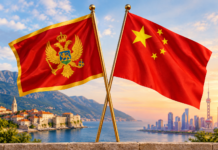
The most significant decision is expected to be for Montenegro. On June 30, 2026, the European Commission has already adopted the financial package defining the budgetary parameters for Montenegro’s future membership. This is an important signal, because the Commission notes that the Member States have reached an agreement to start drafting the Accession Treaty. Podgorica has already closed 18 chapters and by the end of the year it is possible to provisionally close 4 more chapters and advance the preparation of the Accession Treaty. At the same time, political pressure will increase on Podgorica to fulfill the remaining “fundamental” conditions and turn it into a kind of test for the EU’s new “accelerated enlargement” policy.
For Albania, additional opening/closing of negotiation areas and a concrete political assessment of whether Albania can follow Montenegro as a “front-runner” are expected by the end of the year.
For North Macedonia, the key decision will not actually be made in Brussels, but in Skopje. The EU continues to link the actual opening of the first cluster to the fulfillment of the conditions of the Council conclusions of July 2022, including constitutional amendments. No “compromise formula” is expected that would allow North Macedonia to start the actual opening of the clusters without fulfilling the condition.
For Serbia, as well as for Bosnia and Herzegovina and Kosovo, no breakthrough in negotiations is in sight. For these countries, the Growth Plan may prove to be more important than the negotiations themselves. The EU has €6 billion available for the Growth Plan for the Western Balkans for the period 2024–2027. But the funds are conditional. In April 2026, European Commissioner Marta Kos warned that over €700 million could be lost if the necessary reforms are not implemented by the set deadlines in 2026. This means that a number of concrete decisions on releasing or withholding European funds could be taken by December. In May, the Commission already released €158.9 million for Albania, Montenegro and North Macedonia. The importance of the Growth Plan should not be underestimated, as for some countries it could turn from an economic programme into a real conditionality mechanism by the end of the year.
2026 could be the year in which the EU finally moves from the “all six together” principle to “whoever is ready advances”. This is already visible in practice: the Commission releases funds according to the implementation of specific reforms, and Montenegro receives financial and procedural preparation for future membership. That is why by the end of 2026 the most important question will not be whether the Western Balkans will move closer to the EU – this is already the political consensus – but whether the EU will actually start “rewarding” individual countries with an accelerated membership procedure.
The clearest signal will come from the European Council, 15-16 October 2026, when we will find out whether the next summit will be a summit of promises or of decisions.
The upcoming EU Enlargement Forum on 15–16 November 2026 is likely to be an important indicator of this new policy; the forum is conceived precisely as a political impulse for the future trajectory of enlargement.
The EU must not miss the moment that could be lost forever. The current candidate countries have every reason to be completely frustrated. Their representatives have repeatedly insisted that now is the last time the EU has a chance to maintain credibility. The EU must leave the comfortable and habitual circle of discussions, appeals to the public and NGOs, justifications with elections in many European countries (“now is not the time for big decisions”), the placement of more and more avatars of accession (gradual, phased, reversal membership, etc.) and take the path of decisions and assuming responsibilities. The attractiveness of the EU is no longer automatic.