Thewesternbalkans.
Kosovo.
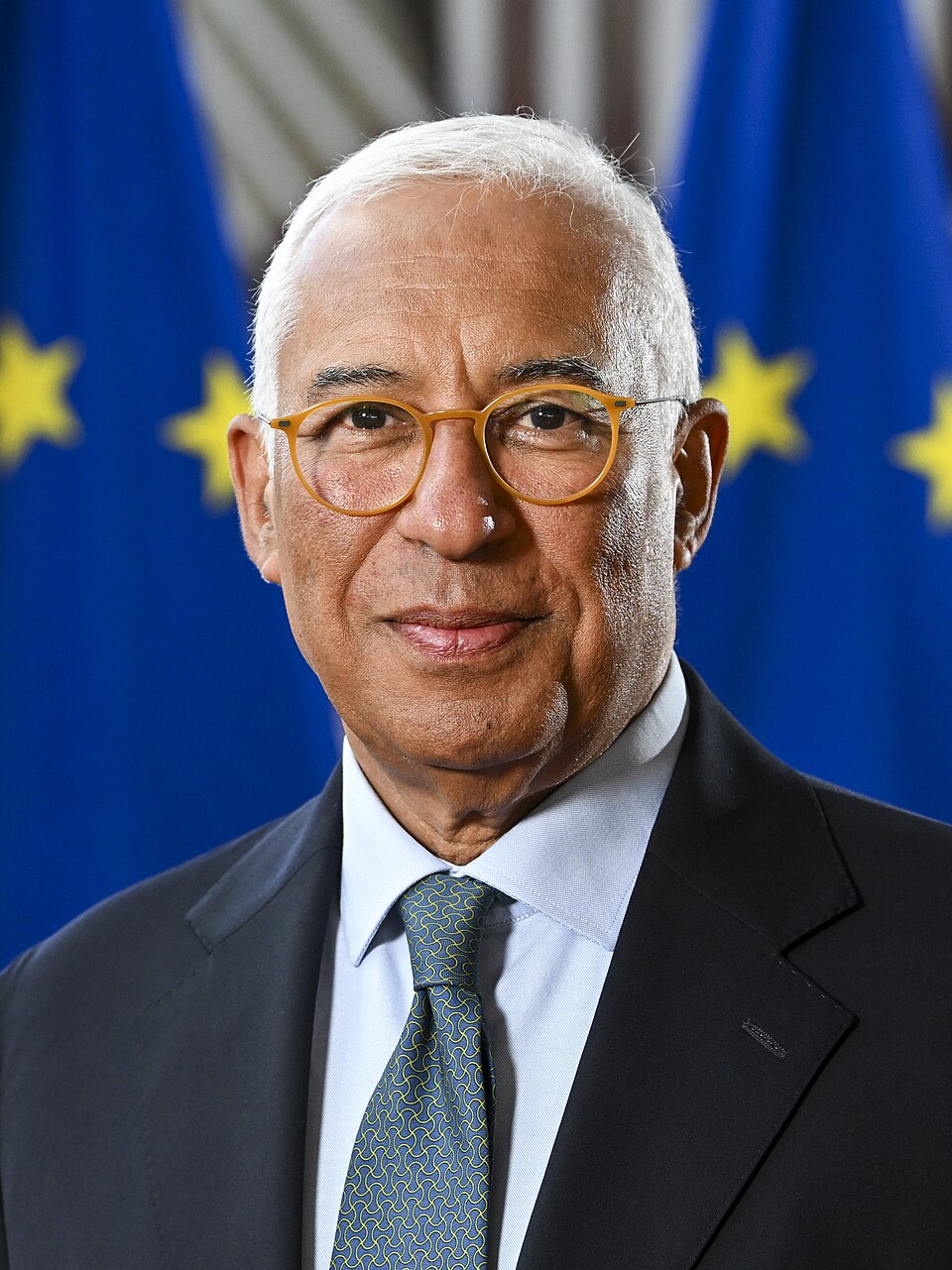
On 3-th of June, in Pristina, the President of the European Council Antonio Costa held separate and joint sessions with the Head of State – Acting President Albulena Haxhiu, the Executive – Caretaker Prime Minister Albin Kurti and the opposition: leaders of Kosovo’s major rival political factions.
At the press conference after the meetings Antonio Costa declared that he is back in Pristina, one year after his first visit, to reaffirm the European Union’s continued support to Kosovo on its European path.
“Since 1999, the European Union has been Kosovo’s strongest and most reliable partner, and the largest provider of financial assistance. To date, we have invested €3.7 billion – in education, infrastructure, energy, the environment, businesses, human rights and the rule of law”, said President Costa.
He commended Kosovo’s full and voluntary alignment with the Common Foreign and Security Policy of the European Union. It is a clear signal of Kosovo’s strategic orientation.
But the main message was: “The EU can support Kosovo, but it cannot do Kosovo’s homework. Kosovo needs strong, stable and functioning institutions capable of delivering reforms and seizing opportunities the European Union offers. In his meetings, Antonio Costa has encouraged all political actors to make European integration a priority, beyond political divisions, and to work together toward this shared goal.
Fostering good neighbourly relations and regional cooperation is also an essential priority to ensure the security and economic prosperity of the region. The Belgrade-Pristina dialogue is critical in this regard. Normalisation is essential for the European future of both Kosovo and Serbia.
Republic of Serbia.
On 3-th of June in the afternoon Antonio Costa arrived in Belgrade. President of the Republic of Serbia Aleksandar Vučić welcomed President of the European Council António Costa at Belgrade Airport. “Serbia is committed to accelerating its reform agenda and taking a responsible approach to the European integration process, while EU membership remains our strategic goal”, declared Aleksandar Vučić.
Serbia’s Minister for European Integration, Nemanja Starovic, stated that a series of important diplomatic activities in recent months points to Serbia’s strengthening international position, and that the visit of President of the European Council Antonio Costa represents a clear signal of support for the country’s European path.
Zoran Sandic, deputy leader of the New Democratic Party of Serbia, on June 3 said that the visit of European Council President Antonio Costa to Serbia represents “continued pressure on our country.”
On 4-th of June Antonio Costa met in Belgrade President, Aleksandar Vučić, followed by joint press conference, meetings with the Speaker of the Parliament, Ana Brnabić and with civil society organisations.
The main messages of the President of the European Council were:
He is in Belgrade to reaffirm the European Union’s continued commitment to Serbia’s European perspective.
Enlargement is based on building trust. The road ahead is demanding but the path is clear. EU and Serbia must focus on 3 main priorities:
- fostering good neighbourhood relations and regional cooperation. They are vital for both security and economic prosperity. The Belgrade-Pristina dialogue and the full implementation of the Ohrid agreement are critical in this regard;
- aligning with the European Union’s policies and values, in particular our Common Foreign and Security Policy. These are not just principles, but they are the very foundation of the European project and the partnership with Serbia;
- delivering the ongoing reforms is necessary to advance on your accession process.
The EU encourages Serbia to continue to accelerate reforms in three important areas:
- Rule of Law – Including fully implementing the recommendations by the Venice Commission on the laws governing the judiciary and prosecution;
- Media Freedom – making sure to create an enabling environment for media and establish a new REM Council in a transparent and inclusive way;
- And finally, reforming the Electoral Framework in line with the ODIHR recommendations ahead of the next Serbian elections.
The EU welcomes the four electoral laws that were adopted last week as a very important step. Now, it’s important to conclude by addressing the remaining recommendations, including the ones on the prevention of the misuse of state resources and on pressure against voters.
Montenegro.
In Tivat, during a European Union–Western Balkan summit, Antonio Costa confirmed that accession negotiations with Montenegro are developing very well. It is expected to close all chapters by the end of 2026. The EU is ready to start drafting the Accession Agreement with Montenegro. According to the statement of Antonio Costa, done in the morning of 5-th of June to the Euronews, it will be possible to congratulate the 28-th member state of the EU on 2028.
Conclusions: Antonio Costa’s messages are known and expected by experts, familiar with the matter, and are at the same time particularly important. It is enough just to follow the addressing to the local leaders and we will see what the attitude in Brussels is towards the respective countries. The “top performers” Montenegro and Albania continue to be a main priority for the EU, and most likely the timelines for the EU enlargement with these two countries will be met. The desire in Brussels to maintain the status quo in Bosnia and Herzegovina, as well as the possibility for dialogue with Serbia, is also clearly visible. Kosovo remains at the end of the chain.
Special attention deserves the visit and messages of Costa in Skopje. Once again, North Macedonian politicians tried to make preliminary insinuations in the eve of the Costa’s visit, that they have a problem with an EU member state, and once again it was explained to them that there is a decision of the European Council and Skopje’s problem is at the EU level.
Attention also deserves the increased self-confidence of Serbian President Aleksandar Vučić, who spoke about “further strengthening relations between Serbia and the European Union and confirms the importance of the dialogue they are conducting with their European partners at a time of numerous challenges for all of partes“. On the other hand, there is a statement by one of the leaders of the opposition (Zoran Sandic), which is not very pro-European.
And we can see also the difference of the level and the class of preparation on the Balkans. The direct attempt to influence coming from Skopje and the communication from Belgrade where every single word was very well measured.