Thewesternbalkans.
“The U.S.-led nation-building era has passed” – this is the startling message in the US State Department document entitled “Report to Congress on United States Policy to Promote Regional Stability and Prosperity in the Western Balkans”. This historic transformation in US foreign policy towards the Balkans should have triggered a wave of exclusive headlines in the regional media. Instead, we have a quiet statement of US messages in anticipation of possible steps to implement them.
“The era of large-scale international nation-building may be over, but the harder task of building genuinely accountable and functional states in the Western Balkans is far from complete”, states Albanian expert Ilva Tare. And what will the Serbs say, who believe that the Serbian national question has not yet been resolved. What will the Bulgarians say, who recognize the Macedonian state and do not deny the right to self-determination of the citizens of North Macedonia, but do not recognize the Macedonian language and the historical Macedonian nation? What will the Croats say, who want a Croatian entity in Bosnia and Herzegovina? Finally, what will the Serbs in Republika Srpska say, who want separation from Bosnia and Herzegovina? Is it true that peace will come to the Balkans only when each people gets its own state? The United States is putting aside the answers to these questions, moving away from the “nation-building” model and moving towards a more pragmatic policy based on stability, economic interests, energy security and counteraction to China and Russia. The importance of the Balkans as a field for strategic competition and geoeconomic confrontation of external factors is growing.
What is the place of the document in the American foreign policy hierarchy?
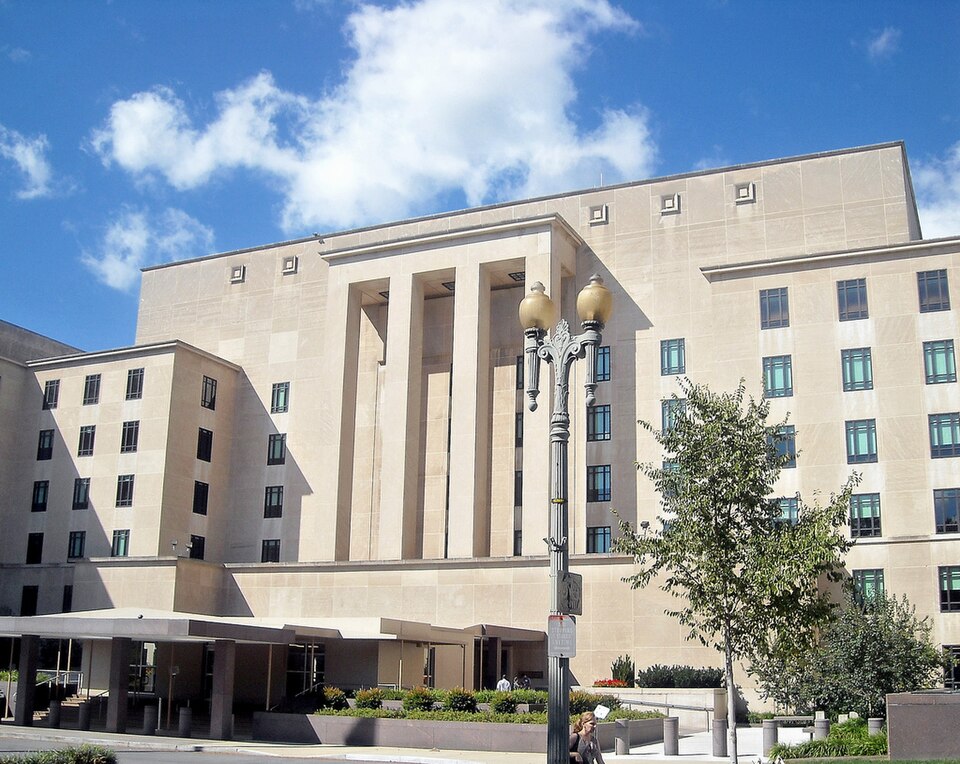
The US State Department report, published at the end of May, is interesting not so much for its specific recommendations, but because it represents the first official and comprehensive statement of the Trump administration’s (second term) policy towards the Western Balkans, presented to Congress. In a sense, it can be seen as a regional strategic framework, although not at the level of a National Security Strategy.
The document was prepared by the State Department at the express request of Congress under Section 7019(e) of the National Security and Foreign Policy Appropriations Act of 2026. It is not a law, nor a presidential directive, but an official report of the executive branch to Congress, reflecting the policy of the administration.
In terms of importance, it is ranked approximately as follows:
- National Security Strategy (NSS) – the highest strategic level.
- National and regional strategies of the White House and the National Security Council.
- State Department Reports to Congress (like this one) – an official statement of policy towards a specific region.
- Individual strategies of ministries and other agencies.
- Work plans and program documents.
Therefore, the document does not have the force of law, but it is an important indicator of Washington’s priorities and should serve as a guide for future funding, diplomatic initiatives, and policy of American institutions.
Key messages
1.The Western Balkans are important for US national security
This is the strongest political message.
The report defines the region as an area of direct importance for US security and economic interests. Instability in the Balkans is seen as a potential threat to US interests.
2.The end of the era of “nation-building”
This is probably the most important new element. Washington states that it no longer wants to play the role of an external guardian, building institutions and solving the internal problems of the Balkan states. Instead, the emphasis is shifting to stability, partnership and economic interests. The document looks at the region through the prism of energy security, infrastructure connectivity, investment, trade, technological competition.
The focus is no longer so much on democratization as on economic sustainability and the business environment. The US report does not mention the word “democracy” at all. The US approach is determined entirely by the demands of “hard power”. Public diplomacy resources are mentioned only in the context of support for trade and business.
3. Limiting Russian and Chinese influence
This is one of the main strategic motives. The report views Russia and China as external factors that can exploit the region’s weaknesses to undermine Western influence. Particular attention is paid to energy dependence on Russia, Chinese infrastructure and technology projects, strategic investments in telecommunications and transport.
4.Kosovo and Serbia remain a priority
The report reaffirms support for normalization between Kosovo and Serbia and calls on the two sides to reach a lasting agreement. The language surrounding the dialogue between Serbia and Kosovo (“negotiated, lasting agreement, acceptable to both sides”) signals that Washington does not support an imposed solution or an agreement that benefits one side at the expense of the other. There is no new initiative, but the traditional American position is confirmed. The US commitment to KFOR is confirmed, but no indications are given of an increase or decrease in the American presence.
5. Fight against organized crime
The document pays special attention to transnational criminal networks, drug trafficking, financial crimes, corruption. These phenomena are presented not only as a regional but also as an American security problem.
What is new for the Western Balkans?
From a diplomatic perspective, the most important thing is that Washington is moving from democratization, institution-building, and international oversight to stability, economic interests, energy security, competition with China, limiting Russian influence, and regional connectivity. Interestingly, the emphasis is more pragmatic and less ideological.
This is a shift from a policy of “transformative engagement” to a policy of “managed stability.”
Reading the interlinears of the report leaves the impression of a one-way trajectory for imposing American economic and political interests in the region, regardless of the social and environmental consequences. “The Office of the U.S. Trade Representative is negotiating agreements on reciprocal trade with North Macedonia and Serbia,” the document states. But what kind of “fair, reciprocal trade” can we talk about when it is also demanding “eliminating barriers for U.S. companies,” and after the U.S. imposed last year a 33% tariff on the minimum Macedonian import to the U.S. of $118 million, while U.S. exports to North Macedonia are almost twice as high?
How is this perceived in the Western Balkans?
As always, perceptions of policy in the region will vary. For NATO members Albania, Montenegro, and North Macedonia, stronger U.S. involvement means greater security guarantees and closer integration into Euro-Atlantic structures.
For governments in the Western Balkans, the report is a signal that the United States will increasingly judge them on whether they are reliable security partners; whether they are reducing their dependence on Russia and China; whether they are participating in regional infrastructure and energy projects; and whether they are providing stability.
In Belgrade, the new U.S. policy can be seen as an indirect push away from Moscow and Beijing. The document explicitly identifies Russian energy influence and Chinese infrastructure financing as strategic vulnerabilities, which increases the political and reputational costs for governments that continue to rely heavily on these partnerships. For Serbian President Aleksandar Vucic, the publication of the report came at the most inopportune moment possible – he went to see Xi Jinping, who presented him with the highest order given to foreigners. Now Vucic will do everything possible to please Trump and gain his trust.
The report paid close attention to Bosnia and Herzegovina, which was mentioned most often – 9 times in the 7-page document. The country is also the most vulnerable from a security perspective, as the complex open state structure does not fit into the declared completed nation-building process.
The Trump administration will probably now pay less attention to domestic political issues in the Balkan countries, as long as they do not threaten regional security. For analysts of the Balkans, this is perhaps the clearest signal yet that the Trump administration views the region primarily as a geostrategic space in competition with Russia and China, and not as a project for democratic transformation.
The report makes no mention of civil society in the region, which has been active in social or environmental protests against the Trump family’s multi-billion dollar projects in Serbia and Albania.
The challenges in the Western Balkans cannot be solved by foreign policy documents alone, and many local political structures are still resistant to domestic political changes. More broadly, the region appears to be entering a period in which strategic ambiguity is becoming increasingly difficult to maintain. Governments trying to balance competing external forces may feel increasing pressure to choose a clearer direction.
How was the report received in the EU?
The State Department report did not mention the EU at all, and Brussels remained completely silent after its publication. There has been no official, unified response from the European Commission, the European Council, or the European External Action Service (EEAS) so far.
The main emphases of the report coincide with the EU’s policy towards the Western Balkans, especially the Growth Plan, the Common Regional Market, and the enlargement policy. Despite the coincidence of strategic goals, the American document focuses on a more pragmatic policy based on stability, economic interests, and energy security, while the European enlargement process requires the rule of law, judicial reforms, democratic standards, protection of the media, and human rights.
According to European analysts, Brussels is concerned that the new American administration may emphasize “stability before democracy” and bilateral deals with local leaders instead of institutional reforms.
The EU’s indirect reaction to the report, through its own policies and public statements, can be summarized as Brussels’ welcome of the continued US commitment to the Western Balkans, but with an insistence that the region’s long-term stability can only be guaranteed through European integration and the fulfillment of the EU membership criteria.
From Brussels’ perspective, the US report should be perceived less as a challenge to the EU, but rather as a signal of a reshuffle of roles: the US will focus more on security, energy, strategic infrastructure and limiting Chinese and Russian influence; the EU will remain the main driver of reforms, economic integration and the accession process.
The change in the US approach, from a policy of democratic transformation of the Western Balkans region to a policy of strategic risk management, is likely to increase pressure on the EU to take even greater political responsibility for the development of the Western Balkans in the coming years.