If the Irish EU Presidency is expanding to the Western Balkans, then in October 2026 there is one event that stands out above all others: the European Council on 15 October 2026. This key meeting will be the first strategic discussion of EU leaders dedicated specifically to enlargement and internal reforms of the Union since the political impetus given in June 2026. The European Council has announced that it will hold this discussion in October.
Why October is important
For the Western Balkans, the following are expected to be discussed:
– the progress of the six candidate countries;
– the principle of gradual integration before full membership;
– the implementation of the Growth Plan for the Western Balkans;
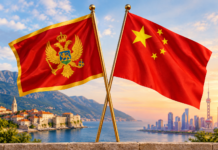
– the political readiness to accelerate negotiations with the most advanced candidates, especially Montenegro and Albania;
– how enlargement can be combined with institutional reforms across the EU.
At this stage, no formal decision on the admission of a new state is expected, but rather political guidelines.
Most likely, the focus will be on Montenegro – seen as the most advanced candidate, with the possibility of concluding negotiations before the others;
Regarding Albania, accelerated opening and closing of negotiation chapters will continue;
Serbia – progress remains dependent on the rule of law and the normalization of relations with Kosovo;
Bosnia and Herzegovina – assessment of reforms is expected;
North Macedonia – continues to depend on constitutional changes and bilateral issues;
Kosovo – emphasis on the implementation of European commitments.
The June European Council and the EU-Western Balkans summit (Tivat, June 5, 2026) gave a clear political signal that October 2026 will be the moment when leaders will discuss in practice how to accelerate enlargement and what internal EU reforms are needed to make this possible. It is this meeting on October 15 that is shaping up to be the most important political event for the future of the Western Balkans within the EU this year.
So far, the success is unofficial
The participants in the EU-Western Balkans meeting in Tivat are assessing it as the most successful meeting in the last few years. However, it had an informal nature and did not end with an official declaration or other document. The leaders of the meeting – French President Emmanuel Macron and German Chancellor Friedrich Merz – presented a joint non-paper in which they set out their vision for fulfilling the forgotten promise of Thessaloniki in 2003 for the integration of the Western Balkan countries into the EU. The core of the document is the idea of full integration of the candidate countries into the EU single market even before their formal acceptance as full members of the union. This was the main result of the meeting and everyone was positive and optimistic.
Just a few months later, however, eight countries (Belgium, Bulgaria, Croatia, Estonia, Finland, Lithuania, the Netherlands and Sweden) flatly rejected the European Commission’s proposal to open a new cluster in EU accession negotiations with Serbia, meaning that it would not start negotiations on harmonizing the single market with Serbia. Three other countries (Denmark, Latvia and Luxembourg) were also sceptical, whether Belgrade was fulfilling its obligations to tackle corruption, impose sanctions on Russia and protect media freedom.
The blocking of Serbia is a partial defeat for the Commission’s policy of “gradual integration”, amid a heated debate on the future enlargement of the EU. Thus, the non-paper that saved the “success” of the Tivat summit has come face to face with the harsh reality of the Balkans.
The EU loves long processes, and therefore the non-paper of Germany and France is expected to continue to be discussed at the special Council meeting in October and at the regular Council meeting in December, along with non-papers prepared by other countries – Austria, together with Italy, Slovenia, Slovakia, the Czech Republic, as well as the non-paper of the Netherlands, supported by other countries, on some aspects of Montenegro’s integration process. It is these discussions, along with the results of the reforms in the specific countries, that will determine the trajectory and speed of the integration process in the six Western Balkan countries, Ukraine and Moldova.
The Merit Based Principle or Political Reason
Next week, at the meeting of EU ministers on 14 July in Brussels, just before the Brussels administration’s vacation, the favorites for accession, Montenegro and Albania, will close three chapters each in the negotiation process. This technical progress is important, but final approval will come from EU national governments.
As for Ukraine and Moldova, member states are divided on whether to open all the next clusters of reforms. The second of six clusters, covering external relations and foreign policy, is expected to be opened. Political resistance to rapid progress by these two countries, especially with regard to Ukraine, remains high within the union.
According to the assessments of a number of experts, only the results of Montenegro and partly of Albania are satisfactory so far. The Commission’s progress report on Montenegro is more optimistic – in just one year – 2025 – the country has achieved more than in the previous eight years. But the report also showed that the country is very far from full membership in some of the 33 areas where reforms need to be implemented. Montenegro is a small country, a NATO member, with no major problems with its neighbors. However, the difficulties of the deeply fragmented domestically-political Montenegro are no less than those of other candidate countries. The final steps towards full readiness before accession are always the most difficult. They will depend both on the cooperation of the Montenegrin opposition and on the attitude of the EU itself. Many member states are asking themselves whether to admit only one country from the Western Balkans and leave the other five waiting, or to admit all at once. Injecting a geopolitical moment into the enlargement process strongly undermines the fundamental principle of merit.
The refusal of Serbia’s neighbors – Bulgaria and Croatia, to open Cluster 3 for Serbia, clearly showed what problems await not only Belgrade, but also Skopje.
But here comes also the question of whether the leaders of the Balkan countries will continue to fulfill the conditions set by the EU or will they prefer solutions that help them stay in power. Leaders like Rama, Vučić, Dodik, Kurti are today making more efforts, including lobbying, to please the Trump family than Brussels.
The EU’s responsibility
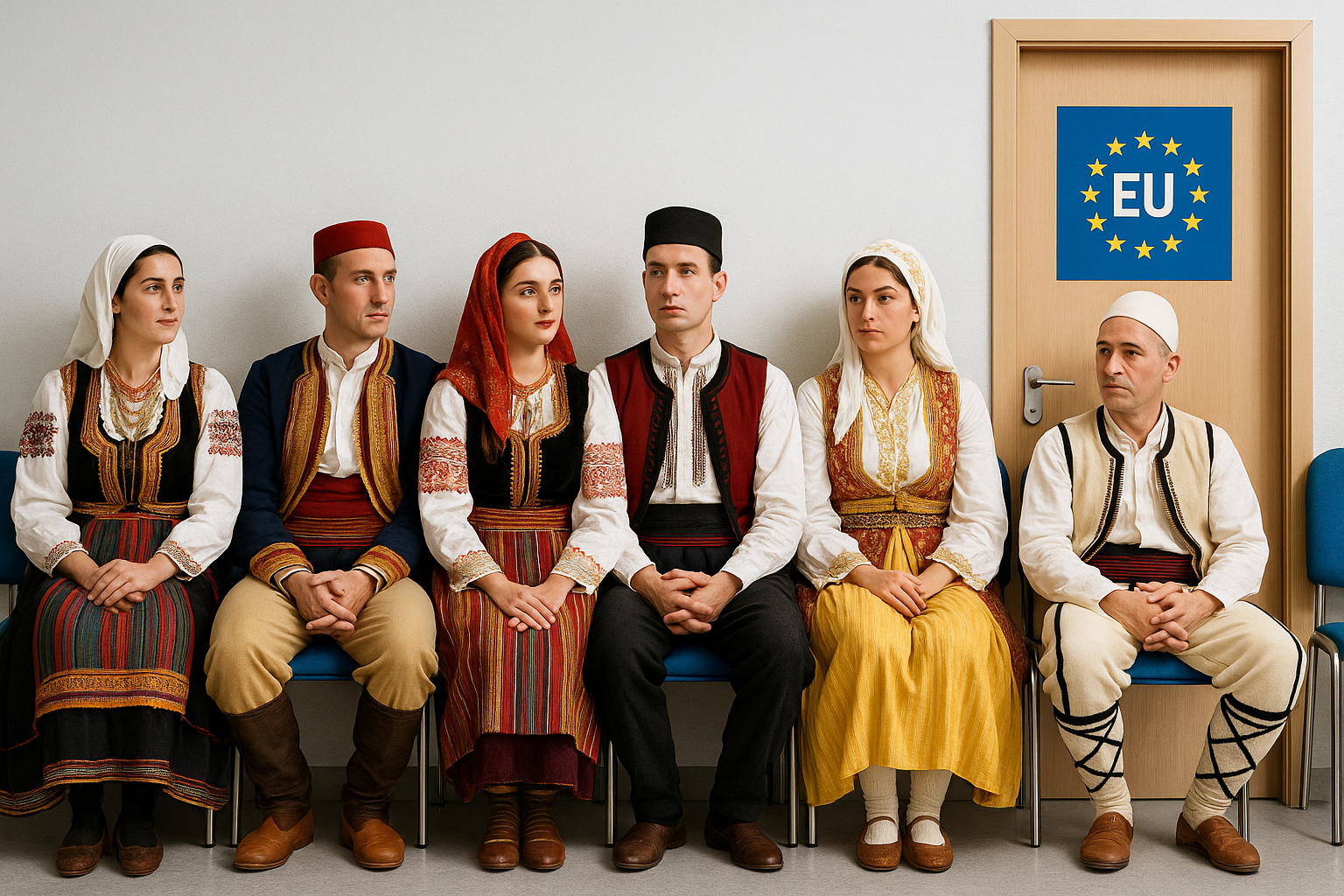
Currently, the EU and the Commission lack self-confidence and a clear vision of how to continue enlargement. They cannot promise precise deadlines even to Montenegro, as it is not clear how far the reform process will go. It is not even clear what the term “gradual integration” means, which each official in the EU structures interprets in his own way. In this situation, the various non-papers of the member states and the open letter of Vučić and Rama on gradual membership expand the discussion field, but do not bring more confidence to the Commission.
The candidate countries also do not believe that the EU will grant them full membership, as it did with the last country admitted – Croatia. The EU’s interest in Bosnia and Herzegovina and especially in Kosovo is very weak. The Union has limited instruments of influence in these countries. Kosovo is not even recognized by five EU member states and the Council has no will to offer it at least candidate status. Bosnia and Herzegovina is increasingly fragmented, with Republika Srpska tending to pursue its own foreign policy, the priority of which is not the EU. Until the next parliamentary elections in October, nothing will happen in the country.
The Republic of North Macedonia, after its separation from the package with Albania in the accession process, is deeply disappointed and is investing more and more efforts in rapprochement with the US and becoming Washington’s main strategic partner in the Western Balkans.
Montenegro will most likely also be disappointed in the end, since it will not be able to fully fulfill all the criteria and conditions for accession. But then, as in the cases of Bulgaria and Romania and as often happens in the decision-making process in the EU, political reason will prevail. It has two sides – first, whether the EU needs the countries of the Western Balkans and for what purpose, and second, whether and when (at all) the EU will have the administrative capacity to take on new countries.