Thewesternbalkans.
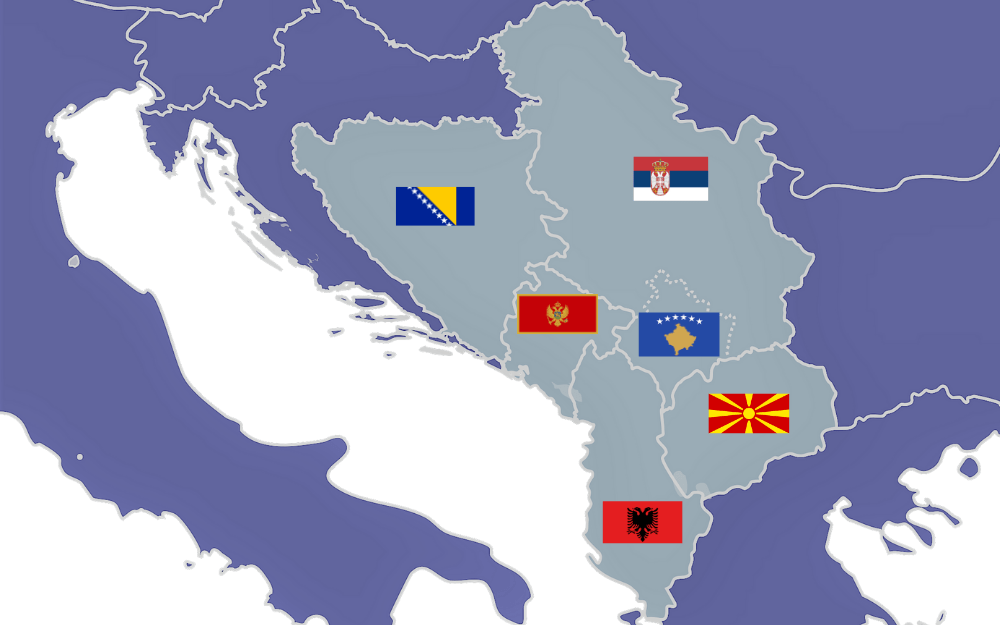
According to the publications by the EU institutions, on 30 of June and 1 of July 2025, Commissioner for Enlargement Marta Kos and the leaders of the six Western Balkans partners gathered in Skopje for a high-level meeting dedicated to the EU-backed Growth Plan for the Western Balkans. The leaders reaffirmed their determination to seize the opportunities that the Growth Plan brings to the region.
Commissioner Marta Kos and leaders took stock of the progress made on finance, transport, digital connectivity and market integration. They also confirmed their determination to meet on a regular basis to maintain the political momentum behind the Plan’s implementation.
The Reform & Growth Facility (RGF), under which the partners have developed Reform Agendas, is an ambitious common tool and commitment to implement more than 600 ambitious reforms for which the EU is providing €6 billion in financial support.
So far, pre-financing payments under the RGF have been made to North Macedonia, Albania, Montenegro and Serbia. The Commission encourages Kosovo to accelerate the approval process for bringing into force the Facility and Loan agreements to unlock pre-financing. The Commission also welcomes the adoption by Bosnia and Herzegovina of a draft Reform Agenda on 27 June.
During the meeting, Commissioner Kos recalled that this instrument needs sustained and strong steer and ownership by the political leaders to ensure swift and full delivery. “This will accelerate our partners’ growth and ensure they advance on their EU accession path. While results on some important reforms are already visible, partners were invited during the meeting to speed up the delivery of the plan. The Commission is working closely with the Western Balkan partners to achieve results”, said Marta Kos.
By using the pre-financing made available to the beneficiaries who have completed all the RGF preparatory work, the Commission proposed to the Western Balkans Investment Framework (WBIF) Operational Board an investment package of €87.7 million. This is expected to mobilise a total of €487.3 million for eight new investments in clean energy in Albania, Montenegro and Serbia:
- Electricity:construction of overhead lines, construction of substations in Albania and Montenegro.
- Hydropower: rehabilitation of hydropower plants in Albania and Serbia.
- Solar heating: renewable energy integration into Novi Sad District Heating System in Serbia.
These investments will be rolled out in close cooperation with the Western Balkan partners and international financial institutions through the WBIF.
Under the Growth Plan, to further accelerate gradual integration in the EU Single Market, in addition to reforms committed to under the RGF, partners have taken the following complementary measures:
First, Montenegro, Albania, North Macedonia and Serbia have joined the Single Euro Payments Area (SEPA). This paves the way for making financial transfers in euro easier and reduces the cost and processing time of these transactions between their citizens, businesses and other SEPA members.
On the Green Lanes – an initiative supported by the European Commission that ensures smoother transit flows of goods within and between the Western Balkans and the EU – implementation is underway to support the 11 busiest crossing points. The Commission will provide financial support to address infrastructure needs through the Safe and Sustainable Transport Programme.
Work progresses on digital connectivity as well.
Work is also advancing to facilitate the development of the Western Balkans’ tourism ecosystem. This is achieved by integrating regional tourism stakeholders into EU wide bodies and mechanisms, including the Tourism Advisory Committee, and the European Travel Commission. The aim is to support the transition towards a greener, more digital and resilient tourism industry and to boost skills. On consumer protection, cooperation is developing to facilitate access to tools, knowledge and networks to build partner countries’ capacity to ensure the protection of consumer rights and product safety. Finally, the Single Market Highway initiative will focus on industrial alliances and strengthening value chains between the Western Balkans and the European Union; acceleration of regulatory convergence and integration of business communities.
Building on the work already done, participants agreed to double down on reforms, reaffirming their political commitment and working to forge broad national consensus so that key measures are adopted rigorously and on time as well as to boost communication and visibility, ensuring citizens and businesses see the concrete benefits of the Growth Plan and understand the reforms it brings.
Comments: The Growth Plan for WB was adopted by the Commission on 8 November 2023. The Plan aims to integrate the Western Balkan partners into the EU’s Single Market, advance regional economic cooperation, deepen EU-related reforms and increase pre-accession funding to accelerate socio-economic convergence of the Western Balkans with the EU.
The Growth Plan incentivises enlargement partners’ preparations for EU membership, by bringing forward some of its benefits ahead of full integration into the EU. This in turn should significantly speed up the enlargement process and the growth of their economies.
Clearly, the European Commission has learned its lesson from the first enlargement towards Central and Eastern Europe and no longer allows money to be spent on issues that are not of interest to the EU. The Growth Plan for the Western Balkans is aimed precisely in this direction, and the documentation prepared by the candidate countries is an important element of their commitment.