
Thewesternbalkans.
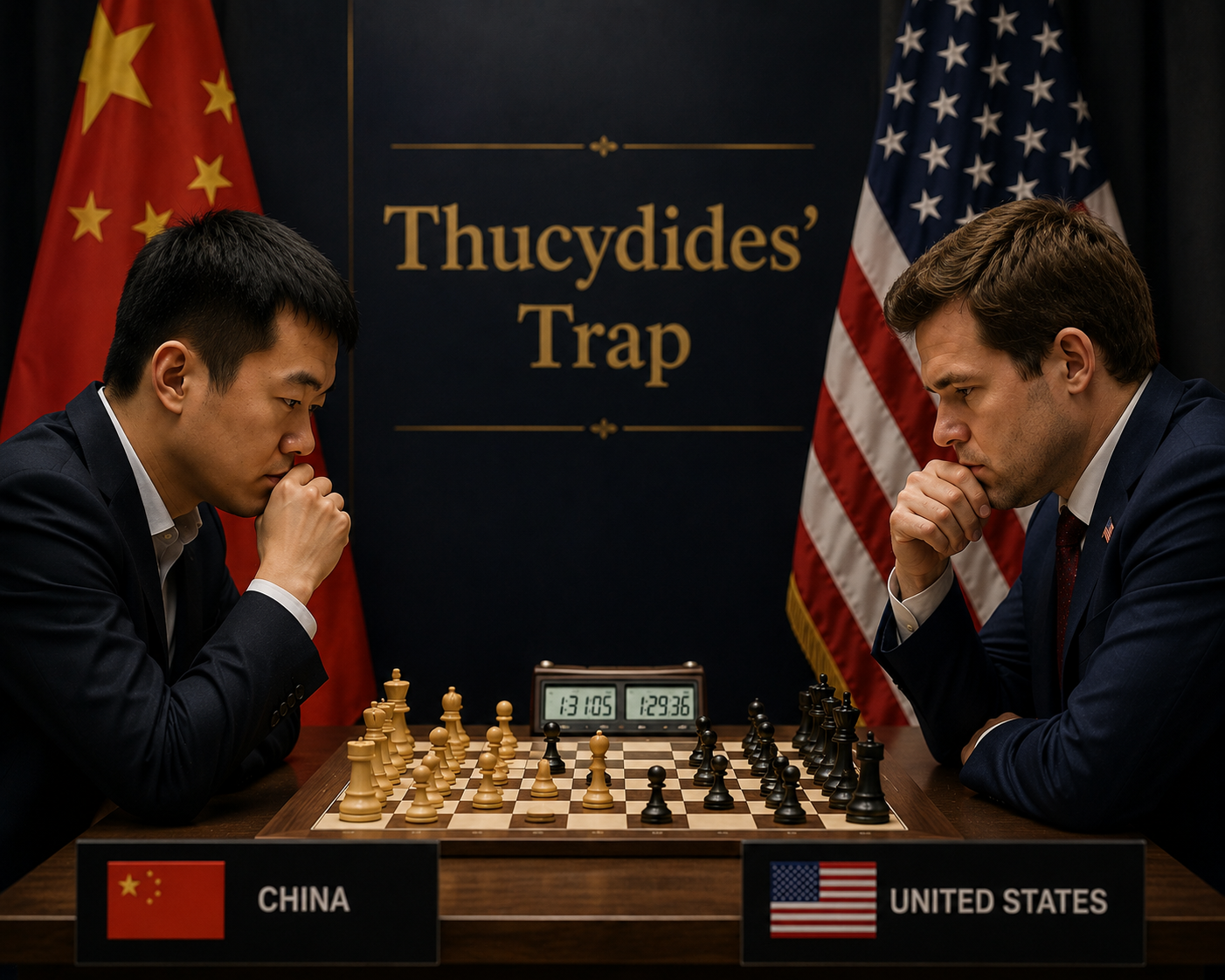
Chinese foreign policy rhetoric rejects the inevitability of the “Thucydides Trap” (rising powers cause anxiety in established ones, leading to conflict). Translated into today’s context, China’s rise is certain to provoke a clash with the United States, just as Athens once did with Sparta. Invoking the “Thucydides Trap” as a justification for confrontation with China could actually do great harm.
Instead, Chinese scholars advocate the idea of strategic stability between great powers in the current era, going beyond the old domains of nuclear, military, and crisis politics to encompass politics, economics, technology, security, supply chains, strategic assessments of each other, and global governance. This new framework for China-US relations is what the Chinese call constructive strategic stability.
What does the Chinese side understand by this new formula, which has gained wider popularity in connection with the recently concluded two-day visit of US President Donald Trump to Beijing? At a press conference (15.05.2026) of Chinese Foreign Minister Wang Yi on the results of the visit, he stated the following:
„President Xi raised some important questions: Can China and the United States overcome the Thucydides Trap and create a new paradigm of major-country relations? … Throughout the nearly nine hours the two presidents spent with each other, they showed mutual respect, a commitment to peace, and a shared interest in pursuing cooperation. The most important political understanding they reached was the agreement to build “a constructive China-U.S. relationship of strategic stability.” They also agreed for the two sides to pursue more exchanges on foreign policy, military-to-military relations, economy and trade, public health, agriculture, tourism, people-to-people ties, and law enforcement. This will provide a powerful boost to China-U.S. interactions at all levels and in all fields.“
To the question: “What is meant by “a constructive relationship of strategic stability,” the new vision for China-U.S. relations?, Wang Yi replied:
„President Xi and President Trump agreed on a new vision of building a constructive China-U.S. relationship of strategic stability, providing strategic guidance for bilateral relations over the next three years and beyond. The new vision they articulated has been well received by the people of both countries and the broader international community. This is how China understands it:
It should be positive stability where cooperation is the mainstay and the relationship gets more resilient through exchange and cooperation. As the world’s top two economies, China and the United States share deep ties. Neither can cut the other out, or prosper without the other. We both gain from cooperation and lose from confrontation. While a confrontational relationship will be disastrous for both countries and the world, China-U.S. cooperation will get many great things done to the benefit of both and all.
It should be healthy stability where competition is kept within proper limits and is not turned into a zero-sum game. Major-country competition is nothing new, but China-U.S. relations should not be defined by competition. When competition does happen, it must be a healthy one where we learn from each other, pursue excellence together, and compete fairly in compliance with rules. The purpose of competition should be to outdo oneself, so that both sides become better.
It should be constant stability where differences are manageable and the relationship should not be like a roller coaster. Both sides should maintain policy continuity and stability. It is very important for both sides to honor our words and move in the same direction. A positive outlook of China-U.S. cooperation will provide more certainty for both countries’ development and for the international situation.
It should be lasting stability where peace is expectable and conflicts and wars are not acceptable. Peaceful coexistence is the biggest common denominator of China and the United States. Conflict and confrontation between us will produce consequences no one can bear. To prevent this from happening, the bottom line is that both sides must abide by the three China-U.S joint communiqués, respect each other’s social systems and development paths, respect each other’s core interests and major concerns, and respect each other’s right to development.
In short, building a constructive China-U.S. relationship of strategic stability is not a slogan. It should be a goal both sides uphold and entail concerted actions. Now that our presidents have set the direction, we should add more substance to this new vision and translate it into concrete policies and measures, so as to write a new chapter in China-U.S. relations.“
The Chinese side seems very pleased with the outcome of the summit, as it feels that the US is finally recognizing China as an equal. The Chinese believe that the US administration has accepted the new framework of relations and understood China’s concerns regarding Taiwan, trade and technology. There is optimism that the downward spiral in relations is likely to stop and that we may even see some constructive outcomes, particularly on economic issues.
However, this new framework of constructive strategic stability is not interpreted by Chinese officials or analysts as some kind of shared G2-style governance of the world. Beijing clearly understands that competition remains, but has no interest in managing global hot spots with the US. Rather, Beijing seems to desire a rebalanced relationship with the US, which engenders a degree of bilateral stability and a calmer external environment that will allow China to gain time and space for its own development and pursuit of its political, economic, technological and security goals.
Chinese scholars describe constructive strategic stability as positive stability whose main characteristic is cooperation. The two sides should become partners, not rivals.
Constructive strategic stability should be a benign stability of competition with appropriate constraints. This framework does not avoid competition, which is inevitable, but competition is by no means a zero-sum “boxing match” in which one side loses and the other wins. Rather, it should be an “athletics competition” of mutual encouragement and joint improvement.
Constructive strategic stability should be a normal stability in which differences are manageable. China and the United States differ in history and culture, social systems, and development paths. Contradictions and differences are inevitable, but competition between major powers should be more manageable and predictable.
Constructive strategic stability” should be a lasting stability in which peace can be expected.
The Chinese side is pleased with Trump’s visit, as hosting the visit provided an opportunity to send an important signal to the international community – China is strong and Xi Jinping holds the helm firmly in turbulent international waters. The West has problems, Trump is creating chaos.
But even more important for Beijing is the signal to the domestic public – in a year, in the fall of 2027, the 21st Congress of the Chinese Communist Party will be held. The careful orchestration of the visit showed the Chinese leader in an extremely favorable light with a view to preparing the political ground for Xi’s legitimization as an indispensable leader, the only one capable of guiding China through a turbulent and dangerous period.