Thewesternbalkans.
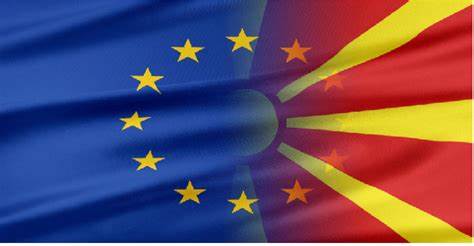
According to the European Parliament information, on 9 of July 2025, with 461 votes in favour, 121 against and 107 abstentions, the European Parliament approved a Resolution on the 2023 and 2024 Commission Progress Reports on North Macedonia prepared by special rapporteur Thomas Waitz.
This is the first report on the country’s progress on its European path in the last three years.
The preparation the EP Report, and its first appearance were extremely politicised by the Nort Macedonian Prime minister Mickosky and a lot of Bulgarian politics because of the presence in the initial texts of words directly referring to the “Macedonian language and identity”. After MEPs Andrzej Halicki, Kathleen Van Brempt and Dan Barna submitted written amendments to delete references to language and identity in the Report these texts were removed from the final version.
Despite the extremely undiplomatic language of Prime Minister Mickoski, as well as the “triumphant” words of some Bulgarian leaders, there were still quite logical and constructive opinions heard around the report, such as this of Thijs Reuten, S&D negotiator on North Macedonia, who said:
“North Macedonia belongs in the EU. We share the vision of the country’s European future. Macedonians can count on us – both for our political backing and our technical assistance in delivering on EU reforms. But we must be clear: North Macedonia’s leadership must overcome political polarisation and focus on reforms, including the constitutional amendments the country has committed to. We know that it is difficult to amend the constitution once again, but this is the only way to advance the accession negotiations”.
It is very interesting also to read some of the conclusions in the EP Resolution and to try to comment them:
“Whereas North Macedonia remains a target of foreign malign influence operations, including efforts to fracture the country’s social fabric and weaponise anti-EU sentiment, notably via Serbian-language tabloids and media outlets, which function as regional amplifiers of Kremlin narratives and enjoy considerable influence; whereas China has sought to expand its influence through information control, investment diplomacy and coercive clauses in infrastructure loan agreements.”
Comment: It is clear message to the authorities in Skopje that they have to be very careful with the strong wave of influence coming from Belgrade in the last year.
“Whereas North Macedonia’s authorities have proposed solutions for constitutional change that did not meet the conditions of the July 2022 Council conclusions – any accession country is expected to respect democratic values, the rule of law and human rights, and to abide by EU law.”
“The European Parliament reiterates its full support for North Macedonia’s continued and persistent commitment to join the EU and for the necessary transformative changes that are required to fulfil the accession criteria; commends the country’s commitment to European integration and encourages continued efforts in advancing EU-aligned reforms, despite the challenges and setbacks that have tested the patience and trust of the Macedonian society”.
“Underlines that EU accession remains a matter of political will in fulfilling the criteria and implementing the commitments undertaken, in terms of both making the necessary reforms and adopting the necessary constitutional amendments.
The EP rrecalls the need to maintain the momentum and credibility of the EU integration process; notes that North Macedonia continues to demonstrate commitment to EU integration and alignment with EU policies; calls for the swift advancement of accession negotiations, while noting the importance of adopting the constitutional amendments; urges the European Council to signal, publicly and unequivocally, that the Council intends to swiftly and unconditionally take the positive decision to enter into the next phase of accession negotiations with North Macedonia once the conditions of its conclusions of 18 July 2022 have been fulfilled; encourages all political parties in North Macedonia to engage in constructive dialogue to achieve the necessary consensus on these amendments, which would strengthen the country’s multi-ethnic character and accelerate its progress towards EU membership; believes that strengthening the links between the multiple ethnicities is essential for improving social cohesion and ensuring more effective governance; calls on the Member States, the Council and the Commission to safeguard the predictability and credibility of the accession process, also with a view to maintaining popular support for accession in enlargement countries. Encourages North Macedonia to achieve tangible results in complying with the EU’s expectations under the negotiating framework and the Council conclusions of July 2022, including relevant constitutional changes, in line with the country’s commitments;
Comment: EP repeated many times that the amendments of the North Macedonian Constitution are absolutely necessary for beginning of the negotiation process.
“Reaffirms that the respect for linguistic, cultural and national identity is a fundamental component of the EU accession process and a cornerstone of democratic societies which will be further affirmed with the accession to the family of European nations”.
Comment: It is a little compensation for the lifted texts.
“Notes the funds being received by North Macedonia from individual Member States and the good cooperation between them; warns however about strengthening alliances with illiberal regimes;
Urges North Macedonia to intensify efforts to strengthen the rule of law and judicial independence, including in judicial appointments and the functioning of the Judicial Council, to counter corruption, reform its public administration and improve the transparency and concentration of media ownership; encourages further implementation of systemic measures to ensure transparency and efficiency in governance;
Calls for the continued modernisation of a merit-based public administration. Calls for further steps to ensure the systemic accountability of public institutions through meaningful and public stakeholder consultations.
Notes that certain Chinese diplomatic entities have financed paid content and opinion pieces in Macedonian media outlets without clear labelling; recalls that a 2023 analysis found that Russian state-affiliated actors had used Serbian media proxies to disseminate narratives hostile to NATO and to claim that the EU is pressuring North Macedonia to ‘abandon its identity’;
Encourages North Macedonia to continue the efforts to combat hate speech in all of its forms and targeting all groups, to proactively prevent and thoroughly investigate all instances of hate speech, hate crimes and intimidation, systematically prosecute related attacks, with a view to achieving convictions and ensuring the safety and security of their targets, such as journalists, people belonging to minorities, communities such as Bulgarians, and other vulnerable groups.
Expresses concern about the rise in hate speech and growing threats from disinformation in online media, over which the national Agency for Audio and Audiovisual Media Services has no regulatory authority.
Encourages North Macedonia to take meaningful steps toward recognising and incorporating national minorities and communities into its constitution, fostering inclusivity, protecting diversity, fighting discrimination and strengthening social cohesion in line with European values and democratic principles; calls on North Macedonia to fully guarantee equal rights and opportunities for all ethnic communities in the country”.
Comment: Finally, we see that in North Macedonia there are problems with hate speech especially against Bulgarians, as well as with the integration of national minorities and ethnic communities.
“Is deeply concerned that North Macedonia and other EU accession countries in the Western Balkans are being particularly hard hit by foreign interference and disinformation campaigns, including hybrid threats, strategic corruption, opaque financial flows and coercive investment practices, notably originating in Russia and China; is alarmed by the roles of the Hungarian and Serbian Governments in advancing China’s and Russia’s geopolitical objectives; notes, in this context, the risk of dependence on China caused by asymmetrical loan agreements, as well as the recent loan from the Hungarian bank ExIm bank, which appears to be sourced from China;
Expresses concern about the so-called ‘Serbian world’ project and that some representatives of the Government of North Macedonia have been advocating and promoting this concept; condemns the participation in meetings that attempt to establish a sphere of influence undermining the sovereignty of other countries and the stability of the region.
Recalls the need to open up Yugoslav secret service archives (UDBA and KOS), kept in both North Macedonia and Serbia; emphasises the need to open these archives region wide to deal with the totalitarian past in a transparent way, with a view to strengthening democracy, accountability and institutions in the Western Balkans”.
Comment: May be the most important conclusions in the Report. Even the diplomatic language can not help the Macedonian authorities. The problems that appeared in texts are very hard and sensitive. If I was in place of the North Macedonian authorities, I would be reading those texts one hundred times and take the necessary conclusions.
“Calls for additional efforts to accelerate progress on all priority sections of the core network for both rail and road, including by increasing the number of border crossings wherever possible; notes the strategic importance of Corridor VIII for the EU’s and NATO’s geostrategic autonomy, serving as a key logistics route along NATO’s southern flank”.
Comment: Attention. Referring to NATO is a very interesting conclusion and very special direction of the Report cense.
“Welcomes the country’s commitment to nurturing good neighbourly relations and acknowledges its role as a model for the peaceful resolution of bilateral disputes through dialogue and mutual understanding; emphasises, in this regard, the importance of full implementation of international agreements with tangible results in good faith by all sides, including the Prespa Agreement with Greece and the Treaty of friendship, good neighbourliness and cooperation with Bulgaria; calls for consistent commitment to dialogue and cooperation with neighbouring countries to strengthen regional stability and foster mutual trust; calls for the further promotion of people-to-people contacts across south-eastern Europe”.
“Regrets, however, that North Macedonia, was the only country in the Western Balkans to abstain on the European resolution on Ukraine in the UN General Assembly in February 2025 and instead co-sponsored the US resolution, alongside countries such as Georgia and Hungary, representing a negative signal regarding North Macedonia’s alignment with the EU’s common foreign and security policy and with the collective European commitment to upholding peace, international law and democratic principles”.
Comments: North Macedonia acquired EU candidate status in 2005, but progress in accession negotiations has been very slow, mainly due to internal political polarisation and bilateral disputes with neighbours Greece and Bulgaria. The country formally began accession negotiations in 2020 but was stopped (and separated from Albania) in 2024, because in Skopje the Macedonian leaders thinks that it is possible to do not implement or even to change an European Council decision. We see now that Republic of North Macedonia is placed alongside countries such as Georgia and Hungary.
Final comment: A highly respected Bulgarian professor and archaeologist, Nikolay Ovcharov, concluded a few days ago that North Macedonia simply does not want EU membership. With all due respect to Professor Ovcharov, who is certainly right, I would like to point out that North Macedonia, just like the other countries of the Western Balkans, is subject to the process (and strategy) of EU enlargement, which makes things much more complicated from the perspective of “‘I want – I don’t want”.