Thewesternbalkans.
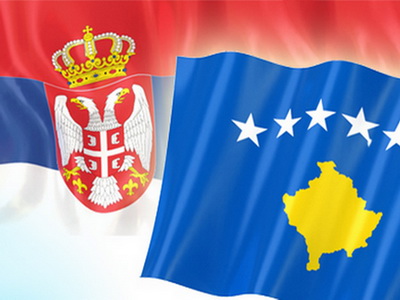
Former US Ambassador to Belgrade Christopher Hill said in an interview with Radio Free Europe that he does not expect the US to interfere in solving the problems in the Balkans, including the dispute between Kosovo and Serbia, as it has done in the past. According to him, the Balkans are not a priority for the US, so solutions should now come from within.
The US has a special envoy for the Balkans and American interests include the Balkans, but they are unlikely to get involved in solving the problems.
The US has many interests in Serbia that have nothing to do with Kosovo. Donald Trump has appointed people of Serbian origin to key positions in Belgrade and Sarajevo, which is a good sign of appreciation for Serbia’s role in the region. The US also has many interests in Kosovo; let’s just mention the huge investment in the military base in Bondsteel.
Donald Trump’s comment on Platform X on June 16 that he had averted the danger of war between Serbia and Kosovo was widely seen as hyperbole, but it is an indication that Kosovo-Serbia relations remain on the president’s radar and that he intends to re-engage in dialogue between the two countries.
According to Trump, the Washington Agreement between Pristina and Belgrade (2020) reached under his leadership was not implemented due to the inaction or mistakes of the Biden administration. This means that a possible re-engagement by Trump would not differ from his previous approach and would be in line with his political thinking: seeking a deal through pragmatic means, primarily economic.
However, the political moment for Trump’s intervention is not yet ripe. The attention of the US administration is occupied with too many hot spots around the globe and geopolitical challenges. A government has not yet been formed in Pristina, and the caretaker prime minister, Albin Kurti, does not enjoy the trust of the US administration. Even the US ambassador to Pristina admits that he has problems with Kurti.
Serbia is also still waiting for Trump to pay attention to it. Despite the efforts of Serbian President Aleksandar Vučić to earn this attention by providing favorable conditions for investments for Donald Trump’s family, even at the cost of violating his own laws, Vučić was not received by Trump during his visit to Washington in May. Vučić had to return ingloriously to Belgrade, citing health problems. The public impression was that this was a “diplomatic illness”.
It can be reasonably assumed that the Washington Agreement model remains Trump’s methodology, but given his unpredictability, it is not excluded that he will take steps towards direct negotiations with Serbia on some economic issues that benefit members of the president’s family. This would make the wayward Kosovo Prime Minister Kurti more lenient. In any case, both the EU and the US remain of the view that Kosovo should establish a Union of Serbian Municipalities, as stipulated in the 2013 Brussels Agreement between Belgrade and Pristina.
The government of Albin Kurti has lost a significant part of the support it enjoyed in the West, causing the country to be isolated and damaging Kosovo’s relations with the US. The sanctions that were imposed, Washington’s critical attitudes and the subsequent isolation have weakened Pristina’s negotiating position in the upcoming talks.
On the other hand, Serbia is gaining points in Western support with Vučić’s participation in the Odessa meeting, the intention to purchase French Rafale aircraft and Brussels’ declaration of the lithium deal with the EU as “strategic”.
So far, the efforts of the new EU Special Representative for the Pristina-Belgrade dialogue, Peter Sørensen, despite all his diligence and activation, remain fruitless. Vučić told Sørensen that compromise solutions could be adopted with “respect for the interests of the Serbian people” (understand the key importance of the creation of the Union of Serbian Municipalities in Northern Kosovo), and with “full respect for international partners”, i.e. further unhindered development of Serbia’s relations with Russia and China.
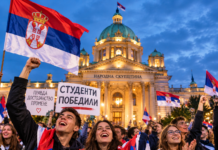
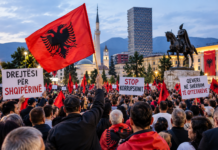
Serbs in Kosovo are preparing to mark the anniversary of the battle with the Turks on Kosovo Polje –in Gazimestan on June 28. Around Vidovdan, the day of mourning, Serbs there traditionally face provocations, bans, confiscation of Serbian flags. Violent actions against Serbs in Northern Kosovo, to which Vučić will have to respond, are also expected around July 11 – the Day of Remembrance of the Victims of the Genocide of Muslims in Srebrenica. The focus on “sacred victims” among ethnic Albanians could serve to radicalize protests within Serbia itself. The scenario of the strengthening of protest potential in Serbia combined with possible escalation of interethnic tensions could catalyze Trump’s intervention as a peacemaker and to prevent a new war in the Balkans.