
Thewesternbalkans.
According to Albanian media, the final report of the OSCE Office for Democratic Institutions and Human Rights (ODIHR) on Albania’s May 11 parliamentary elections paints a deeply troubling picture. The document exposes extensive evidence of vote buying, misuse of state resources, intimidation of public employees, and media capture.
All those are pointing to the same conclusion long echoed within Albania: the line between the ruling Socialist Party and the state has effectively disappeared. A fundamental problem that has haunted Albanian democracy for decades: the state apparatus functions as an extension of the ruling party. According to the report, government ministers including the prime minister himself participated in thousands of public inaugurations and inspections in the months leading up to the election, in what amounted to a taxpayer-funded campaign for the Socialist Party.
Between January and May 2025 alone, the government held 4,522 official events, while the Central Election Commission (CEC) stopped only 18 of them, a token number that underscores the absence of meaningful oversight. The report concludes that this practice “blurred the line between the state and the party,” violating OSCE Copenhagen standards and creating an “uneven playing field.”
This systemic overlap between the government and the ruling party mirrors patterns observed in the 2021 elections when Albania appeared to revisit its early post-communist past, mobilizing state institutions, law enforcement, and public funds against the opposition in ways reminiscent of the country’s first pluralist elections of the early 1990s.
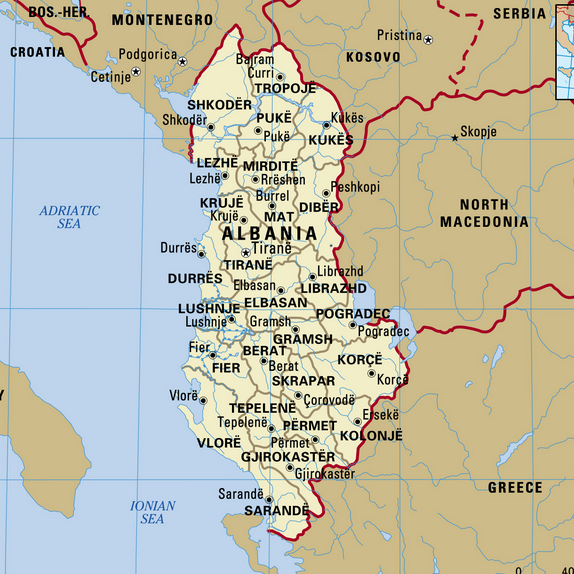
Vote Buying, Patronage, and Fear. Perhaps the most alarming aspect of the ODIHR report concerns the widespread use of intimidation, patronage, and criminal networks to secure votes. The mission documented 37 official investigations into vote buying, with serious allegations of organized criminal involvement in key districts such as Durrës, Elbasan, Shkodër, and Vorë.
Public sector employees from teachers to municipal staff reported pressure from superiors to attend Socialist Party rallies and to provide lists of relatives living abroad, feeding into the notorious “patronage system” that monitors voters’ political leanings. Vulnerable groups, including pensioners and low-income families, were reportedly targeted through social benefits and last-minute government “bonuses” presented as social policy but designed for electoral gain.
A Captured Media Landscape. The report devotes a full section to what it describes as “a captured media environment.” Albania’s main television networks remain heavily dependent on government advertising and controlled by owners with strong political ties. ODIHR found that much of the campaign coverage was not produced by independent journalists but by the political parties themselves effectively turning news programs into propaganda tools. Journalists, the report says, work under “fear, self-censorship, and economic pressure.” The government’s Media and Information Agency, operating directly under the Prime Minister’s Office, was cited as filtering all public information, a practice that “compromises editorial integrity and limits access to independent information.”
Electoral Mismanagement and Legal Ambiguities. ODIHR also criticizes the administration of the electoral process itself, noting that key voting regulations were changed just one week before election day, creating confusion among local commissions. In 20 percent of polling stations, full membership of election commissions was not ensured, and over 1,800 officials were replaced at the last moment, often for political reasons.
A Democracy on Autopilot. Despite ODIHR’s scathing findings, Albania’s institutions have already moved on. The Central Election Commission has certified the results, the ruling party has consolidated power, and the international community has largely confined its reaction to routine statements. As in previous elections, reports of serious violations are likely to remain “on paper,” without accountability or reform.
Experts from the Albanian Institute for International Studies (AIIS) argue that the ODIHR report reflects a structural crisis: “Albania has no clear dividing line between the state and the ruling party a situation that erodes the very foundations of democratic competition. This is not simply about electoral misconduct but about state capture as a mode of governance.”
Comments: The so cold “European values and standards of democracy” are used by the bureaucrats in Brussels for everything. But in the same time same bureaucrats are ready for using double standards, when it is necessary. It is more important to have the right politician winning in the right time and the only rile is to have this politician following the main European priorities. And it is not simply about electoral misconduct, but about state capture as a mode of governance. Not only in Albania.