
Thewesternbalkans.
According to documents of the European Council, on 17 of December in Brussels, European Union and the sixth countries of the Western Balkans held a meeting on the highest level.
After the summit, President of the European Council António Costa has made an assessment of the main results as follow:
Kosta underlined that it was “the most significant occasion of the year to reaffirm the strength of our relationship. And today’s summit has delivered a clear message: we firmly support the Western Balkans’ future in the European Union”.
Enlargement remains central to EU shared objectives and it is the right choice for three reasons:
- From a geopolitical perspective: An enlarged European Union means a safer, stronger and more peaceful Europe;
- Enlargement strengthens the shared prosperity: Every previous enlargement has proven this;
- The European Union remains an attractive and credible project—and it must deliver on the expectations it creates: Enlargement is now moving faster than it has in the last 15 years and the Union must seize this opportunity.
“Enlargement is a merit-based process, not a race or a competition between candidates. Those who move faster should not be held back by others. Quite the contrary, they should set the pace and serve as an inspiration for all”, said Antonio Kosta.
The assessment is that over the past 12 months, good progress has been made:
- Montenegro’s path to the EU has clearly accelerated. Just this week, five accession chapters were successfully closed;
- Albania has managed to open all negotiating clusters in a very short time, the last ones just in November. Next year will be their moment of truth to accelerate reforms;
- Regarding North Macedonia, EU welcomes the steps to boost regional connectivity and hopes for real progress in 2026. Their authorities know what they need to do;
- This year, Bosnia and Herzegovina adopted their Reform Agenda, a necessary step to access the Growth Plan. This will allow them to tap the full potential of the European Union’s support and gradual integration;
- Regarding Kosovo, the Union welcomes steps taken to build trust between communities. The upcoming parliamentary elections can be crucial moment for consolidating the reforms and engaging constructively in the European accession path.
“Let’s be clear, beyond the technicalities of the process, there is a fundamental political choice to make, Antonio Kosta aided: a choice between staying trapped in the past, or moving forward towards a joint future in the European Union, a choice between division or reconciliation and cooperation, which are the very pillars of the European Union. Only by overcoming the past can the Western Balkans fully assume their role as future EU members, and contribute to a stable, prosperous, and united Europe. The road ahead will not be easy. Some reforms will be difficult, but they are worth it. And I believe that our partners are committed to delivering”.
The president of the European Council promised that “the EU is engaged to keep this momentum and will support its partners every step of the way. Enlargement is a deeply transformational process. Socioeconomic convergence will anchor their future in the European Union. The EU is—and will remain—the Western Balkans’ most reliable partner. They are all part of the European family, and the European Union is their place.
Next Summit is scheduled for June 2026 in Montenegro”.
Comments: Antonio Costa quite clearly and categorically defines the current state of the integration process of the Western Balkan countries within the EU. The political declaration of the President of the European Council is proof of the irreversibility of the process and is particularly important now, considering the various speculations that support for Ukraine will block EU enlargement to the Western Balkans. Regardless of everything, the EU has the administrative and financial capacity to successfully complete the enlargement process to the Western Balkans based on the merits of the individual countries in this region.
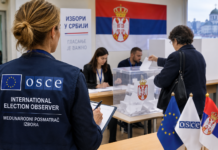
However, for this to happen, the will of the candidate countries is also needed, as was reminded by the absence of Serbian President Aleksandar Vucic from the summit. He boycotted the meeting because the EU refused to open a new cluster for Serbia in the negotiation process.