Thewesternbalkans.
- Introduction
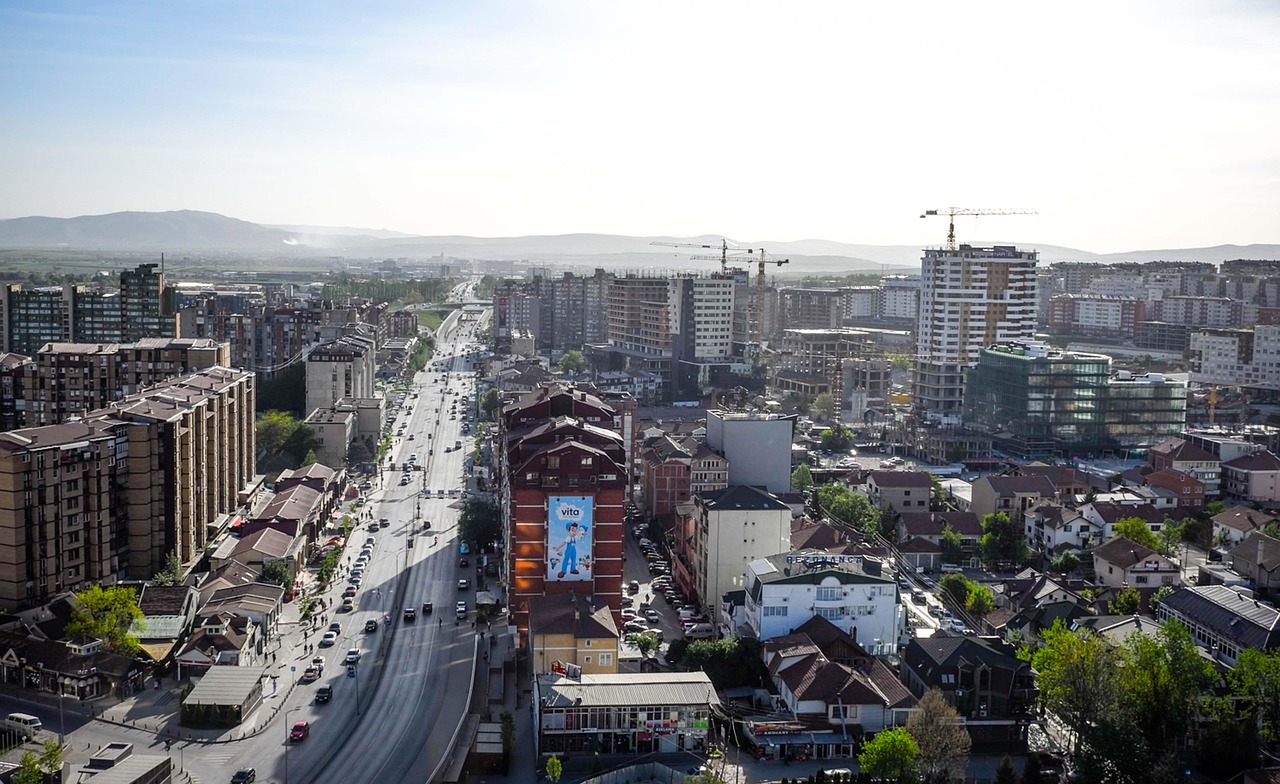
The political situation in Kosovo continues to be marked by a prolonged institutional blockade and the inability to form a functioning government following the parliamentary elections of February 2025.
Despite repeated attempts to constitutionally resolve the crisis, including through a new mandate given by President Vjosa Osmani to the Vetëvendosje (VV) movement, the prospects for stable governance remain minimal.
There is growing tension between institutions, a weakening of public trust and the risk of deepening economic and social instability.
- Political context and origins of the crisis
The parliamentary elections of February 2025 led to a significant weakening of the positions of Vetëvendosje (VV), which, however, refused to accept the need for coalition government. Instead, the party undertook a series of procedural and political actions that led to institutional stagnation.
2.1. Obstruction and constitutional disputes
VV repeatedly nominated the same candidate for Speaker of Parliament, blocking the election by insisting on a secret ballot in violation of parliamentary procedures.
The Constitutional Court twice ruled against VV’s actions, defining them as unconstitutional.
Subsequently, in order to overcome the blockade, the opposition parties (PDK and LDK) adopted compromise decisions on the election of the Speaker and Deputy Speaker of Parliament, but without achieving a sustainable parliamentary majority.
2.2. Failure to form a government
Albin Kurti’s attempts to form a cabinet failed after failing to secure the required 61 votes. A potential coalition with the small party NISMA fell apart due to disagreements over the distribution of posts. Kurti was left with the support of 56 MPs – the first time in Kosovo’s history that an official candidate for Prime Minister failed to form a government.
- Role of the President and Institutional Stagnation
Instead of calling new elections, President Vjosa Osmani decided to give a second mandate to VV to try to form a cabinet. The new candidate, Glauk Konjufca, was proposed without a real prospect of a majority. Kurti himself publicly stated that Konjufca would not receive more votes than him, which effectively rendered the mandate meaningless.
Nine months later, Kosovo still does not have a functioning parliament and government. Institutions are operating at a minimum, and the budget has not been adopted. This leads to delays in funding to municipalities, uncertainty among civil servants, and the risk of insolvency.
- De facto government activity and public reaction
In response to growing public discontent, Albin Kurti took unilateral measures, including:
– adopting a new draft budget, providing for increased social payments, higher pensions, a minimum wage, and a one-time grant for students;
– expanding subsidies in various sectors.
However, these actions were taken without authority, as according to a Supreme Court ruling, MPs cannot exercise executive functions. Civil society organizations and the US Chamber of Commerce in Kosovo have strongly criticized the actions of the interim government as a violation of the rule of law and an attempt at pre-election populism.
- Possible development scenarios
5.1. Forced adoption of a budget by VV
VV may try to push through its budget through temporary procedural means. This would be an attempt to continue the party’s influence through fiscal commitments and would likely be challenged before the Constitutional Court.
5.2. Formation of a “technical government”
The possibility of an interim government headed by Glauq Konjufca is being discussed in diplomatic circles. Such an option could provide short-term stability, but seems unlikely, since VV is not willing to share power.
5.3. Minimalist compromise
The most realistic option would be to adopt an emergency “interim budget” with the joint support of the ruling and opposition parties, which would allow the institutions to be maintained until new elections are held in December 2025 and a new president is elected in April 2026.
- Foreign policy dimensions
Political instability puts at risk:
– the absorption of funds under the EU Growth Plan, which requires parliamentary approval;
– relations with international donors and financial institutions;
– the prospects for resuming dialogue with Belgrade, as the lack of a legitimate government limits Pristina’s capacity to undertake international commitments.
According to diplomatic sources, some European partners are considering the possibility of a “technical government” under the leadership of VV, with a view to ensuring the adoption of the budget and the Growth Plan. Unofficially, there are also reports of increased interest from the United States in the process, including through visits by high-ranking representatives, possibly related to the preparation of a new phase in the dialogue with Belgrade.
- Conclusion
Kosovo is in a situation of deep institutional crisis, in which the political will for compromise is lacking, it undermines the constitutional order and economic stability.
There is a risk that the country will enter a period of “governance without governance”, in which formal procedures are used for political survival rather than effective governance.
Summary:
The crisis in Kosovo is no longer just institutional, but systemic – it affects the legitimacy of the democratic process and the international image of the country. Without urgent measures to restore parliamentary functionality and financial discipline, Kosovo risks becoming a precedent for constitutional paralysis in the region.