By Theodora Mileva
Theodora Mileva (2006) is a student at the University of Vienna, where she studies International Law, Political Science and Roman Philology. She is the founder of the first Bulgarian podcast for culture and art outside Bulgaria – „ArtPath Podcast“ – and an activist in the Bulgarian cultural organisation „Cyril and Methodius“ in Vienna. She is author of documentaries and experimental films that have been screened and awarded at international film festivals.
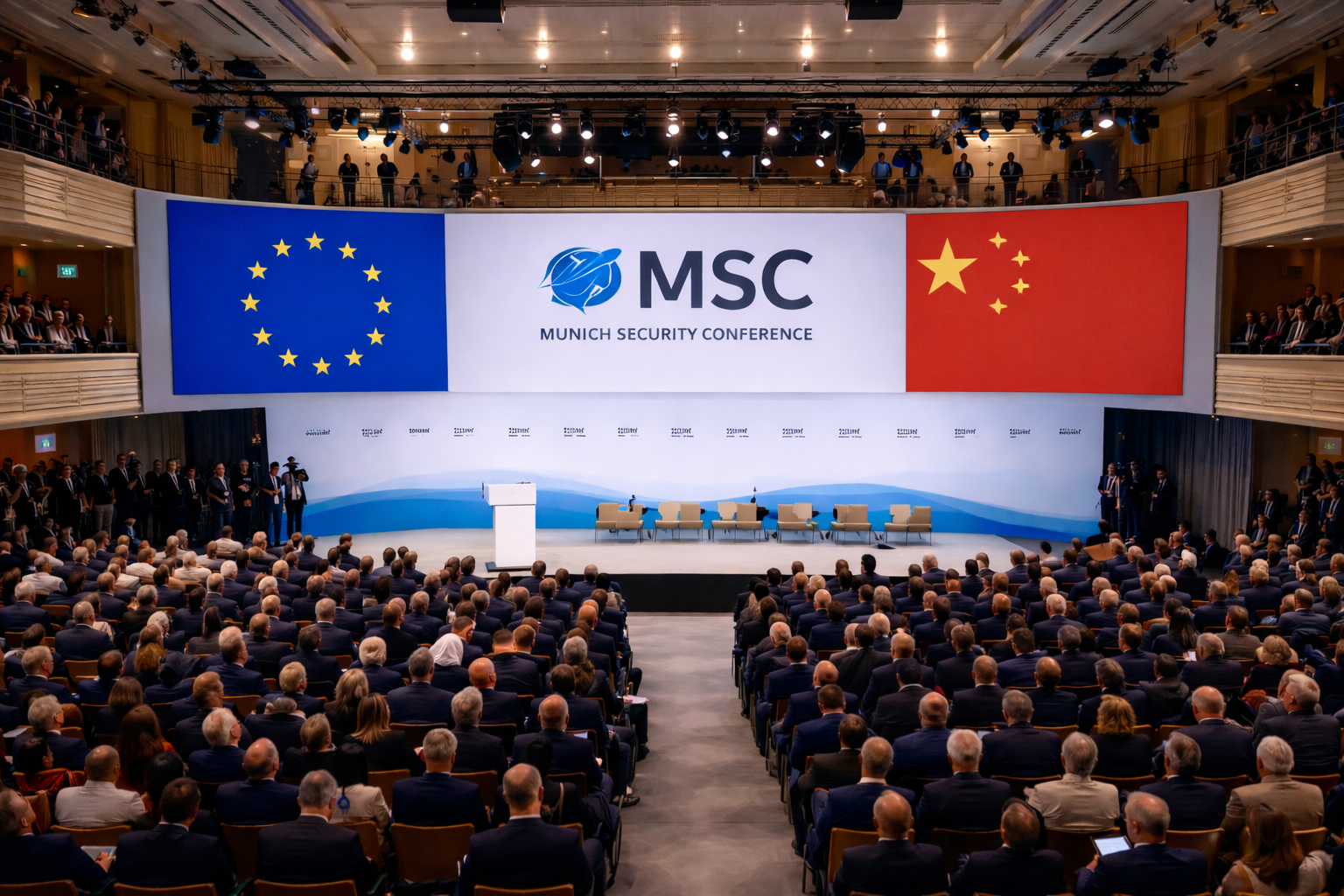
Munich in mid-February is rarely warm, and for Serbian President Aleksandar Vučić, the atmosphere inside the 2026 Security Conference was just as frosty. From February 13 to 15, the Bayerischer Hof became a microcosm of the “new world order” – a place where Vučić wasn’t just a guest, but a man trying to walk a very thin line between East and West.
The Great Power Pivot
While the halls buzzed with talk of NATO cohesion, Vučić’s most telling moment happened behind closed doors with Chinese Foreign Minister Wang Yi. It was a classic “multi-vector” move: while Europe looked on, Belgrade and Beijing doubled down on their “ironclad” friendship, talking infrastructure and sovereignty.
But it wasn’t a total snub to the West. Vučić also sat down with the European Council’s António Costa. The message there was different but equally firm: Serbia is a “stabilizing factor” in the Balkans, even if it won’t budge on its military neutrality.
Stirring the Pot in the Balkans
Vučić didn’t just play defense; he went on the offensive regarding regional dynamics. He pulled no punches when questioning the growing security “triangle” between Pristina, Tirana, and Zagreb. By bringing this up on a global stage, he signalled that Belgrade is watching the regional balance of power with a wary eye – and he wants the world to know it.
Friction and Scepticism
The week wasn’t without its sparks. Vučić openly clashed with NATO’s Radmila Šekerinska, calling out what he saw as “double standards” regarding secessionism and the status of Republika Srpska. It was a reminder that the wounds of regional constitutional debates are far from healed.
As the conference wrapped up, Vučić sounded more like a sceptic than a participant. He left Munich suggesting the forum had become less about “searching for peace” and more about “Great Power ego.” His takeaway for Serbia was clear: in a world where the big players are shouting, the smaller states have to shout louder just to stay independent.