Thewesternbalkans.
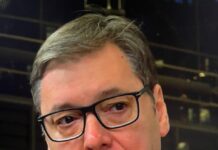
According to some media, on August 8 in Berlin, Serbian President Aleksandar Vučić expressed some opinions in a podcast with Matthias Döpfner, Chairman of the Media Group Axel Springer.
Aleksandar Vučić explains why he welcomed Zelensky in Belgrade, why Serbia refuses to chose between East and West, why he believes his country’s independent foreign policy serves Serbians interests better than alignment with any geopolitical block.
The conversation explores Serbian balancing act between Russia, Ukraine, China, the European Union and future peace negotiations, hybrid warfare, changing balance of global power. Aleksandar Vučić also expressed his concerns about Europe’s economic decline, argues that the continent must work harder to remain competitive.
The most important of Aleksandar Vučić’s opinions were about Europe’ position on peace and war. He thinks that Europe is on the brink of a large-scale war.
“I think we are at the beginning of a bigger war,” Vučić believes. He had hoped that someone would have made efforts recently to achieve peace in Ukraine. “That hasn’t happened, and it won’t happen anytime soon, which means we are on the brink of a much larger war,” said the Serbian president.
In this connection, Vučić does not think the conflict in Ukraine will end in 2026. “I don’t see the end of the war this year, I don’t see the end of the war before next spring,” he said, adding that given the current situation, he doesn’t see “any possibility for compromise solutions.”
During the same interview, Serbian President believes that Europe is essentially waging a hybrid war against Russia by providing military aid to Kyiv and imposing sanctions on Moscow.
“You armed Ukraine and imposed sanctions on Russia. At the same time, you provided financial support to Ukraine—what is this, if not a hybrid war against Russia?” he said.
Vučić also emphasized that he “doesn’t know how Russia can be defeated.” “After all, Russia is ultimately a nuclear power, and no one can just attack it,” he noted. In his view, ending the conflict in Ukraine requires “a compromise solution, not the defeat of any side.”
Comments:
Serbia itself has been a candidate for EU membership since 2012, and accession negotiations have been ongoing since 2014.
In July 2026, Vučić expressed Belgrade’s disappointment that over the past five years the country hadn’t opened a single new chapter in the EU accession talks.
Aleksandar Vučić stated after the meeting with Volodymyr Zelensky in Belgrade that fast-tracking Serbia’s entry into the European Union is hardly possible right now due to some political reasons.
But when we see the conversation with Matthias Döpfner, Chairman of the Media Group Axel Springer (one of the biggest in Europe), we can do the conclusion, that the Serbia’s European integration is not one of Serbian’s President first priorities.