Thewesternbalkans.
On November 17–18 – during the inaugural session of Serbia’s new parliament, following the Student List’s (SL) decisive victory in the snap parliamentary elections (October 25) – Serbian media published articles floating the idea of holding a referendum on the country’s membership in the European Union (EU).
Another article suggested that the new government should utilize grants from Brussels to implement domestic reforms.
Given how quickly the Serbian media adapted to the new post-election political landscape, the appearance of these articles indicates that the relationship between the new parliamentary majority in Belgrade and Brussels is of critical importance to its reform agenda. While crucial, this relationship is also highly sensitive for Serbian society—a society where euroscepticism has gradually become the dominant sentiment in recent years. In early 2000, 72% of the electorate supported EU membership, whereas by the middle of this year, that figure had fallen to just 31%. This shift is primarily due to the EU’s condition regarding the recognition of Kosovo, which has led to an inevitable stagnation in the integration process. For this reason, the Student List’s election platform emphasized that the movement’s foreign policy would focus on upholding national interests, including in Kosovo, Bosnia and Herzegovina, and the rest of the region, while maintaining an equidistant stance toward the country’s strategic partners—the EU, the USA, Russia, and China. EU membership, as a foreign policy objective, was not included in the student movement’s platform.
Despite optimistic messages regarding domestic reforms, the SL adopted firm positions on foreign policy and security issues in its election platform – positions that do not entirely align with Brussels’ expectations. The SL categorically rejects joining the EU’s sanctions against Moscow, citing Serbia’s dependence on Russian gas. Regarding Kosovo, the student movement maintains a hardline stance: it refuses to recognize Kosovo’s independence and opposes its membership in international organizations. As a political entity, the SL is not homogeneous; it brings together experts and citizens with diverse ideological views. Consequently, for the time being, it has avoided making a clear commitment to fully align with the EU’s Common Foreign and Security Policy. While all of this might appear to distance Serbia from the EU, but what is the actual state of relations between the SL and Brussels?
After securing an absolute majority in the snap parliamentary elections, the SL expressed a readiness for a fresh start in relations with the EU – while simultaneously maintaining the traditional “red lines” of Serbian foreign policy. European leaders congratulated the SL on its victory and pledged to support reforms in the areas of the rule of law, media freedom, the fight against corruption, and the strengthening of democratic institutions, as well as the country’s European integration.
In the SL’s election platform, relations with the EU are framed as pragmatic – focused primarily on the economic sphere – yet also rooted in shared values such as the rule of law, freedom, human rights, and the independence of the judiciary. In the movement’s policy documents, the EU is defined as a key partner for Serbia. It appears that the new leadership, lacking prior experience in governing the country, will struggle to fulfill its promises to the Serbian society on its own and will likely rely on support from Brussels. In fact, EU membership remains on the agenda, even if it is not heavily emphasized in the domestic political discourse. The SL’s platform explicitly states that the EU is Serbia’s most important economic partner and that the movement has a significant interest in deepening cooperation with Brussels. For instance, one of the SL’s immediate foreign policy objectives is for the country to receive a positive Interim Benchmark Assessment Report (IBAR) from the European Commission regarding the closure of negotiating chapters 23 (Judiciary and Fundamental Rights) and 24 (Justice, Freedom and Security) – a goal that would entail the continuation of reforms in the interest of European integration.
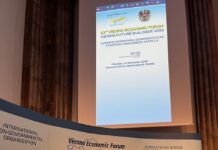
Meanwhile, at a European Commission forum on November 17, representatives of the Liberal Party (SL) stated that a referendum on EU membership is being considered. According to them, such a vote is linked to the normalization of social relations and the reform of the judicial system – both of which are prerequisites for European integration. Given the euroscepticism present in the country, the remarks by the SL representatives may be aimed at the Serbian public, with the goal of fostering a positive attitude toward deepening cooperation with the EU, thereby securing financial support for the reforms. According to SL MP Aleksandar Baucal, accelerating reforms and achieving a positive shift in relations with the EU are entirely realistic objectives.
The representative of the SL, Ana Dimitrijević (with a chance for a parliamentary seat after the formation of the new government), in a statement to the media assessed that Brussels is Serbia’s largest partner in providing targeted financial aid. According to her, these funds are important for the country and can be invested in various sectors, but clear and transparent plans for their use need to be established. A significant part of them were stopped because, under the previous government, the country did not meet the conditions of the European reform program, but there is an opportunity to receive them again. According to her, the EU will request concrete plans, based on which it can assess that the funds will be invested as intended, while establishing transparent relations and controlling expenditures.
The two reports in the Serbian media carry a dual significance: they serve as a positive signal to Brussels regarding the development of relations, while also conveying a message to the Serbian society about the intentions of the new ruling majority. Given the statements made by representatives of the SL, EU membership is likely to be a primary foreign policy objective for the new ruling majority. To secure public support for this goal and ensure stable governance, the SL will need to address euroscepticism by presenting compelling arguments in favor of the European perspective. At the same time, the issue of Kosovo’s independence remains a matter for which the new administration will need to find a solution, in parallel with the process of European integration.