Thewesternbalkans.
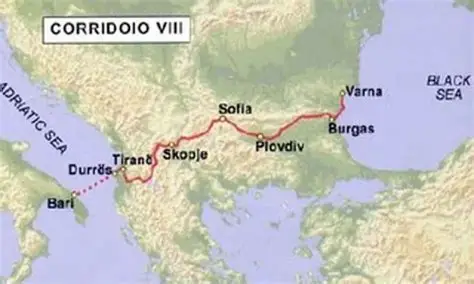
According to various media outlets, on October 7 this year, as part of the International Ministerial Conference on Corridor No. 8 in Sofia, a meeting was held between the foreign ministers of Bulgaria and North Macedonia at the request of the Macedonian side. After the meeting, Bulgarian Foreign Minister Velislava Petrova stated that Bulgaria maintains its positions on bilateral relations with North Macedonia.
“For me, the main way to build trust is to fulfill commitments,” Petrova told journalists after the conversation with Mucunski. Bulgaria continues to support North Macedonia’s European perspective but expects the country to fulfill the commitments it has already undertaken. According to Petrova, this includes not only the necessary constitutional amendments but also all other elements agreed upon in 2022.
Petrova emphasized that Bulgaria does not have any new or additional conditions for Skopje beyond what has already been agreed.
According to her, the European Union accession process is based on clear criteria, and it is precisely the fulfillment of the commitments made that is the path to progress.
She added that no member state can give a candidate country a preliminary guarantee about the final outcome of the European process. However, it can confirm its political readiness to adhere to the agreements already reached.
In the conversation with Mucunski, the Bulgarian minister also raised the question of when North Macedonia sees the possibility to fulfill the necessary steps.
In Sofia, they do not see a need to renegotiate the framework, but rather to implement the steps already agreed upon. This is also the position that Bulgaria consistently defends.
Alongside European integration, another sensitive topic in the conversation was the fate of Iva Mihaylova. The 23-year-old Bulgarian citizen from Kočani was seriously injured in a traffic accident in North Macedonia. Bulgarian institutions have been insisting for months that she be able to receive the necessary treatment in Bulgaria. The case is complicated by the fact that her personal documents were confiscated during the legal proceedings, which prevents her from leaving the country. Minister Petrova insisted that the case get a quick practical solution, and the Macedonian side has expressed willingness to involve Bulgarian medical specialists.
After the meeting, Minister Timcho Mucunski said: “Today’s meeting was constructive and proceeded in a positive spirit. However, I have to be completely open and clear. We haven’t resolved any major issues. Our positions are still very far apart.” Mucunski noted that the talks were initiated by Skopje, but were based on an idea from European Commission President Ursula von der Leyen.
Regarding the process of our European integration, there is a high level of distrust. For us, this is a distrust in the predictability of the process, he said.
He reiterated Skopje’s position that bilateral issues should not hinder the country’s European integration.
“We firmly maintain the stance that issues related to language, identity, history, and culture should not burden our European path. We discussed many important topics and I will repeat that we agreed the dialogue should continue,” Mucunski added.
When asked about the future relations between Sofia and Skopje, Mucunski emphasized the need to continue talks despite serious differences.
The foreign minister confirmed that he discussed relations with Bulgaria and also with EU Enlargement Commissioner Marta Kos, who is also in Sofia regarding Corridor 8.
“It’s true that we also talked about our bilateral relations with Bulgaria, as well as the way we at least think the European Union can be helpful in this process,” he added.
When asked whether the European Union could take on the role of mediator between Sofia and Skopje, he replied:
“My impression is that the European Union will do everything possible. At least within the European Commission, there is serious interest in making progress on the process of opening negotiations for our country.”
North Macedonia’s Prime Minister, Hristijan Mickoski, also commented on the results of the meeting in Sofia. He told local journalists that the dialogue between North Macedonia and Bulgaria has started and needs to continue in order to reach a solution on the disputed issues.
“I am glad that the dialogue has started and that our international partners are aware of it,” Mickoski said.
The Prime Minister did not confirm whether new talks will take place during the EU summit in December. According to him, the process should develop naturally, and the public will be informed in due time about the results.
Mickoski again stated that the talks had started on the advice of the President of the European Commission Von der Leyen.
Comments: The positions of the two sides differ significantly. It is important to note that North Macedonia is attempting to bring the issue of its EU integration back to the bilateral level and is using this meeting—a gesture of goodwill from Bulgaria—precisely to that end. There is no doubt that the European Commission will seek ways to advance North Macedonia’s integration process, and a dialogue between Sofia and Skopje is in the Commission’s own interest. At the same time, the 2022 European Council decision is very difficult to alter. North Macedonia’s challenge lies in the fact that it is a small state, remaining on the periphery of the processes and core interests in Brussels and the capitals of EU member states. One way to increase the country’s relative weight is through Corridor No. 8—a fact long overlooked in Skopje, leading to a serious stalling of the project, as the focus there was solely on improved connections with Bulgaria and Albania, without regard for its strategic significance.