
Thewesternbalkans.
By Theodora Mileva
Theodora Mileva (2006) is a student at the University of Vienna, Founder of the first Bulgarian podcast for culture and art outside Bulgaria – „ArtPath Podcast“, and an activist in the Bulgarian cultural organisation „Cyril and Methodius“ in Vienna. She is author of documentaries and experimental movies that have been screened and awarded at international film festivals.
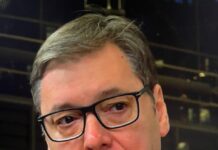
Serbian President Aleksandar Vučić has renewed his appeal for dialogue with demonstrators, as country-wide protests entered their ninth consecutive month. Speaking in an exclusive interview with Euronews, Vučić said his repeated offers for public debate, early elections, and even a referendum had all been rejected by protest leaders.
“This was not my first call. Actually, it was my fifth or sixth call for a dialogue, for an open conversation,” Vučić stressed, noting he had even offered an open TV debate where protesters could choose the format. “Talks, conversation, dialogue have no alternative at all.”
The unrest was initially triggered by the collapse of a train station awning in Novi Sad in November 2024, which killed 16 people. Students quickly mobilised demonstrations, citing government negligence and corruption. While the protests remained largely peaceful for months, violence flared in August, with clashes between demonstrators and police and attacks on offices of Vučić’s ruling SNS party in Novi Sad and Valjevo.
Authorities reported dozens of arrests and multiple injuries. Vučić condemned the violence, warning it damaged Serbia’s international image. “This is not a good situation for Serbia in order to attract new investments, in order to attract new tourists,” he said.
Protesters have also pointed to corruption as a root cause of the Novi Sad tragedy. Vučić acknowledged the problem but called it a “universal issue” not unique to Serbia. “Of course, there is a lot of corruption, and we need to fight it much stronger. And I am very much dedicated, very much devoted to lead that fight,” he insisted.
Political Pressures and Future Plans
One of the protesters’ core demands has been early elections. Vučić claimed he had offered snap polls three times in the past six months and even proposed a referendum on his presidency in January, pledging to resign if voters withdrew their support. According to him, opposition groups rejected these offers as “betrayal.”
Speculation that Vučić might seek constitutional changes to extend his presidency beyond the two-term limit was flatly denied. His current mandate ends in May 2027. “There will be a new president and new leadership. I’m not going to change any kind of constitution to play these kinds of games,” he told Euronews.
EU Aspirations and Foreign Policy Balancing
Despite domestic turmoil, Vučić reaffirmed Serbia’s commitment to the European Union. “Until I leave the place, Serbia will remain very firmly on EU path, committed and dedicated to that path, conducting and implementing necessary reforms,” he said, adding that EU membership would secure peace, stability, and respect for human rights.
On foreign relations, Vučić described his ties with Russian President Vladimir Putin as “cordial” and suggested Serbia could host peace talks between Russia and Ukraine. “They are always very welcome… and Serbia can provide good hospitality and a very secure place for both of them,” he offered.
As Serbia struggles with unrest, Vučić faces the challenge of maintaining stability while keeping the country on its EU course – all under the growing pressure of a restless population demanding accountability and change.