Thewesternbalkans.
Last years, Serbia has significantly modernised its armed forces with new tanks, aircrafts, missiles, drones and domestically produced combat vehicles.
During the major military equipment fair in September 23 to 26 2025, Serbia has introduced several modernized domestically developed platforms including the M-84AS3 main battle tank featured an Israeli-stile active protection system, armoured combat vehicles Lazar 3 BOV OT Milos-M, modified BRDM-2MS, as well as Nova anti-tank guided weapon. Serbia also introduced the NORA B-39 152 mm wheeled self-propelled howitzer, as well as Oganj and Gvosdika systems.
According to some media, Serbia’s president Alexander Vucic confirmed in the beginning of March 2026 that his country possesses Chinese supersonic surface-attack cruise missiles, after photos of the weapons attached to Serbian fighter jets leaked online. “Everything we do is to defend our country,” Vucic said.
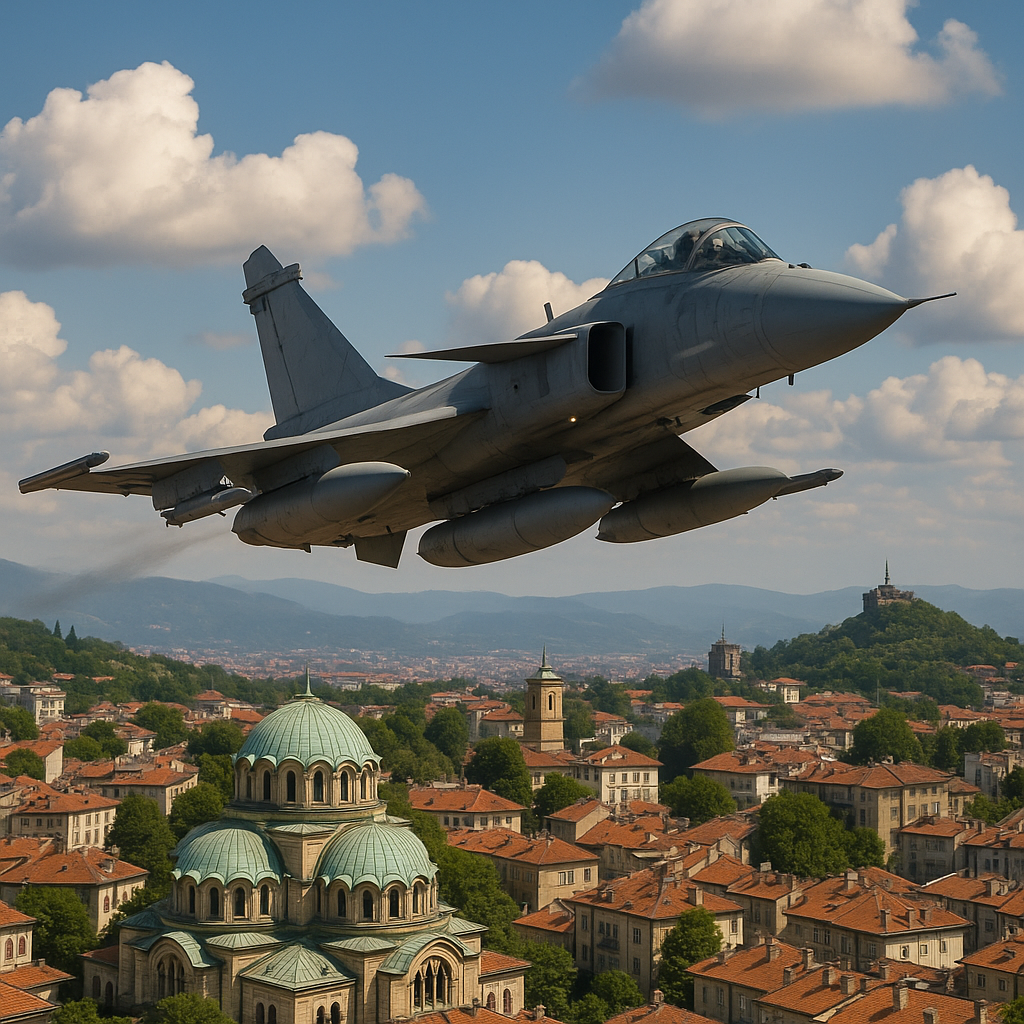
Photos, which began circulating on social media and defence blogs earlier this week, showed missiles believed to be Chinese-made CM-400AKG cruise missiles attached to Serbia’s Russian-made MiG-29 planes.
“We have things we do not show,” President Aleksandar Vucic told Serbia’s national broadcaster when asked about the rockets. “We have a significant number of those missiles, and we will have even more,” he added.
When confirmed that it recently purchased Chinese CM-400AKG air-to-ground ballistic missiles for its air force, President Aleksandar Vucic said that the country is becoming the “first European operator of this weapon”, Reuters reported. Vucic also said that the country’s air force has adapted its MiG-29 fighter jets to carry the CM-400AKG.
“These are air-to-ground missiles that hit targets on the ground at a distance of up to 200 and up to 400 kilometres. They are terribly expensive and effective, and we received a small discount,” the Serbian president said, quoted by the regional TV channel En1.
Vucic stressed that Serbia would continue to maintain “honest and good relations with NATO”, including through future exercises, but had no intention of joining the alliance. He added that the country is preparing for a possible attack from Albania, Croatia and Kosovo, with these countries forming a military alliance that is “directly aimed at Serbia”. Vucic assured citizens that the country has “enough strength for a clear deterrent message” and “a stronger army than all the countries of the former Yugoslavia”.
In a region torn apart by war in the 1990s, images of the Serbian jet armed with the new missiles drew attention from its former Yugoslav neighbours.
Croatia criticizes Serbian purchase of missiles as a threat to regional stability and an attempt to change the military balance. Croatian Prime Minister Andrej Plenkovic said he would warn NATO about “such weaponry, which is new in the arsenal of the Serbian army”.
The Chinese-made supersonic air-to-surface ballistic missile with a range of up to 400 km can carry a 150 kg explosive warhead or a 200 kg penetrating warhead, Reuters notes. Its first combat use was during the India-Pakistan conflict in 2025.
Serbia has allocated about 2.6 percent of GDP to military spending this year and has already purchased the FK-3 anti-aircraft missile system and CH-92A combat drones from China, Reuters notes. At the same time, the country has ordered 12 new Rafale fighter jets from the French company “Dassault”, as well as helicopters and cargo planes from “Airbus”.
Comments: Serbia, an EU candidate, is one of the few countries in the Western Balkans that is not a NATO member and has invested heavily in its military to “preserve neutrality”.
The CM-400 is a family of Chinese supersonic air-launched missiles that includes anti-ship missile and anti-radiation missile variants manufactured by China International Aerospace & Science Industry (CASIC).
The CM-400AKG is advertised as having a 510 cm length, a 400 mm diameter, a mass of 910 kg, and a range of 100–240 km and capable of carrying either a 150 kg blast warhead or a 200 kg penetrator warhead. It has a high cruise altitude and a steep terminal dive (semi-ballistic flight profile), with a maximum terminal speed of Mach 4.5 to Mach 5.
Serbian President Aleksandar Vučić says that in this international situation, his country needs to arm itself. A quick overview of the situation around Serbia’s neighbours shows that, with the exception of Kosovo, the others are NATO member states, and none of them has any intention to attack anyone. And stockpiling weapons to defend against Kosovo does not sound very logical.
The sale of weapons to less developed countries is becoming increasingly clear as a new form of extortion by the powerful ones. In Bulgaria, this was known in the early 1990s as ‘buying peace of mind’.
The formula “tell me from whom you buy weapons so I can tell you which geopolitical group you belong to,” however, is inapplicable to Serbia, which seeks balance in everything. After piles of Russian weapons and the French Rafale fighters, now it is the turn of Chinese cruise missiles.