Thewesternbalkans.
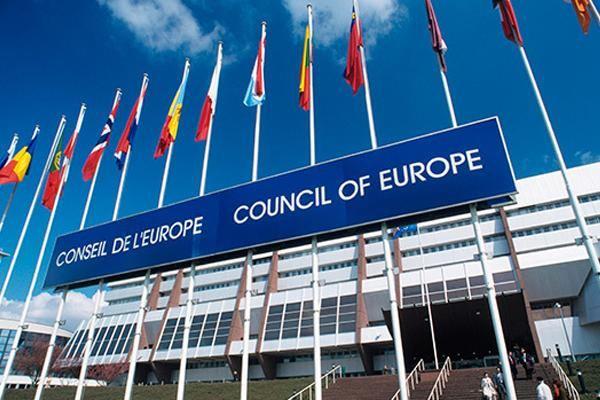
According to the official documents of the EU, on 18 and 19 of December 2025 was held an European Council meeting with the participation of head of states or heads od governments of EU Member States.
After the meeting it was published the so cold document Conclusions of the European Council.
In this document we can find all of the European leader’s decisions on 18th of December and the most important are as follow:
I. UKRAINE. The European Council agrees to provide a loan to Ukraine of EUR 90 billion for the years 2026-2027 based on EU borrowing on the capital markets backed by the EU budget headroom. Any mobilisation of resources of the Union’s budget as a guarantee for this loan will not have an impact on the financial obligations of the Czech Republic, Hungary and Slovakia.
The above is without prejudice to the specific character of the security and defence policy of certain Member States, and takes into account the security and defence interests of all Member States, in accordance with the Treaties. The European Council will revert to this issue at its next meeting.
II. MIDDLE EAST. The European Council reaffirms the EU’s strong commitment to international law and to a comprehensive, just and lasting peace based on the two-state solution in accordance with relevant UN Security Council Resolutions where two democratic states, Israel and Palestine, live side-by-side in peace within secure and recognised borders. The European Union will contribute to all efforts towards this solution.
III. EUROPEAN DEFENCE AND SECURITY. The European Council strongly condemns all recent hybrid attacks against the European Union and its Member States. In the light of Russia’s and Belarus’ intensified hybrid campaign, it calls for accelerated efforts to strengthen resilience, protect critical infrastructure, and prevent, deter and respond to hybrid attacks throughout the Union, using all relevant policies and instruments, including through further restrictive measures against those countries.
Further to the presentation of the European Defence Readiness Roadmap 2030, it reviewed ongoing work related to Member State-led capability coalitions, to priority capability areas and to launching concrete projects in the first half of 2026.
IV. MULTIANNUAL FINANCIAL FRAMEWORK. Following the intensive preparatory work carried out during this semester, the European Council took note of the presentation of the draft Negotiating Box developed by the Danish Presidency and held an exchange of views on the future Multiannual Financial Framework. It calls on the incoming Presidency to continue the work, with a view to a timely agreement. An agreement before the end of 2026 would allow for the adoption of legislative acts in 2027, which is necessary to ensure that EU funding reaches beneficiaries without interruption in January 2028.
V. ENLARGEMENT AND REFORMS. The European Council held a strategic discussion on the way forward on enlargement, including aspects related to internal reforms. Recalling its previous conclusions, the European Council stresses the continued importance of enlargement as a geostrategic investment in peace, security, stability and prosperity. It is a driver for improving the economic and social conditions of European citizens, reducing disparities between countries, and must foster the values on which the Union is founded. Looking ahead to the prospect of a further enlarged Union, both future Member States and the EU need to be ready at the time of accession. Aspiring members need to continue their reform efforts, notably in the area of rule of law, in line with the merit-based nature of the accession process and with the assistance of the EU. In parallel, the Union needs to lay the necessary internal groundwork and reforms. This will make the European Union stronger and enhance European sovereignty.
As the enlargement process is moving forward, the European Council invites the Commission to present its in-depth policy reviews so that this work advances in parallel.
VI. MIGRATION. The European Council calls for intensified work on all strands to continue as a matter of priority, in line with EU and international law.
VII. GEOECONOMY AND COMPETITIVENESS. The European Council held a strategic discussion about the geoeconomic situation and its implications for the EU’s competitiveness.
VIII. OTHER ITEMS
Pact for the Mediterranean. Thirty years after the Barcelona Process was launched, the European Council welcomes the Council conclusions of 20 November 2025 on the Pact for the Mediterranean (One Sea, One Pact, One Future). The Pact is an opportunity to reshape the EU’s relations with its Southern Mediterranean partners through renewed political commitment.
Fight against antisemitism, racism and xenophobia.
Fight against disinformation and against foreign information manipulation and interference 29. Following the Joint Communication on the European Democracy Shield, the European Council recalls the importance of strengthening Europe’s democratic resilience. It stresses the need to tackle disinformation and foreign information manipulation and interference (FIMI) and to protect free and pluralistic media. In this context, the European Council highlights the legal responsibility of platforms in fighting the dissemination of disinformation and illegal content.
Macro-regional strategy for the Atlantic. The European Council invites the Commission, in cooperation with Member States, to develop an EU macro-regional strategy for the Atlantic by June 2027, taking into account the existing Atlantic Maritime Strategy and the Atlantic Action Plan.
Comments: Von der Leyen does not stop repeating that without a decision on a loan for Ukraine she, and other European leaders would not leave the summit. Well, there is a decision on the loan for Ukraine, but three countries are not participating. So, what kind of decision of the European Council is this? Ukraine would supposedly repay the loan (that’s what a loan is, not a grant) if Russia paid reparations. Everyone knows that Russia will not pay a single cent in reparations. The victors of wars never pay reparations. Nor contributions. And what does it turn out to be, that the poor European member states are participating in donations for Ukraine (with the exception of the Czech Republic, Hungary, and Slovakia). At least they could have phrased it as a donation.
On common defence and strategic independenc – the decisions of past summits are repeated.
Only in the European Council’s position on the Middle East is a political stance expressed, based on diplomatic actions and information. The fact remains that in the Middle East, the EU is not a major player.
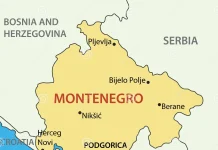
On the issues of enlargement, a topic of paramount importance for the Western Balkans, European leaders adopted a “bla-bla” phrases and the clear position that EU reform comes first, followed by enlargement. The goal of some member states is to eliminate dissenting voices in the EU and to impose voting on foreign and security policy matters. However, this cannot happen at the moment. And it will never happen. Attempts to bypass European legislation regarding Russian financial assets and their use for financing Ukraine are sufficiently indicative in this direction.