
Thewesternbalkans.
Geopolitical Adaptation
In recent months, the European Commission has intensified discussions on accelerating the enlargement process of the European Union. This momentum is not the result of significant progress in the internal reforms of the candidate countries – traditionally a key condition for membership. At the same time, the EU itself has not achieved significant development of its own institutional reforms that would facilitate the integration of new countries. Rather, the acceleration of the debate is related to the geopolitical consequences of the war in Ukraine and the need to create a political framework for the country’s eventual accession to the EU. Such a prospect could emerge if a future peace agreement brokered by the United States is reached, including accelerated European integration of Ukraine.
Although a peaceful settlement of the conflict remains unlikely in the near future, its very discussion functions as a catalyst for rethinking the current enlargement model. Traditionally, this process has been characterized by lengthy negotiations, strict conditionality and the need for full institutional compliance before accession. However, the new geopolitical situation calls into question the ability of the existing mechanism to respond adequately to the strategic challenges facing the Union.
European Commission President Ursula von der Leyen has already publicly rejected Ukrainian President Volodymyr Zelensky’s call for the country’s membership by 2027, stressing that it is impossible to set a specific date for accession at this stage. One of the main political opponents of Ukraine’s accelerated accession remains Hungary. Budapest’s skepticism is likely to persist regardless of the outcome of the parliamentary elections on 12 April and any changes in the country’s political leadership.
Resistance to accelerated integration has also manifested itself at the institutional level. On 5 March, EU member state ambassadors opposed a proposal for a shortened accession procedure for Ukraine and insisted on maintaining the standard enlargement mechanism. Among the ideas discussed was the so-called a concept of “reverse enlargement”, according to which Ukraine could receive formal member state status by 2027, with the full range of rights and obligations to be introduced gradually at a later stage.
The main argument in favor of such a model was related to maintaining the political momentum for reforms in Ukraine. However, a number of member states expressed serious concerns about such an approach. Among the options discussed was the possibility of the country being admitted with limited rights to EU institutions, but this idea also met with significant resistance.
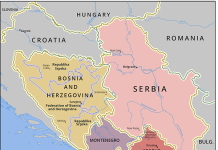
The debates on possible partial or conditional membership have also attracted the attention of other candidate countries. Particularly sensitive to the potential priority admission of Ukraine are Albania and Serbia, which have been in the process of negotiations with the EU for years. In this context, the German newspaper Frankfurter Allgemeine Zeitung published a joint article by Albanian Prime Minister Edi Rama and Serbian President Aleksandar Vučić, in which the two leaders declared their readiness to accept a form of limited membership in the EU – without voting rights, without veto rights and without representatives in the European Commission.
Models of “gradual” or “phased” enlargement
Despite reservations in public opinion in both the Member States and the candidate countries, the European Commission continues to develop various options for reforming the enlargement policy. Within the framework of internal discussions, three main scenarios for the future development of this process have been outlined.
The first scenario envisages maintaining the existing system without significant changes. Under this approach, candidate countries continue to go through the traditional stages of the negotiation process, with Albania and Montenegro considered to be the most advanced in their preparations for membership. In this context, their accession could take place before the end of the current EU institutional cycle in 2029.
The second scenario, known as “gradual integration”, envisages a wider participation of candidate countries in European policies, programmes and initiatives, without formal membership of the Union. This model would allow for earlier economic and institutional convergence, while postponing the need for ratification of an accession treaty in all 27 Member States. Some experts see this option as relatively pragmatic, although it is likely to cause disappointment in countries with stronger political expectations for rapid membership, such as Ukraine.
The third and most radical scenario is the so-called “phased integration”, a term used by Enlargement Commissioner Marta Cos instead of the paradoxical “reverse enlargement”. This model assumes a relatively rapid formal accession of new countries to the EU, followed by a phased implementation of the necessary reforms and the gradual acquisition of the full range of rights and obligations. In practice, however, such an approach raises a number of political and institutional issues. Ratification of accession treaties may prove increasingly difficult against the backdrop of the growing influence of Eurosceptic and far-right political forces in a number of European countries. Additional risks are also associated with possible difficulties in implementing reforms in countries that continue to face internal political instability and periodic public protests, as observed, for example, in Albania and Serbia.
At present, member state governments have shown limited willingness to support such an accelerated enlargement model. The main institutional problem remains the requirement that any accession treaty must be ratified unanimously by all national parliaments.
Several European capitals openly express reservations about the idea of a radical change in the rules. Hungary remains among the most critical countries regarding Ukraine’s membership. Germany has also cooled expectations for the country’s accession by 2027, while Austria, Sweden and France stress the need for the principle of conditionality to remain in the forefront. In France, any future enlargement may even require a national referendum. The Netherlands also warns that excessive haste could undermine the legitimacy of the process.
Despite the interest shown by countries such as Albania, Serbia and Moldova, a number of analysts stress that the ideas being discussed are still at an early stage of development and require significant conceptual refinement. Resistance at the diplomatic level further complicates the process and forces the European Commission to seek new formulas for the integration of candidate countries. These proposals aim to accelerate political convergence with the Union, but without immediately granting the full range of rights, obligations and institutional privileges that traditionally accompany EU membership.